Roman Empire, Italy. Pertinax, Rome, c. 193 AD
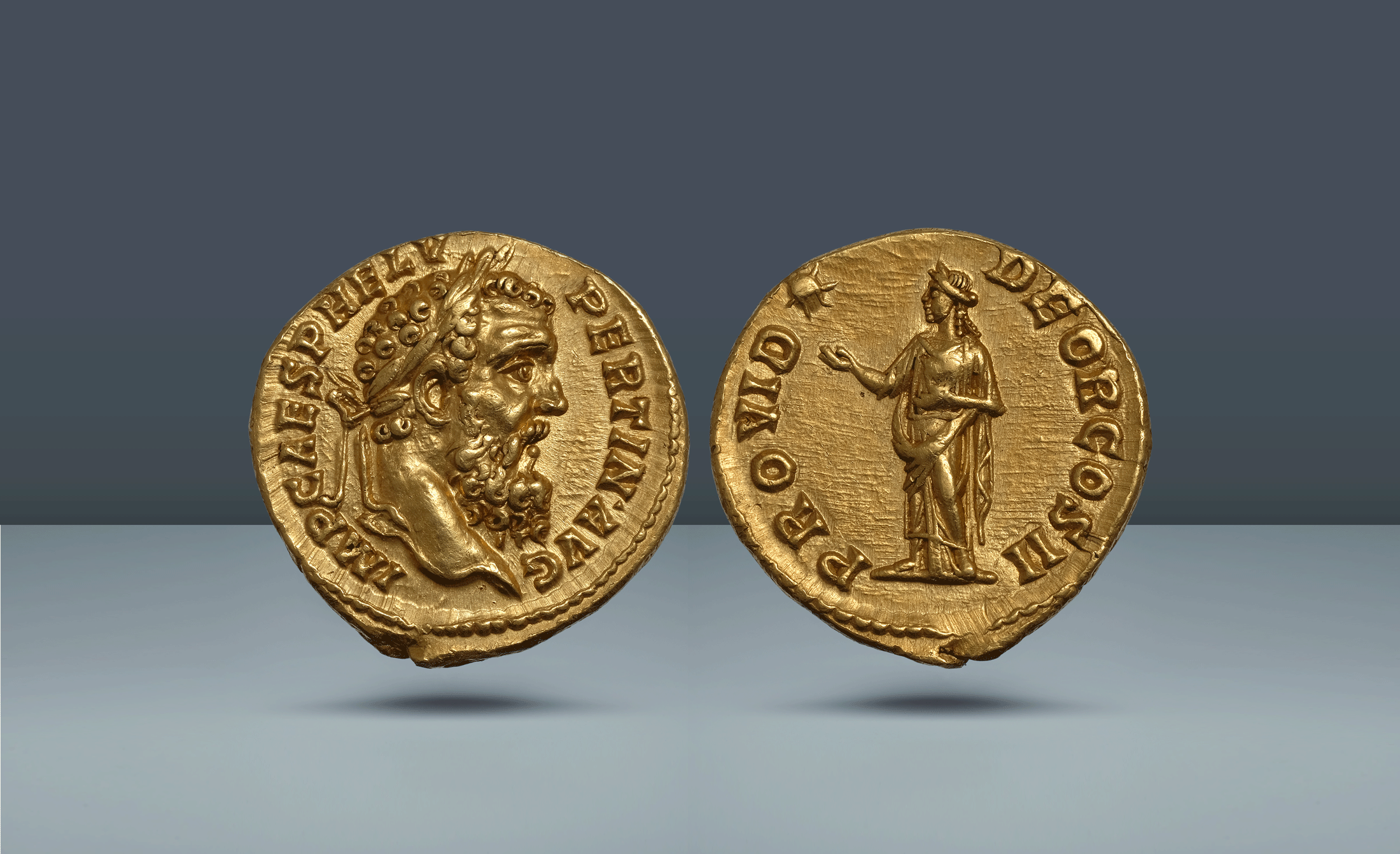
Roman Empire, Italy. Pertinax, Rome, c. 193 AD
AV Aureus, 7.15g (19mm, 12h).
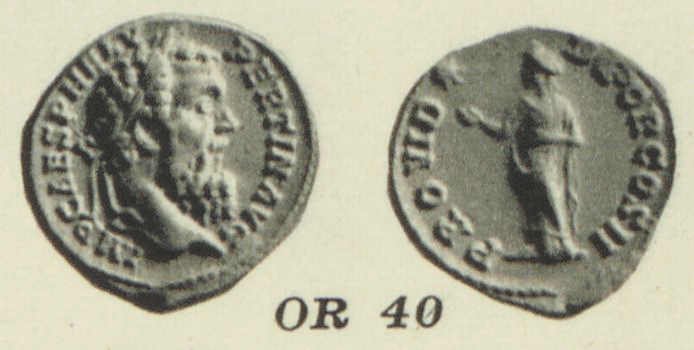
IMP CAES P HELV-PERTIN AVG, laureate head to r. / PROVID-DEOR COS II, Providentia facing, head to l., hands raised toward star in upper l. field.
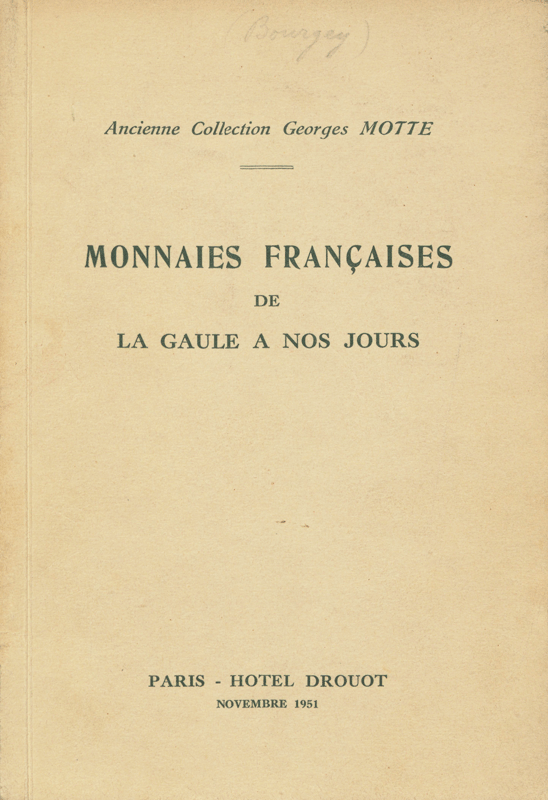
Pedigree: Ex Bourgey, Nov 12–15, 1951, Lot 40 (published by Rolland, H., Monnaies Françaises. Etude d'après le cabinet numismatique de M. Georges Motte, Macon 1932, no. 49). Ex NGSA 6, 2010, lot 180. Ex Künker 182, 2011, lot 760. Ex Künker 341, 2020, lot 5986. Ex Künker 376, 2022, lot 4097. From the Annemarie & Gerd Köhlmoos and Georges Motte collections.
References: BMC 11, Calicó 2389; Coh. 42, RIC 11 a,Lempereur 115 a (this coin)
Grade: Slightly o/c on obverse and reverse without effecting the elements. Beautifully struck with lustrous surfaces. Pedigree back to 1951 and plate coin in primary reference. Mint State
re1467c
Scroll down for more information about this coin.
The Georges Motte Collection represents one of the landmark French numismatic dispersals of the postwar era. Georges Motte was a numismatist from Roubaix, an industrial textile city in the Nord region of northern France, who assembled an extraordinary cabinet over the course of his lifetime. Notably, he focused primarily on the coinage of France from Celtic Gaul through the modern era.
The collection was auctioned by Émile Bourgey at the Hôtel Drouot in Paris from 12 to 15 November 1951, with Étienne Ader serving as commissaire-priseur. Bourgey titled the catalog Ancienne Collection Georges Motte: Très importante Collection de Monnaies Françaises de la Gaule à nos jours, and it included 998 lots illustrated across 12 plates. The 1951 sale marked the beginning of Émile Bourgey's era of great public auctions, which would continue throughout the following decades with the Coppens collection of Gaulish coins in 1961, the Stucker collection of Protestant coinage in 1977, and the Squier collection of world gold in 1978.
Several pieces from the Motte sale produced record prices for their time. For example, a half-écu of Charles VI realized 680,000 francs, while a half-chaise of the same king brought 550,000 francs. In addition, a gold stater of Vercingetorix sold for 425,000 francs, and a remarkable louis of Gaston de Dombes was preempted by the Bibliothèque Nationale itself for 460,000 francs - a rather clear indication of the collection's national importance. Today, the original 1951 catalog remains a highly sought-after reference work in French numismatic libraries.