
Roman Empire, Italy. Plautilla as Augusta (Struck under Septimius Severus and Caracalla), 202 - 205 AD Rome, c. 202 - 203 AD
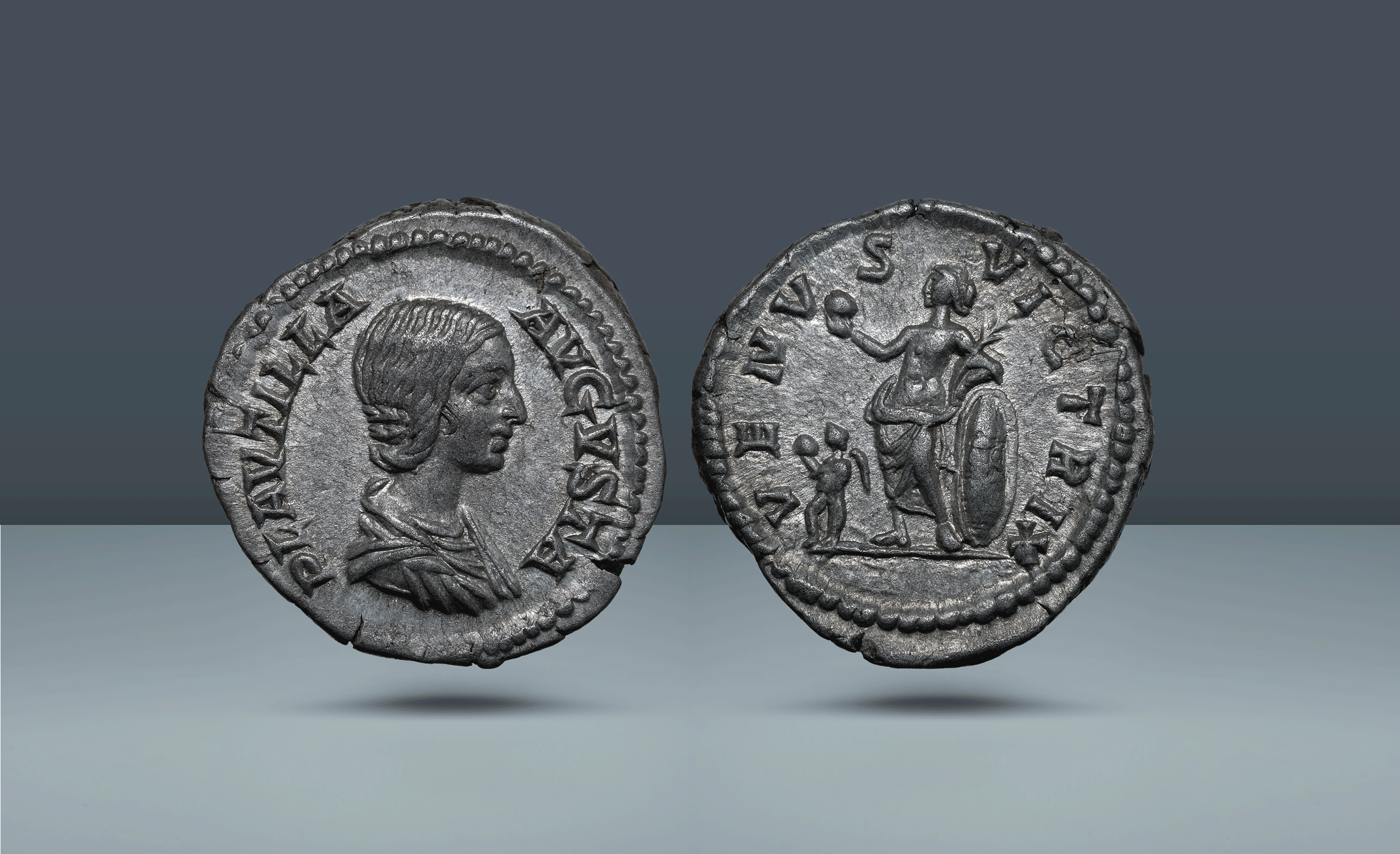
Roman Empire, Italy. Plautilla as Augusta (Struck under Septimius Severus and Caracalla), 202 - 205 AD Rome, c. 202 - 203 AD
AR Denarius, 3.21g (19.5mm, 6h).
Draped bust r. / Venus Victrix standing l., holding apple and palm frond, resting arm on shield set on ground; to l., Cupid standing l.
Pedigree: From the Weise Collection.
References: RIC.IV 369 (Caracalla); RSC.25
Grade: Light wear but nicely toned and good aEF
re1462
Scroll down for more information about this coin.
Plautilla was the daughter of Gaius Fulvius Plautianus, the extraordinarily powerful Praetorian Prefect who had risen to become the most influential man in the empire after the emperor himself. Her brief elevation to Augusta came through her marriage to the young Caracalla in 202 AD - a union that, by most ancient accounts, was deeply unhappy. Caracalla despised his bride and made no secret of it, reportedly vowing to kill either her or her father at the first opportunity. That moment came in 205 AD when Plautianus was accused of conspiracy and executed; Plautilla was stripped of her title and exiled to Sicily, and was put to death shortly after Caracalla became sole emperor in 211 AD.
Her coinage was thus struck in a narrow window of just three years, 202–205 AD, making her one of the shorter-reigning empresses represented in the Roman silver series. This adds an inherent historical poignancy and collectibility to any well-preserved example.
The obverse presents a draped bust of Plautilla facing right, a portrait of quiet dignity befitting her short-lived imperial status. The reverse depicts Venus Victrix - Venus the Victorious - standing left, holding an apple and a palm frond, her arm resting on a shield set upon the ground, with the small figure of Cupid standing to her left. The type was a natural choice for a newly married Augusta, invoking the goddess of love and victory as a symbol of dynastic hope and marital fortune - an optimism that history would cruelly disappoint.