
Roman Empire, Italy. Vespasian, 69-79 AD Rome, c. 77-78 AD
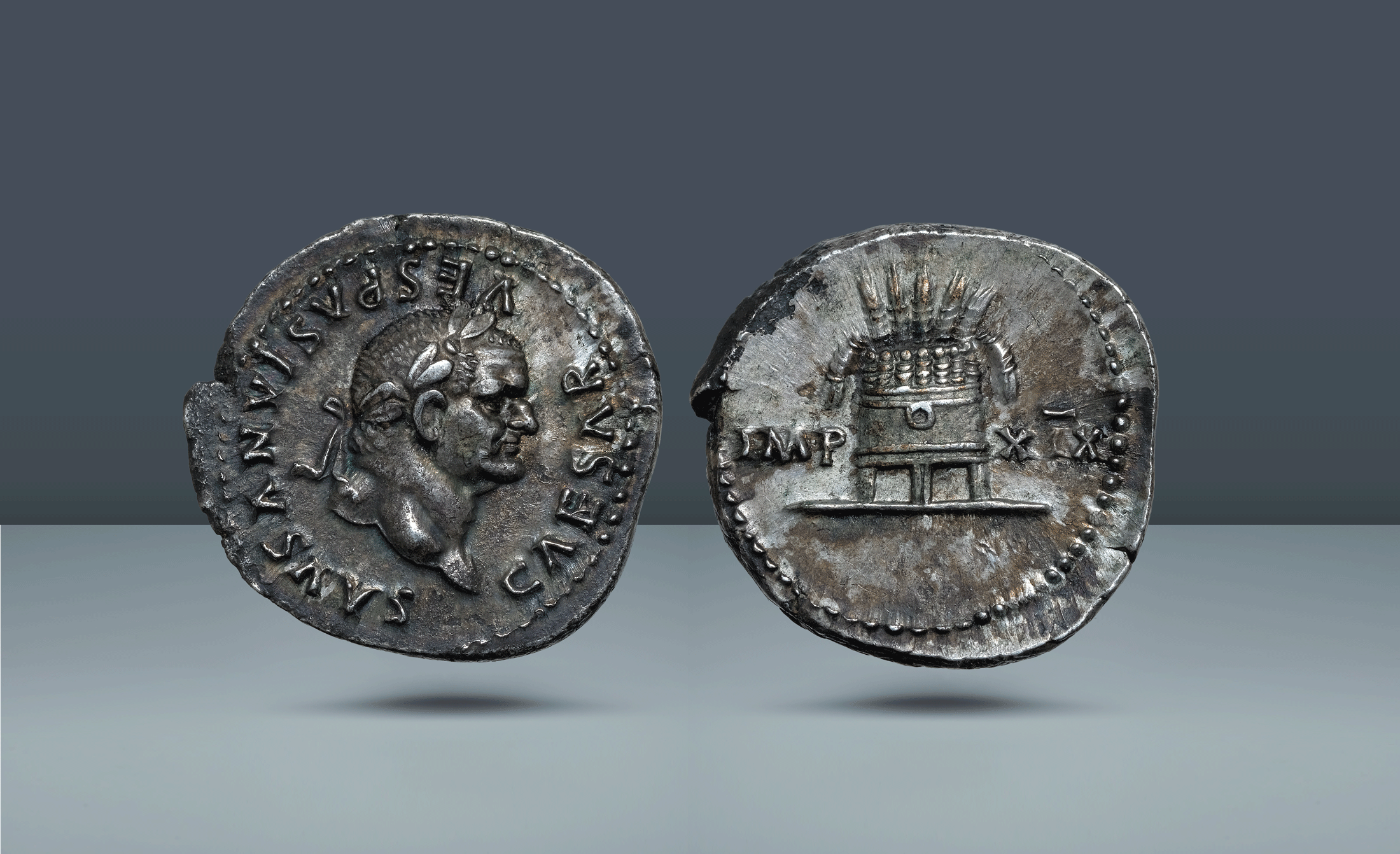
Roman Empire, Italy. Vespasian, 69-79 AD Rome, c. 77-78 AD
AR Denarius, 3.21g (20mm, 6h).
Laureate head of emperor right / Modius with seven ears of grain. IMP XIX to either side
References: RIC II, 981; RSC 215
Grade: Lovely cabinet toning with sharp strike. Surfaces slightly blotchy in appearance but nonetheless about Mint State
re1453
Scroll down for more information about this coin.
Titus Flavius Vespasianus is one of the more improbable success stories in Roman history. A career soldier from a modest Italian family - his grandfather was a common legionary, his father a tax collector - he clawed his way to the consulship under Claudius and eventually to command of the Jewish War under Nero. When the Year of the Four Emperors tore the principate apart in 68–69, Vespasian emerged as the last man standing: pragmatic, unflappable, and possessed of a dry humor that became legendary. He ruled until 79 AD and founded the Flavian dynasty.
By 77–78 AD, when this denarius was struck, Vespasian was in his final years - the IMP XIX acclamation on the reverse dates it precisely to this narrow window. His portrait at this stage of the reign is characteristically blunt: no idealizing flattery, no divine pretension. The strong, slightly weathered features reflect the same earthy self-awareness he was famous for in life.
The reverse is the heart of the coin's interest. The modius - a grain measure heaped with seven ears of wheat - is one of the more quietly powerful symbols in the Roman imperial repertoire. It invokes Annona, the divine personification of the grain supply, on which the feeding of Rome's population entirely depended. Vespasian had inherited a city financially and politically exhausted by civil war, and his restoration of the grain dole and public finances was central to his political legitimacy. Putting the modius on the coinage was a pointed message: stability, abundance, and competent administration had returned.
The coin itself is a genuine cabinet piece. The toning is the warm, layered patina that develops over centuries in a stable collection environment - impossible to replicate artificially and actively desirable to serious collectors. The strike is sharp, capturing the portrait's character and the clean detailing of the grain ears. The slightly uneven surfaces noted in the grade keep it just shy of a full Mint State attribution, but this is an honest, high-end example of a historically significant type from the last years of a remarkable reign.