
Roman Empire, Moesia Inferior. Elegabalus (Governor Nubius Rufus), c. 218 - 222 AD Nicopolis ad Istrum, c. 218-222 AD
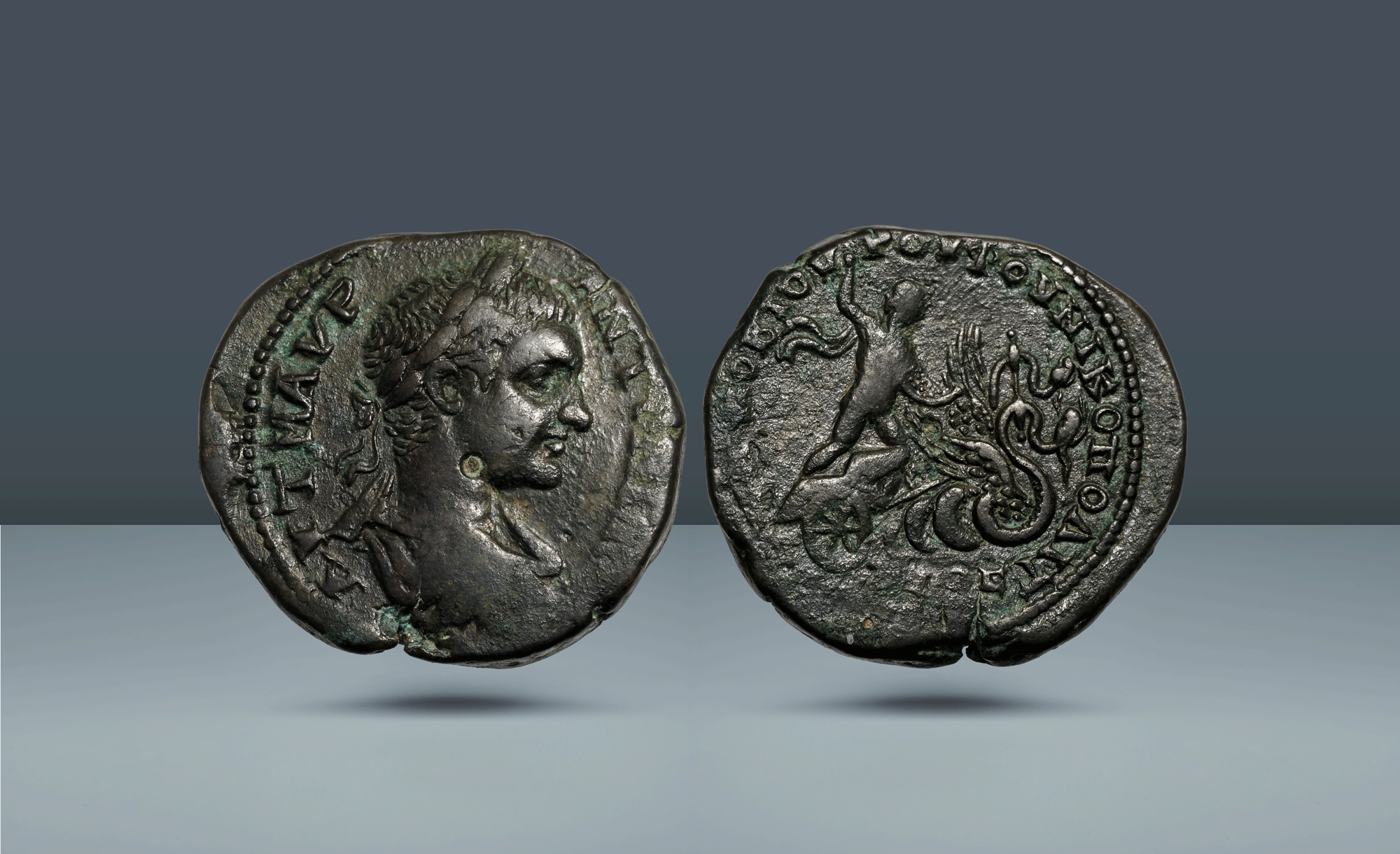
Roman Empire, Moesia Inferior. Elegabalus (Governor Nubius Rufus), c. 218 - 222 AD Nicopolis ad Istrum, c. 218-222 AD
AE 25-28, 13.51g (27mm, 11h).
Laureate, draped, and cuirassed bust facing r. with legend around / Triptolemus standing in biga of winged serpents r. raising r. hand to scatter seeds, and holding additional seeds in fold of cloak. Legend around.
Pedigree: Purchased privately from Harlan J. Berk Ltd. in the early 2000's; Ex. Aufhäuser, 1992, lot 372.
References: AMNG-1906 (3 spec); Varbanov-3911 (same dies); Hristova-Hoeft-Jekov 2012 p415, coins 5-07 (all same dies)
re1314
Scroll down for more information about this coin.
Nicopolis ad Istrum is one of the best-preserved Roman provincial towns in the Balkans, and its story tracks the rise and strain of Roman power on the lower Danube. Founded around AD 106 by the emperor Trajan to celebrate his victories in the Dacian Wars, its name means "City of Victory," and it officially carried Trajan's family name as Ulpia Nicopolis. The site sits on a plateau near the Yantra and Rositsa rivers, close to modern Nikyup in northern Bulgaria. The epithet "ad Istrum" (on the Danube) is misleading, since the city actually lay well inland.
Though Roman in foundation, the city was culturally Greek, built and settled largely by craftsmen from Asia Minor. That being said, it followed a strict grid plan, with a colonnaded agora, council house, odeon, baths, basilica, and aqueducts. Its level of preservation is so great, that the city has invited comparisons with Pompeii!
Initially part of Thrace, it was transferred to Lower Moesia under Septimius Severus and became that province's leading inland center. Its peak spanned the Antonine and Severan eras; it backed Severus in 193 and was rewarded. Decline came later during the third-century crisis. In 250-251 Decius defeated Cniva's Goths near the city, and Aurelian's withdrawal from Dacia (c. 271) left the region exposed. By the 4th century it had shrunk into a fortified town. Abandoned around 447 after Hunnic raids, later rebuilt as a Byzantine fortress, it was finally destroyed amid the Avar and Slavic invasions of the early 7th century.