
Roman Empire, Phrygia. Julia Domna, 160-217 AD Laodicea, c. 196-202 AD
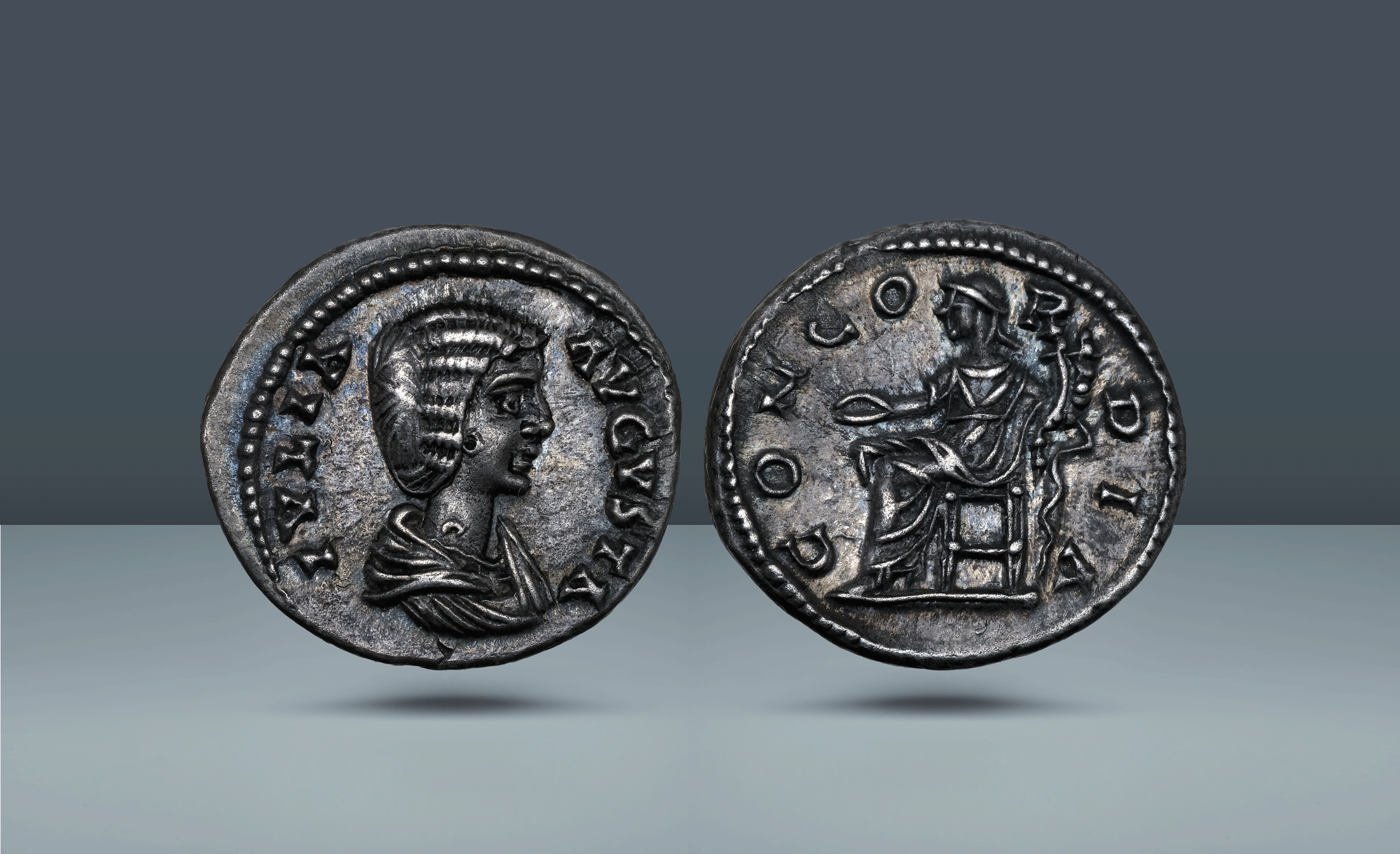
Roman Empire, Phrygia. Julia Domna, 160-217 AD Laodicea, c. 196-202 AD
AR Denarius, 3.12g (18mm, 7h).
Draped bust r. / CONCO–R–DIA. Concordia with patera and double cornucopia seated to the l.
Pedigree: Acquired in 1967 from Stacks, New York.
References: C 21, BMC RE 593, RIC 637
Grade: Nicely toned and with some minimal wear. Good VF
re1445
Scroll down for more information about this coin.
In the late second century AD, after the Antonine plague and year of the five emperors, the Severan imperial family strove to cement their legitimacy in every possible way. An integral part being the coinage bearing the portrait of Julia Domna. This particular piece depicts the goddess Concordia on the reverse. In this context, the goddess represents the importance of marital harmony and imperial unity.
Interestingly, Severan propaganda containing Concordia is more commonly associated with the later joint rule of Caracalla and Geta, as posited by Alex Imrie in his 2014 Revue Belge De Numismatique article: A Case of Mistaken Identity: Julia Domna as Concordia on RIC 380 and 381. In fact, this particular coin (RIC 637) serves as the "smoking gun" that validates Imrie's reinterpretation. It demonstrates that Concordia was already part of Julia Domna's established numismatic vocabulary at Laodicea, making the later types a logical continuation of this theme. The temporal and iconographic connection between these coin types reveals a coherent propaganda strategy spanning nearly two decades-one that used Concordia to project imperial unity even as that unity fractured beneath the surface.