
Seleucis and Pieria, Antioch. Gordian III. 238-244 AD. c. 242-244 AD
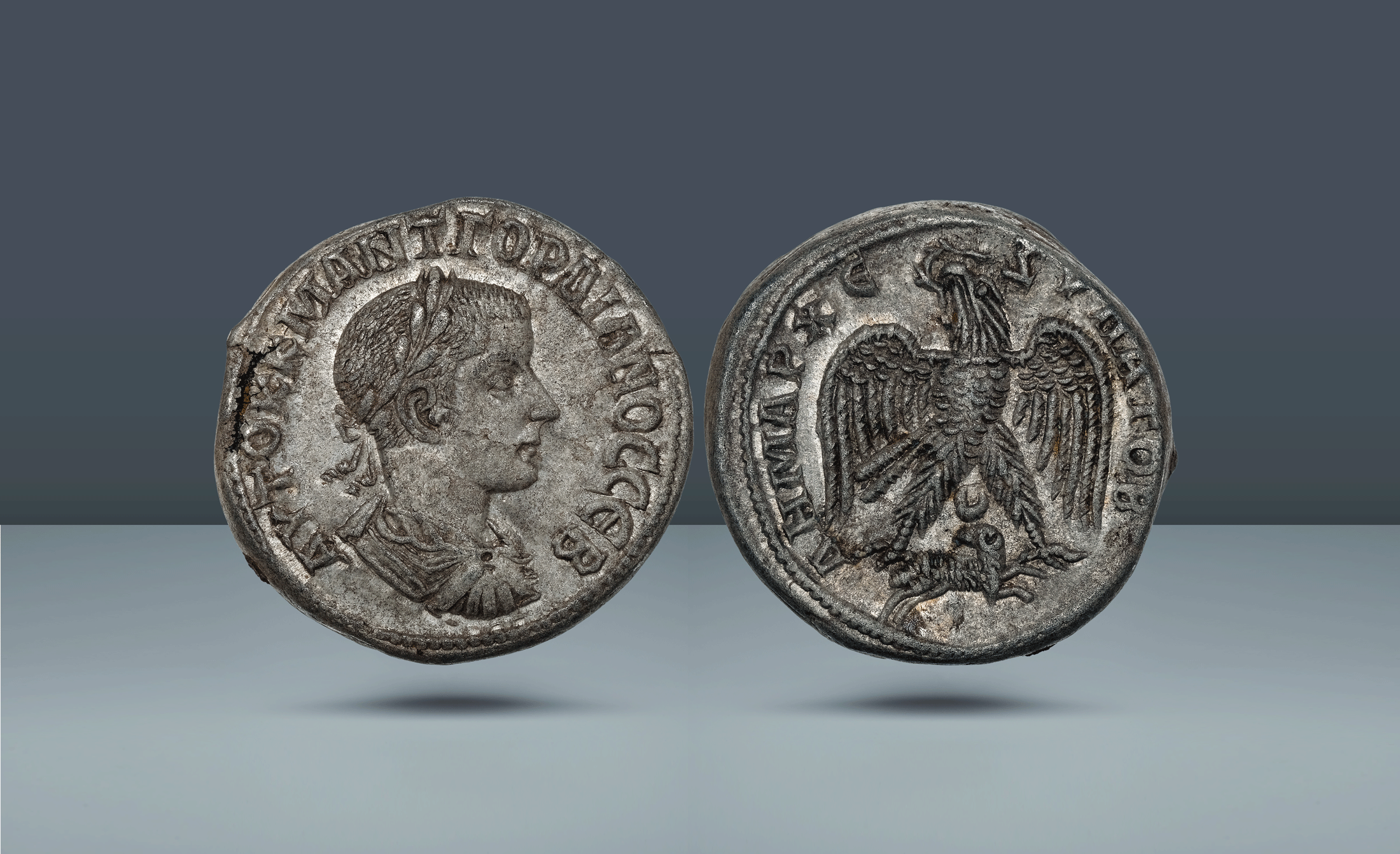
Seleucis and Pieria, Antioch. Gordian III. 238-244 AD. c. 242-244 AD
BI Tetradrachm, 13.82g (26mm, 11h)
Laureate, draped, and cuirassed bust r., seen from behind / Eagle standing facing, head and tail l., with wings displayed, holding wreath in beak; below, crescent above ram leaping right, head l.
Pedigree: Ex Leu Web Auction 15, 27 February 2021, lot 1453
References: Bland, Gordian III, 35.144 (O:134; this coin); McAlee 874; RPC VII.2 3520.45 (this coin); Prieur 302
Grade: Previously encapsulated, NGC 560324-244, graded AU, Strike: 4/5, Surface: 4/5
re1492
Scroll down for more information about this coin.
Gordian III became emperor in AD 238 at approximately thirteen years old. His accession followed the chaotic events of the Year of the Six Emperors, during which a succession of rival emperors rose and fell in a matter of months. Following the murder of Pupienus and Balbinus by the Praetorian Guard, the young Gordian was left as the emperor of Rome. Much of Gordian's early reign was guided by his closest officials, particularly the praetorian prefect, Timesitheus. By AD 242, the threat of the Sasanian Empire under Shapur I demanded Rome's attention. Gordian traveled east to confront the Persians, with Antioch serving as a center for Roman military operations and coin production. Kevin Butcher, in Coinage in Roman Syria, interprets the ram on the reverse as Aries, possibly representing the zodiacal sign under which Antioch was founded by Seleucus I Nicator in 300 BC. The Eastern campaign initially proved successful, with Roman forces recovering Carrhae and Nisibis and defeating the Sasanians at the Battle of Resaena in AD 243. However, the death of Timesitheus later that year left Gordian without one of his most trusted advisers. He was replaced by the future emperor, Philip the Arab. In early AD 244, the Roman army suffered a defeat against Shapur's forces near Misiche. Gordian died shortly afterward, although the circumstances of his death remain disputed between Roman and Persian accounts.