
Seleucis and Pieria, Antioch. Septimius Severus. 193-211 AD. c. 202 AD
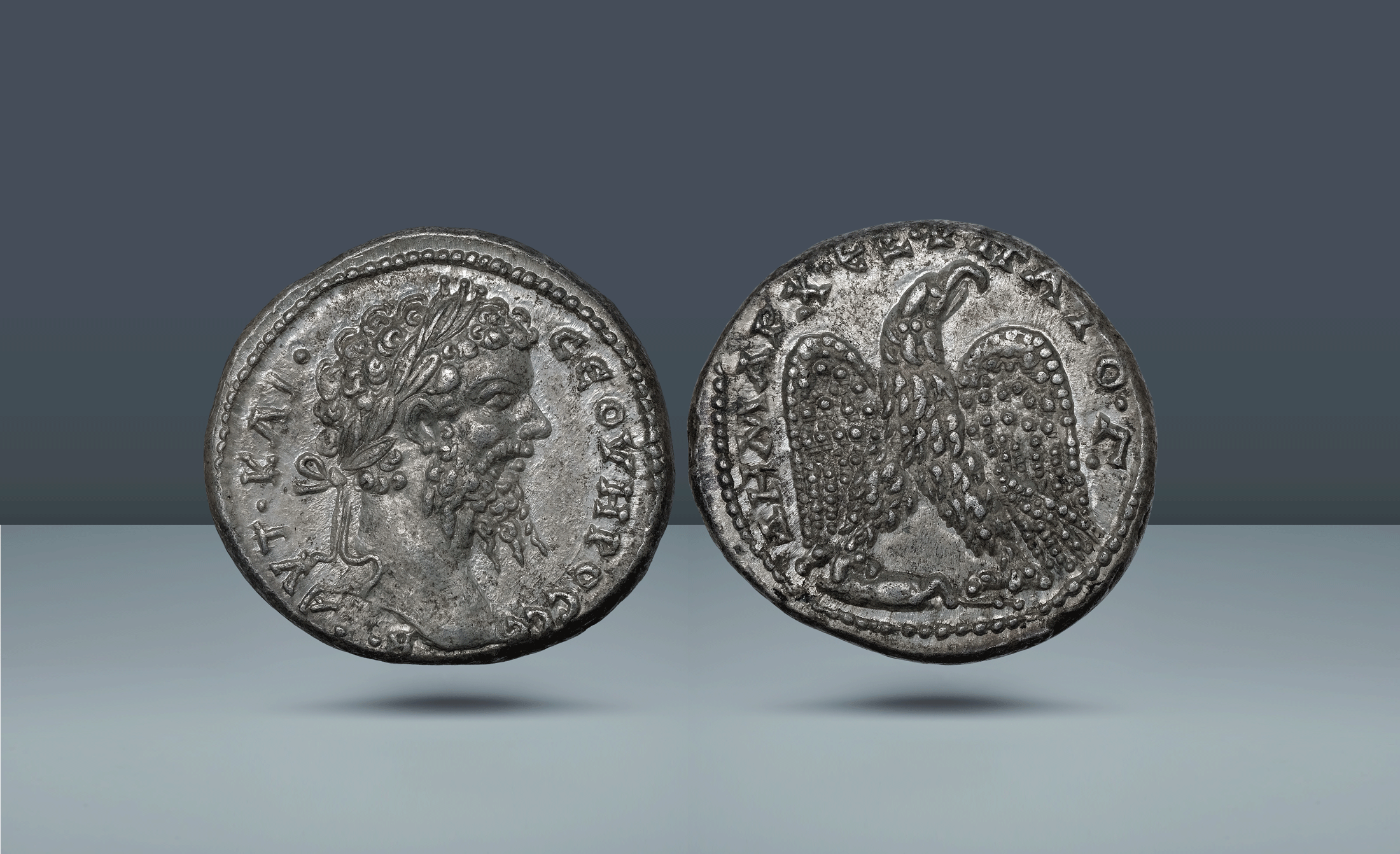
Seleucis and Pieria, Antioch. Septimius Severus. 193-211 AD. c. 202 AD
BI Tetradrachm, 12.88g (26mm, 12h)
Laureate head r. / Eagle standing facing on leg and thigh of sacrificial animal, head and tail r., with wings displayed
Pedigree: Ex Leu 7, 24 October 2020, lot 1491.
References: McAlee 658; RPC V.3 Online 84220 (this coin cited); Prieur 186
Grade: Previously encapsulated, NGC 8560324-224, graded AU, Strike: 5/5, Surface: 4/5.
re1490
Scroll down for more information about this coin.
Struck in AD 202, this tetradrachm comes from one of the most important cities of the Roman East; Antioch. The city was a major commercial and administrative center, and its mint produced substantial quantities of coinage for circulation throughout the surrounding region.
Antioch played an important role in the civil war following the assassination of Pertinax in AD 193. The city supported Pescennius Niger, who, as governor of Syria, challenged Septimius Severus for the imperial throne. Following Niger's defeat in AD 194, Severus moved to consolidate his control over the Roman East, launching campaigns against Osrhoene and Adiabene in AD 195. Antioch itself suffered for having supported Niger, temporarily losing its civic privileges before they were eventually restored under Severus.
The reverse of this tetradrachm depicts an eagle standing upon the leg and thigh of a sacrificial animal, its wings spread and head turned to the right. While the eagle was closely associated with Zeus and Jupiter, the imagery also recalls the foundation legend of Antioch. According to tradition, Seleucus I was performing a sacrifice when an eagle seized a portion of the sacrificial animal and carried it to the site where the new city would be established. The event was interpreted as a divine omen, determining the location of Antioch.
The eagle became one of the most recognizable reverse types on the tetradrachms of Roman Syria, appearing in numerous variations under successive emperors. On the coinage of Antioch, the imagery preserved a connection to the city's Seleucid origins, even centuries after its incorporation into the Roman Empire.