
Roman Republic, Italy. C. Naevius Balbus, Rome, c. 79 BC
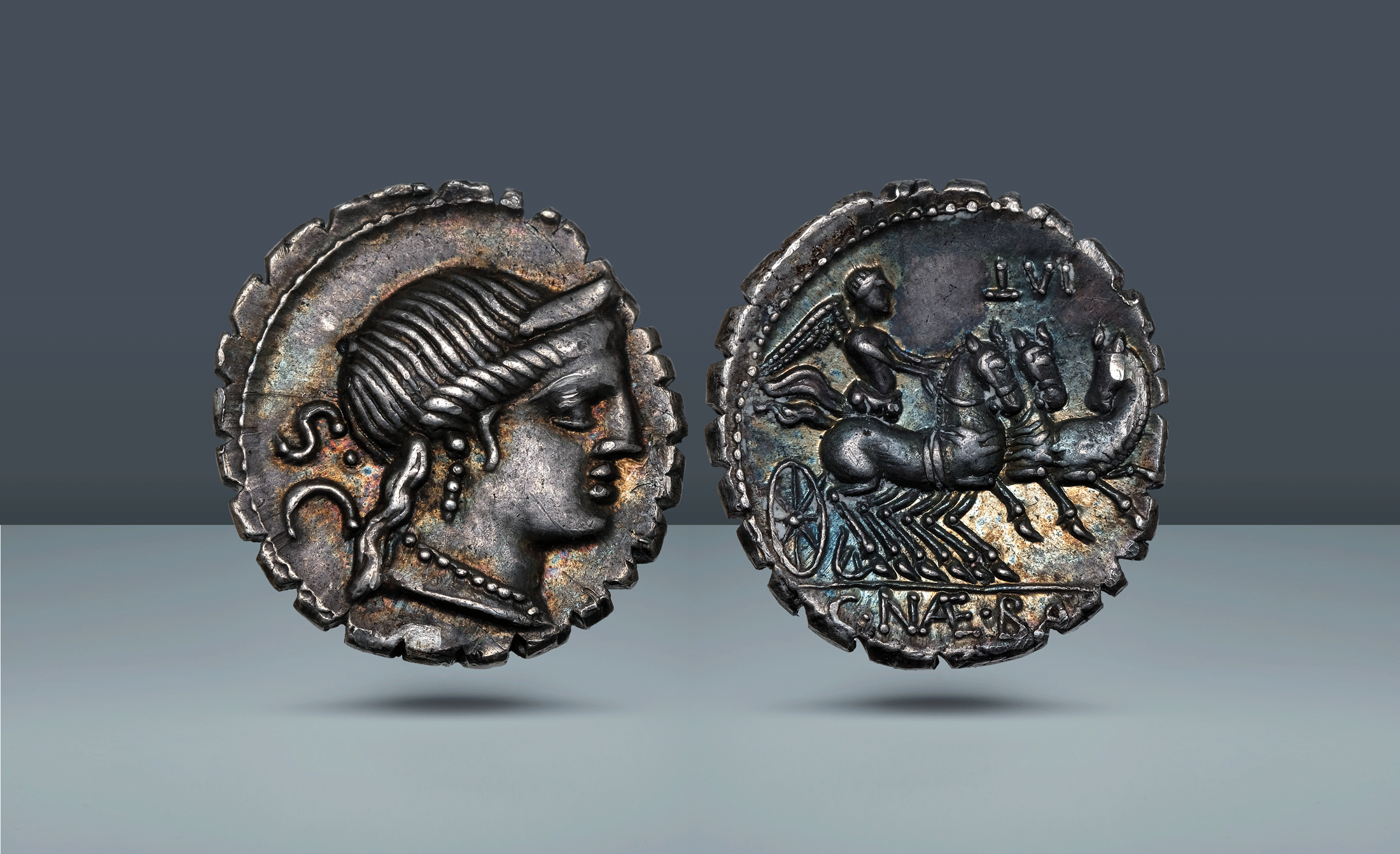
Roman Republic, Italy. C. Naevius Balbus, Rome, c. 79 BC
AR Denarius, 3.56g (18mm, 7h).
Diademed head of Venus ro r. with SC behind; Reverse: Victory driving galloping triga right, holding reins; control mark above and C.AEBALB below
Pedigree: Acquired from Bank Leu AG in 1968
References: Cr. 382/1
Grade: A bit off center but otherwise sharply struck with beautiful iridescent toning. Toned Mint State
rr1407
Scroll down for more information about this coin.
This denarius of C. Naevius Balbus, struck at Rome around 79 BC, pairs a refined portrait of Venus with one of the more visually striking reverse types of the late Republican series, a galloping triga driven by Victory. The diademed head of Venus, rendered here with careful attention to the goddess's coiffure and profile, situates the type within a broader trend of the 80s and 70s BC in which moneyers increasingly turned to deities associated with their gentes' claimed ancestry or with contemporary political currents rather than the generic Roma head that had dominated earlier Republican coinage. The SC (senatus consulto) inscribed behind Venus's head is a hallmark of a small group of issues from this period, generally understood to record senatorial authorization for the issue, likely connected to the currency reforms and standardization of the denarius following the monetary disruptions of the Social War era; its presence here places the Naevius Balbus issue within that same administrative context alongside contemporary moneyers such as Piso Frugi.
The reverse, showing Victory driving a triga, a three-horse chariot, at full gallop, is a genuine rarity in Republican numismatic iconography; the overwhelming majority of Republican chariot types depict the more familiar quadriga. The triga's appearance on Roman coinage has traditionally been linked to the ludi circenses and to a specific, archaic form of chariot race preserved at Rome into the historical period, giving the type an antiquarian resonance that would have appealed to a Roman audience attuned to the reconstruction of ancient ritual practice. The control mark above the horses and the moneyer's abbreviated legend, C.NAE.BALBVS, below the chariot follow the standard Crawford system of control symbols used to track individual dies within the issue. The gens Naevia is otherwise sparsely attested in the historical record, and this issue remains one of the principal numismatic sources for the family's activity in the late Republic.