Roman Republic, Italy. L. Piso Frugi, Rome, c. 90 BC
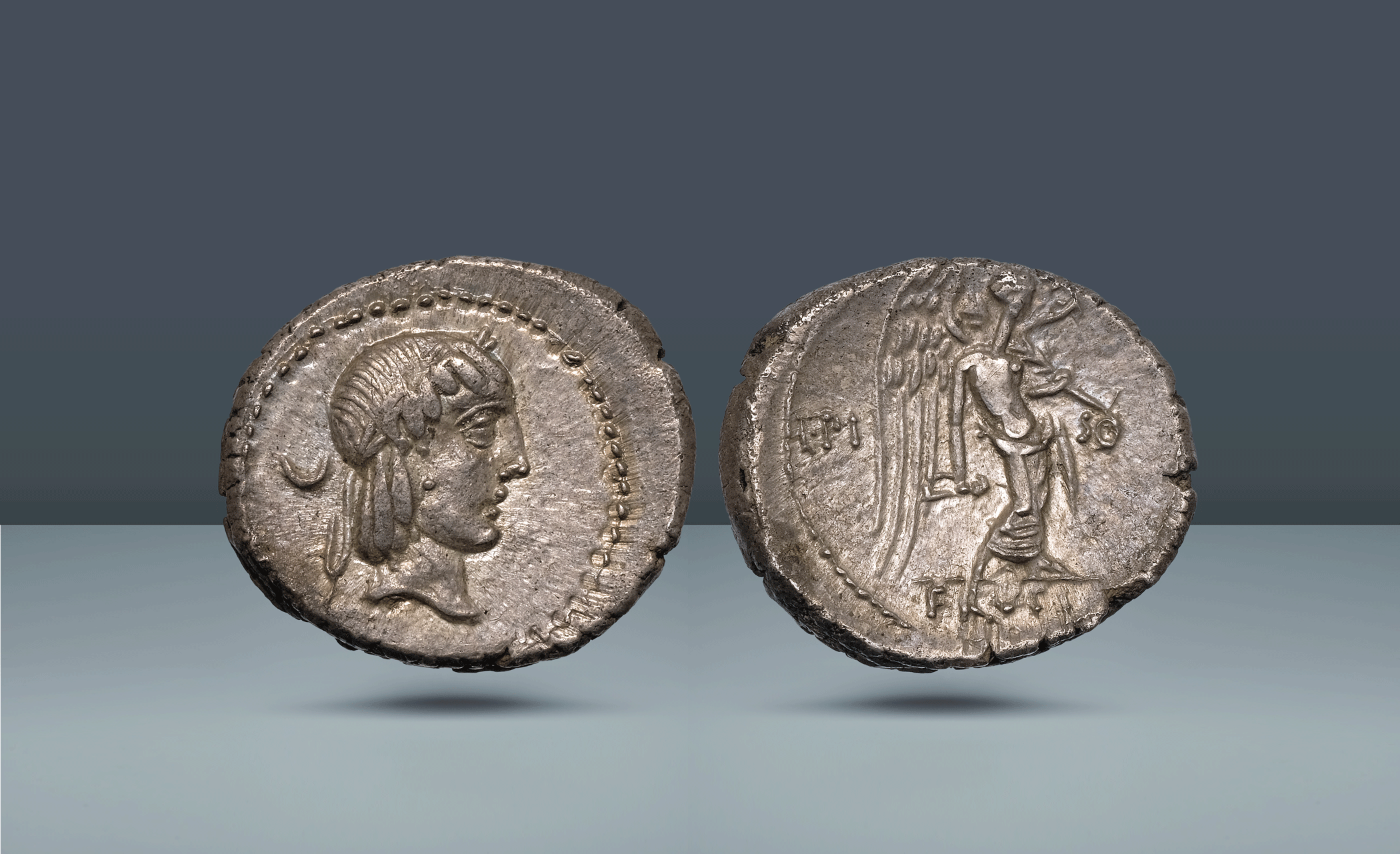
Roman Republic, Italy. L. Piso Frugi, Rome, c. 90 BC
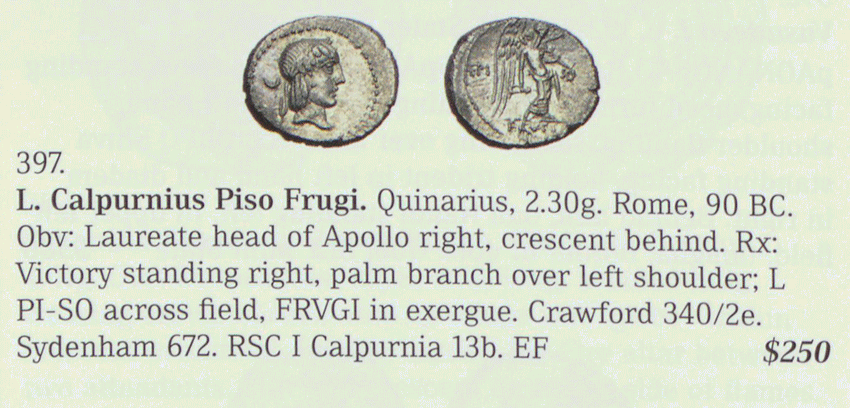
AR Quinarius, 2.3g (15mm, 1h).
Laureate head of Apollo r.; behind, crescent. / L·PI – SO Victory standing r., holding wreath in r. hand and palm branch in l.
Pedigree: From the collection of Carl Subak. Ex Gemini sale VI, 2010, 397.
References: RRSC Vol 2 Moretti Dq136e, Craw 340/2e, Bab Calpurnia 13 var, Syd 674, RBW –, King 40.
Grade: A bit o/c on both sides. Nicely struck with some minor wear on the reverse. aEF
rr1366
Scroll down for more information about this coin.
Carl Subak was one of the great coin dealers and collectors of the twentieth century, remembered as much for his charm and storytelling as for his sharp numismatic eye. Born in Vienna on 16 January 1919, he fled Nazi persecution as a young man, losing his parents to the Holocaust. After reaching the United States, he served at Camp Ritchie, Maryland, where Jewish refugees were trained in military intelligence. He later joined his sister in Seattle and went into business with his brother-in-law, building an enterprise that grew from import-export into stamp wholesaling and, ultimately, coins.
In 1949 Subak settled in Chicago, his adopted home for the rest of his long life. There he and his wife Eileen built one of the Midwest's most successful coin and stamp shops, in the heart of the city. He joined the International Association of Professional Numismatists in 1977. Notably, he never held auctions, preferring to consign choice pieces to trusted colleagues, which is partly why his name is less famous than his influence deserves. The firm, Subak Inc., continues under his son Jon.
A tireless traveller, Subak visited dealers worldwide and studied their stock in detail. A chance meeting at an English train station in the 1960s began a decades-long bond with Oxford's Ashmolean Museum. He helped fund major acquisitions, including the Watlington and Chalgrove Hoards (the latter famously revealing the "lost emperor" Domitianus), financed scholarly publications, and in 1991 created a studentship for numismatists from the former Eastern bloc.
Subak remained active well into his late nineties, commuting by train from Oak Park. He died on 6 February 2022, aged 103, leaving the Ashmolean a $5 million legacy.