
Roman Republic, Italy. L. Titurius Sabinus. Rome, c. 89 BC
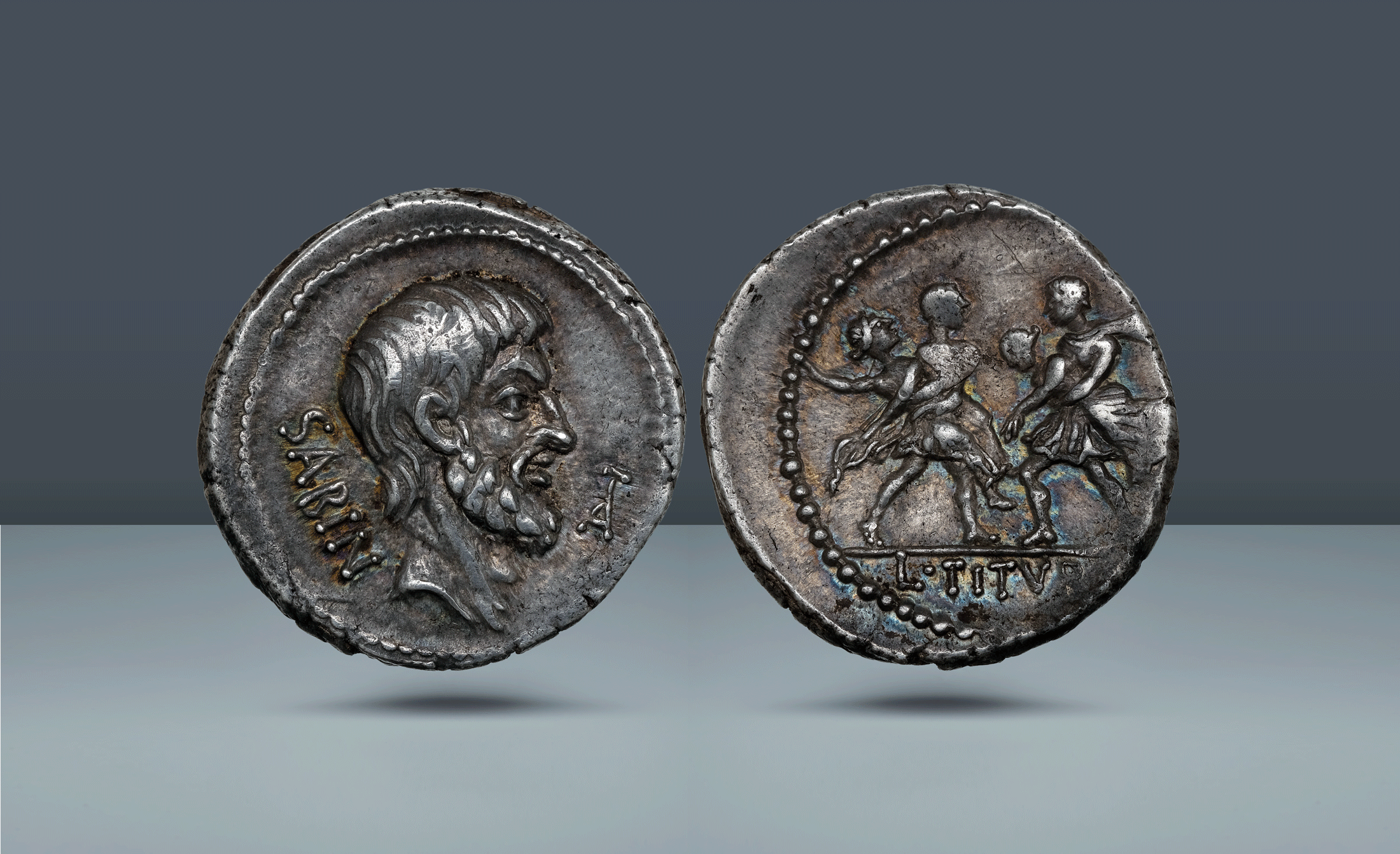
Roman Republic, Italy. L. Titurius Sabinus. Rome, c. 89 BC
AR Denarius, 3.92g (19mm, 11h)
SABIN bare head of King Tatius r.; TA monogram before / L•TITVR[I]; two Roman soldiers standing facing, each carrying a kidnapped Sabine woman both arms.
Pedigree: Ex Peus 410, 31 October 2013, lot 242
References: Craw 344/1a; Syd 698
Grade: Lovely sharp strike with pretty cabinet toning. A bit o/c and some minor wear on reverse faces. EF/aEF
rr1413
Scroll down for more information about this coin.
According to Roman legend, when Romulus founded the city of Rome, it was composed almost entirely of men, and neighbouring peoples refused to let their daughters marry Romans. To ensure his settlement did not become underpopulated, Romulus responded with a trick. He invited the surrounding communities, including the Sabines, to a festival in honour of the god Consus, and at a given signal the Roman men seized the unmarried Sabine women and carried them off. Interestingly, the traditional English usage of "rape" comes from the Latin raptus, meaning abduction or seizure.
The Sabines, led by their king, Titus Tatius, went to war to recover their wives and daughters. During the fighting the Roman maiden Tarpeia betrayed the citadel to the Sabines, only to be crushed beneath their shields. The war ended when the Sabine women, now wives and mothers, threw themselves between the two armies and begged their fathers and husbands to stop. Peace followed, the two peoples united, and Romulus and Titus Tatius ruled jointly.
This particular coin, struck in 89 BC by the moneyer L. Titurius Sabinus, represents the story's best-known appearance in Roman numismatics. The obverse shows the bearded head of Titus Tatius, while one reverse type depicts two Roman soldiers each carrying off a Sabine woman. A companion type shows Tarpeia half-buried under the Sabine shields. As his cognomen suggests, Titurius claimed Sabine ancestry, so the coins advertised his familial connections to one of Rome's founding peoples.