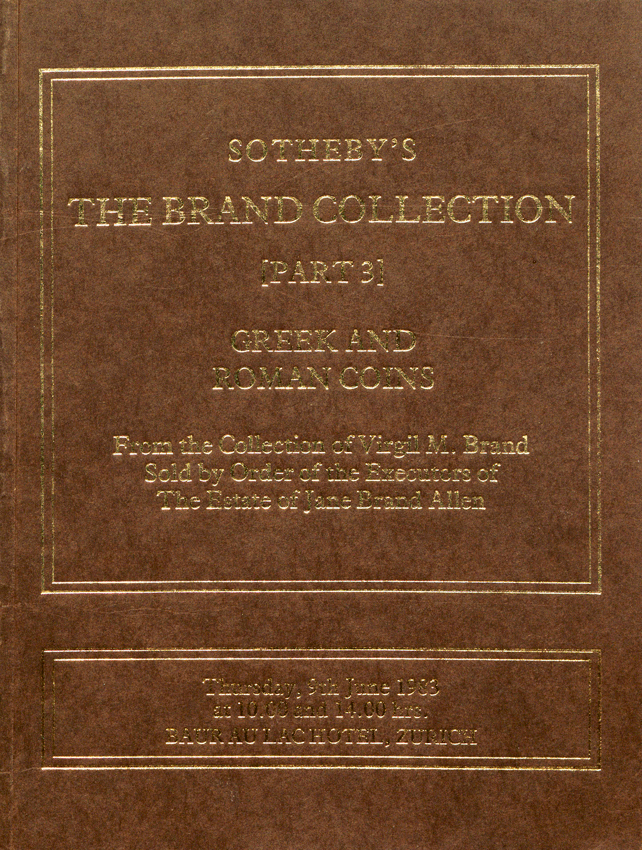
Roman Republic, Italy. M. Baebius Q.f. Tampilius, Rome, , c. 137 BC
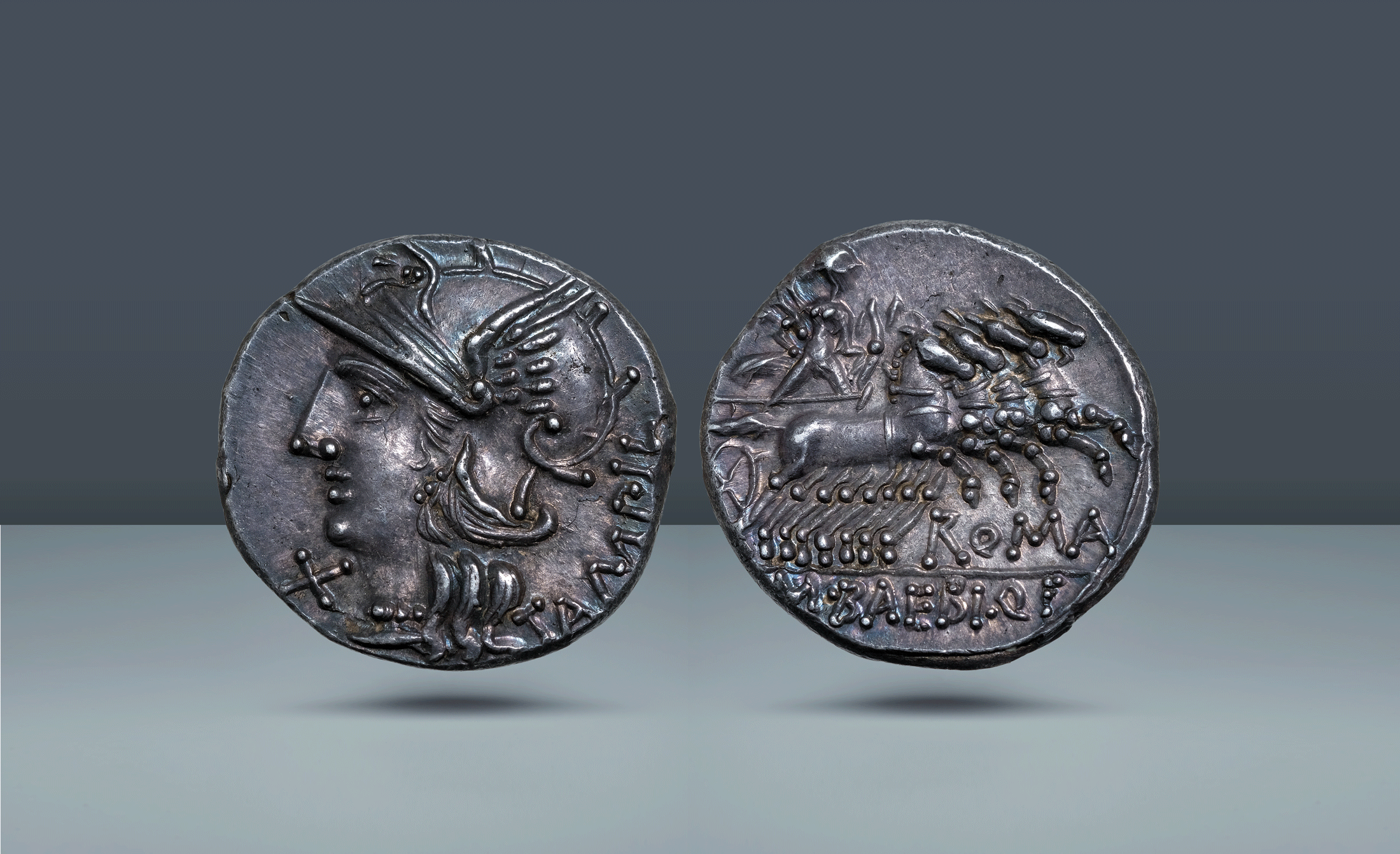
Roman Republic, Italy. M. Baebius Q.f. Tampilius, Rome, , c. 137 BC
AR Denarius, 4.01g (18.3mm, 10h).
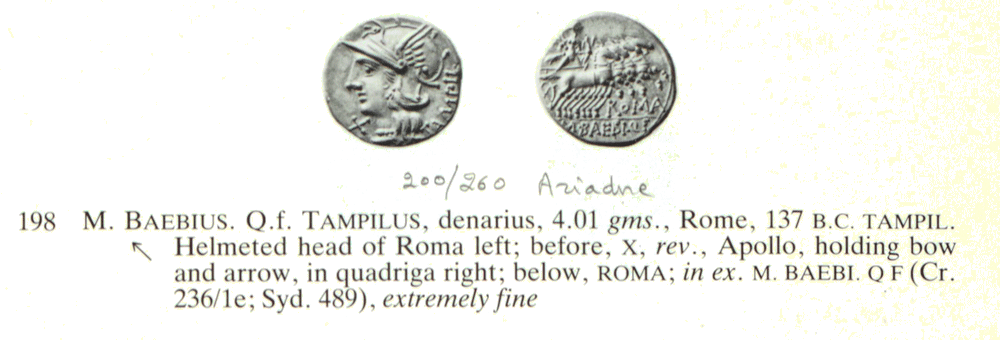
Helmeted head of Roma; behind, TAMPIL; below chin X / Apollo in quadriga right; below, ROMA; in exergue M.BAEBI.Q.F.
Pedigree: Ex Sotheby's, 9 June 1983, lot 198. Ex Tkalec-Rauch, 14 April 1986, lot 249. Ex Rauch 66, 2000, lot 67
References: RBW 971; Crawford 236/1a; Sydenham 489
Grade: Pristine surfaces and sharply struck with cabinet toning. FDC
rr1387
Scroll down for more information about this coin.
Depicting a quadriga on Roman denarii presented significant technical challenges for die engravers (caelatores), who had to compress a number of elements into a circle of only 17-20mm diameter while working in reverse on hardened iron or bronze dies. The engravers developed several spatial solutions: overlap methods where all horses appeared in profile as a single form, partial staggering showing 2-3 horses clearly, or pairings with two foreground horses and two implied behind. Anatomical shortcuts were essential, horses had simplified bodies reduced to essential curves, implied legs, and standardized flowing lines for manes and tails, while chariots were reduced to simple curved frames with 4-8-spoked wheels. The deity required careful scaling to remain identifiable with clear attributes (Apollo's bow on this coin) while maintaining proportionality. Finally, each die was hand-carved, resulting in variations even for the same moneyer based on individual engraver skill and style. However, by 137 BC, after decades of repetition the quadriga designs became standardized through templates and apprentice training, making execution more predictable while allowing exceptional work to reveal particularly skilled caelatores.