
Roman Republic, Italy. M. Cato, Rome, c. 89 BC
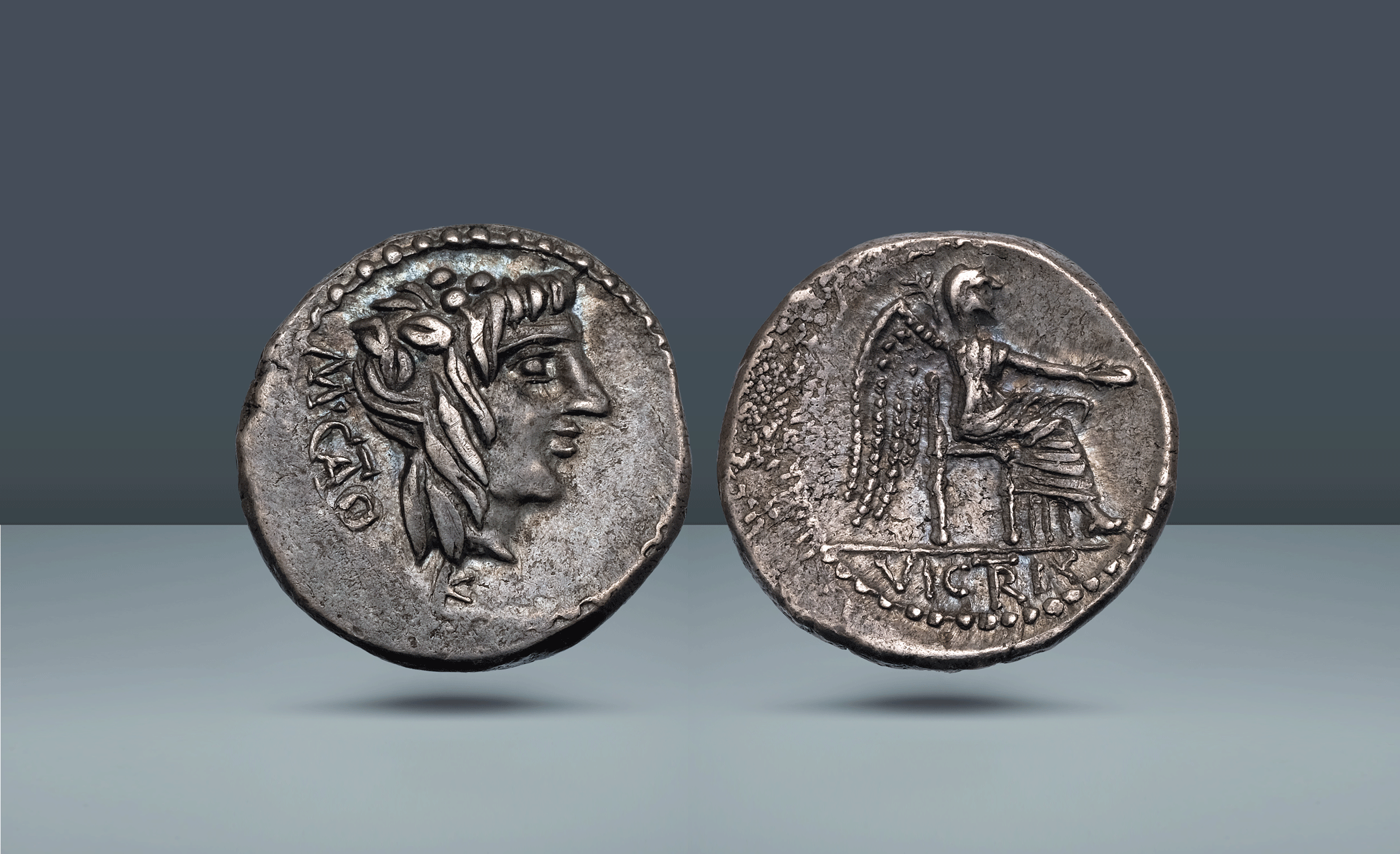
Roman Republic, Italy. M. Cato, Rome, c. 89 BC
AR Quinarius, 2.19g (15mm, 7h).
M·CATO Ivy-wreathed head of Liber r.; below, club. / Victory seated r., holding patera in r. hand and palm branch in l.; in exergue, VICTRIX
Pedigree: From the collection of Carl Subak.
References: RRSC Vol 2 Moretti Dq138b, Craw 343/2b, Bab Porcia 7, Syd 597, RBW –, King 46.
Grade: Great metal. Excellent strike and centering for this rare denomination. EF
rr1367
Scroll down for more information about this coin.
This scarce quinarius was struck by M. Cato, a member of the distinguished gens Porcia, during the turbulent years of the Social War (91–88 BC), when Rome faced a widespread rebellion among its Italian allies. Coinage of this period frequently emphasized themes of victory and divine favor, reinforcing Roman authority during a time of profound military and political strain.
The obverse bears the inscription M·CATO and depicts the ivy-wreathed head of Liber facing right, the Roman god associated with wine, fertility, and freedom. Beneath the portrait appears a club, an attribute often linked to heroic strength and possibly serving as a secondary symbol associated with the moneyer’s family or broader religious imagery. The choice of Liber may reflect themes of liberation and vitality appropriate to a period when Rome was struggling to maintain unity among the Italian communities of the Republic.
On the reverse, Victory sits to the right, holding a patera in her right hand and a palm branch in her left, with the inscription VICTRIX in the exergue. The type proclaims triumph and divine sanction for Rome’s military efforts during the Social War, when Roman forces ultimately succeeded in suppressing the revolt while gradually extending citizenship to many of the former rebels.
Quinarii were produced in far smaller numbers than denarii, making surviving examples comparatively scarce. Issues such as this one are especially desirable for their historical context and for the distinctive iconography that differs from the more common Republican silver types.
This example is particularly appealing, struck on excellent metal with exceptional sharpness for the denomination, and showing superb centering and strong detail throughout.