
Roman Republic, Italy. Octavian, Brundisium or Rome, c. 29-28 BC
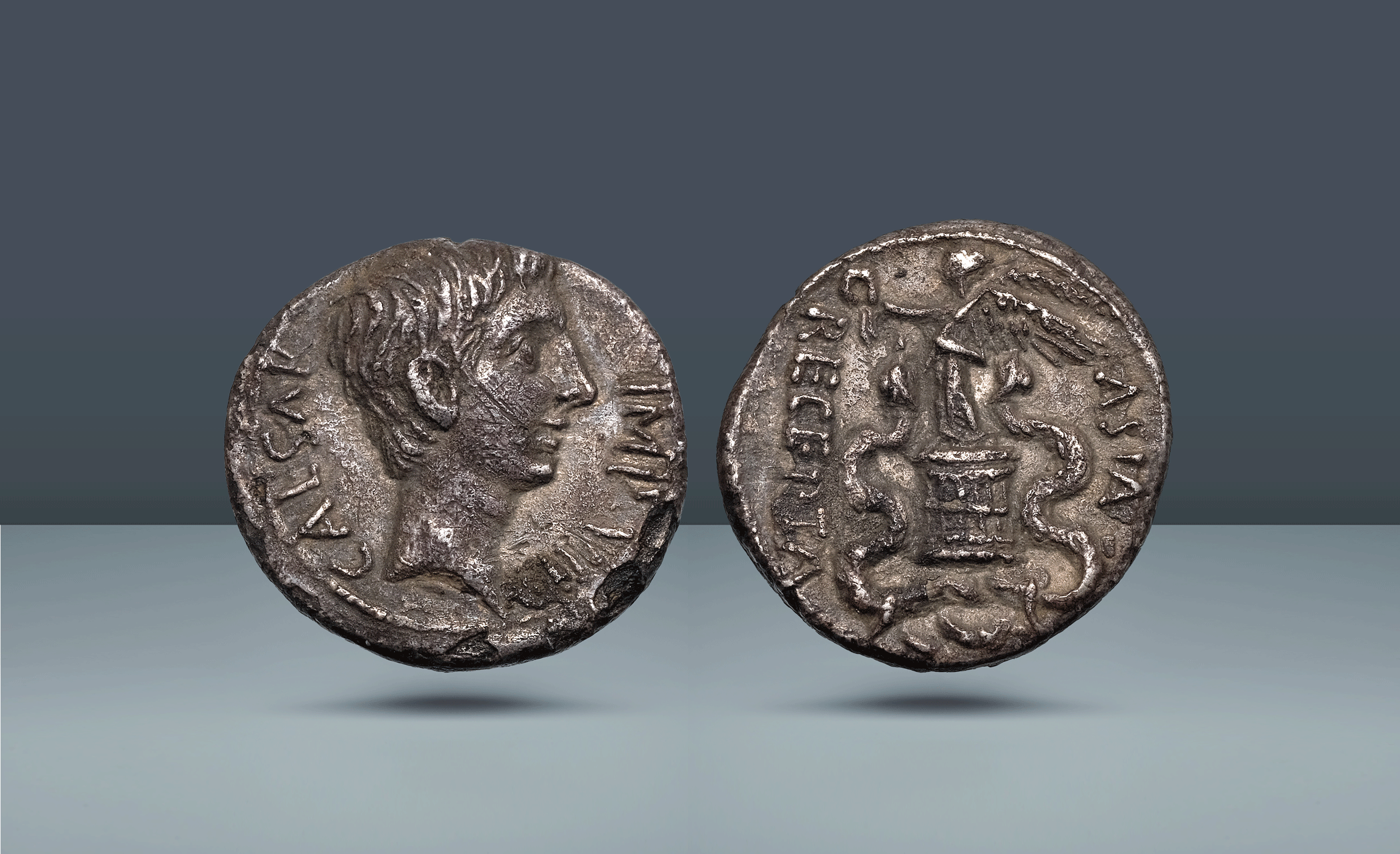
Roman Republic, Italy. Octavian, Brundisium or Rome, c. 29-28 BC
AR Quinarius, 1.49g (16mm, 2h).
CAESAR – IMP VII Bare head of Octavian r. / ASIA – RECEPTA Victory, draped, standing l. holding wreath and palm branch on cista mystica flanked by two interlaced snakes with heads erect
Pedigree: From the collection of Carl Subak. Privately purchased from David Miller in April 1990.
References: C 14, BMC 647, Sear Imperators 429, RIC 276, CBN 899 (Ephesus), King 1.
Grade: Some light marks on the cheek. Well centered and in good condition for the rare denomination. Cabinet toning. Good VF
rr1369
Scroll down for more information about this coin.
This scarce silver quinarius was struck shortly after Octavian’s decisive victory at the Battle of Actium in 31 BC and commemorates the Roman recovery of Asia Minor from the forces of Mark Antony and Cleopatra. The coin belongs to a small but historically important series celebrating Octavian’s consolidation of power and the restoration of Roman authority in the eastern provinces.
The obverse bears the inscription CAESAR – IMP VII surrounding the bare head of Octavian facing right. The title Imperator for the seventh time refers to Octavian’s acclamations by the army following his victories during the final stages of the civil wars. The portrait reflects the youthful yet authoritative image Octavian carefully cultivated during the years immediately preceding the establishment of the Principate.
The reverse carries the powerful legend ASIA RECEPTA, meaning “Asia Recovered.” Here Victory stands left, holding a wreath and palm branch, symbols of triumph and peace achieved through military success. She stands upon a cista mystica, a sacred basket associated with the Dionysiac cult and frequently used as a symbol of the province of Asia on earlier cistophoric coinage. The two intertwined serpents rising on either side further emphasize this eastern iconography. Together the imagery clearly proclaims Rome’s renewed control over the wealthy and strategically vital province after Antony’s defeat.
Quinarii were struck in much smaller quantities than denarii during the late Republic, making surviving examples notably scarce. Issues such as this one served both as circulating coinage and as potent propaganda reinforcing Octavian’s legitimacy as the savior and restorer of Rome’s eastern territories.
A pleasing example with attractive cabinet toning and good centering. While showing a few light marks on the cheek, the coin remains well preserved for this rare denomination.