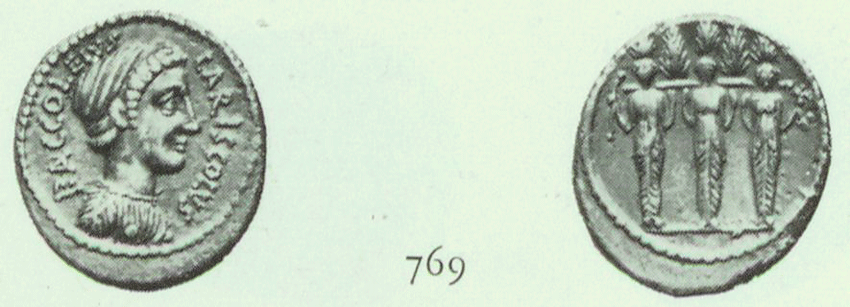
Roman Republic, Italy. P. Accoleius Lariscolus, Rome, c. 41 BC
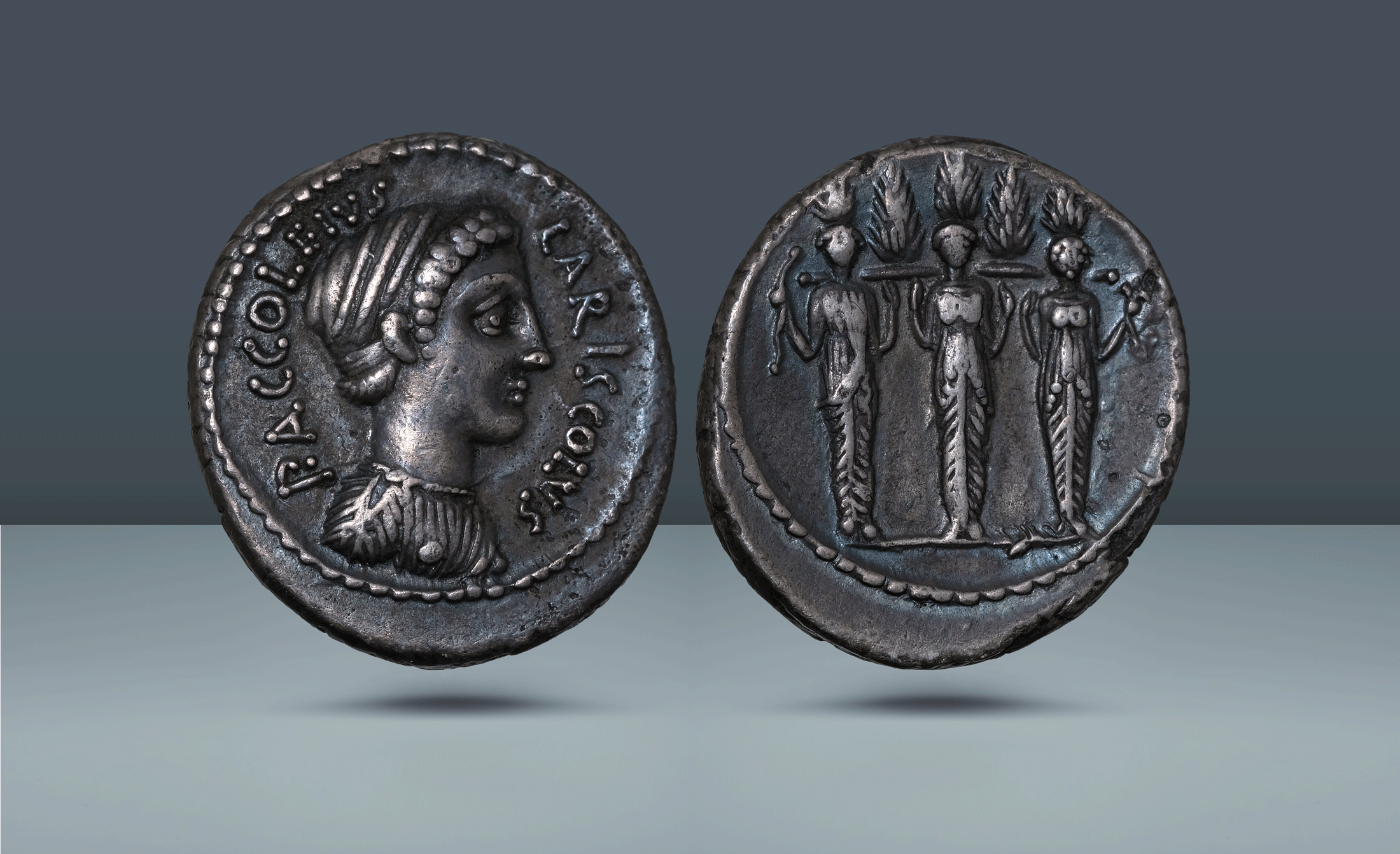
Roman Republic, Italy. P. Accoleius Lariscolus, Rome, c. 41 BC
AR Denarius, 3.83g (18.75mm, 12h).
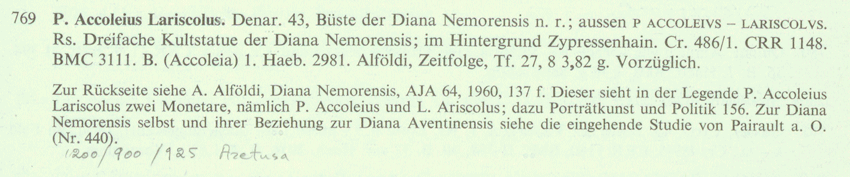
Draped bust of Diana Nemorensis to r. / Triple cult statue of Diana Nemorensis facing, supporting on their hands and shoulders a beam, above which are five cypress trees; the figure to l. holding poppy, that to r. holding lily
Pedigree: Ex Tradart 4, 1994, lot 140; Bank Leu 17, 1977, lot 769. From the Etienne Paul Nicolas (1904-1981) collection.
References: Crawford 486.1, Sydenham 1148
Grade: Minor wear on faces of cult statues. Incredibly complete issue with beautiful toning and from the Nicolas collection and sold through the monumental 1977 Leu auction. EF
rr1406
Scroll down for more information about this coin.
Diana Nemorensis was Diana "of the Wood". She stood as the goddess of a grove and sanctuary at lake Nemi, in the Alban Hills below Aricia, about sixteen miles southeast of Rome. The Romans named the lake speculum Dianae, Diana's mirror. The sanctuary was old, important, and strange enough that Romans themselves treated it as an oddity.
Before it was Roman it was Latin. Cato preserved a dedication naming Egerius Baebius of Tusculum as dictator Latinus consecrating the grove on behalf of a list of Latin peoples - Tusculum, Aricia, Lanuvium, Laurentum, Cora, Tibur, Pometia, Ardea. This makes Nemi a federal sanctuary of the Latin League, probably in the sixth century BC. When Servius Tullius reportedly founded Diana's temple on the Aventine, tradition frames it as Rome staking a rival claim to a cult that belonged to the Latins collectively. After the League was dissolved in 338, Nemi passed into Rome's orbit without losing its prestige.
Perhaps the most famous part is how the priesthood was maintained. The priest of the grove was a runaway slave who won the office by breaking a branch from a particular tree and then killing the incumbent in single combat. He would hold office until someone killed him. Strabo, Ovid, Pausanias, and Servius all describe it, and Suetonius reports Caligula arranging the death of a priest he thought had held on too long. No other Roman priesthood worked remotely like this, and Romans of the late Republic found it archaic and faintly barbarous.