
Roman Republic, Italy. P. Clodius M.f. Turrinus, Rome, c. 42 BC
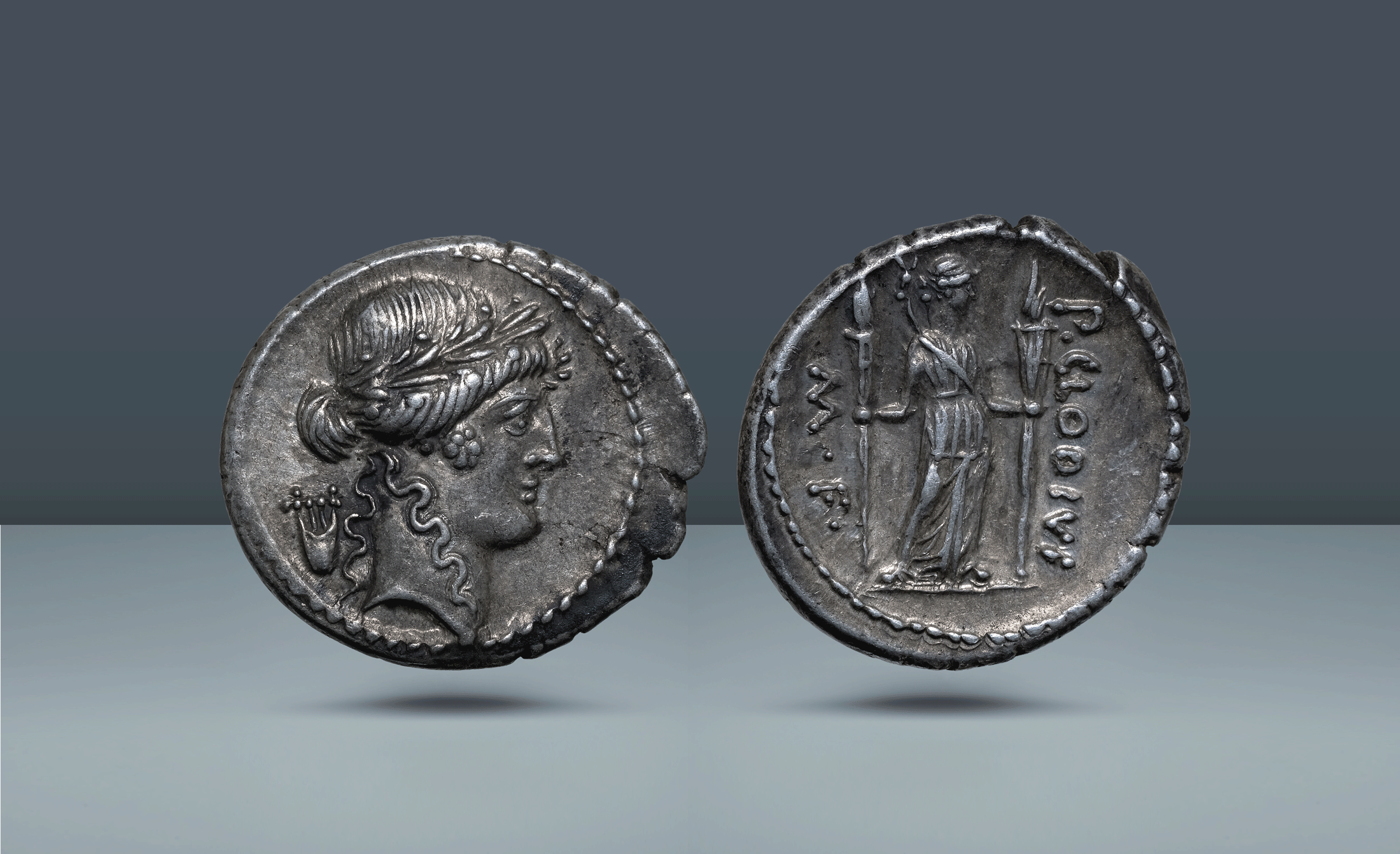
Roman Republic, Italy. P. Clodius M.f. Turrinus, Rome, c. 42 BC
AR Denarius, 3.75g (19mm, 9h).
Laureate head of Apollo to r.; behind, lyre. / P•CLODIVS M•F• Diana standing front, head to r., with bow and quiver over shoulder, holding lighted torch in each hand.
References: Crawford 494/23. Babelon Claudia 15., CRI 184
Grade: Lustrous surfaces and sharp strike. Mint State
rr1397
Scroll down for more information about this coin.
By 42 BC, the Roman Republic was in its death throes. The assassination of Julius Caesar two years earlier had plunged the Roman world into renewed civil war, and the Second Triumvirate - Octavian, Mark Antony, and Lepidus - now ruled with iron authority, their names and portraits increasingly dominating the coinage of the era. Against this dramatic backdrop, the college of moneyers continued to function, issuing silver denarii in the traditional Republican manner even as the old constitutional order crumbled around them.
P. Clodius M.f. Turrinus served as one of the tresviri monetales - the board of three magistrates responsible for overseeing the mint at Rome - and his issues from this year are among the most artistically accomplished of the late Republican series. Little is known of his personal biography, though his name suggests a connection to the broader Clodian gens, one of Rome's great patrician families. His cognomen Turrinus ("of the tower") may reflect a family branch distinction, and the choice of Apollo and Diana for his coinage was almost certainly deliberate - the twin deities of light, prophecy, and the hunt carried powerful resonances in a period when divine favor and legitimacy were fiercely contested by rival warlords.
The obverse presents a beautifully rendered laureate head of Apollo facing right, with a lyre shown behind - Apollo's most iconic attribute, linking him to poetry, music, prophecy, and civilized order. The pairing of Apollo with his lyre was a deeply traditional image, but one with fresh urgency in 42 BC: Octavian had begun cultivating Apollo as his personal patron deity, a association that would reach its full expression after Actium. Whether Clodius intended an implicit nod to Octavian's ideology or simply drew on longstanding religious imagery remains an open question - but the iconographic choice places this coin squarely at the intersection of art, religion, and politics.
The reverse depicts Diana - Apollo's twin sister - standing frontally, her head turned to the right, bow and quiver over her shoulder, and holding a lighted torch in each raised hand. This torchbearing Diana is a striking and relatively unusual variant of the goddess's standard imagery, evoking her role as Hecate-Trivia, the goddess of crossroads and nocturnal mystery, as well as the ritual torch-races held in her honor. The moneyer's name P•CLODIVS M•F• frames the composition, asserting his authority over one of Rome's most treasured institutions in its final Republican years.