
Roman Republic, Italy. P. Clodius Turrinus. Rome , c. 42 BC
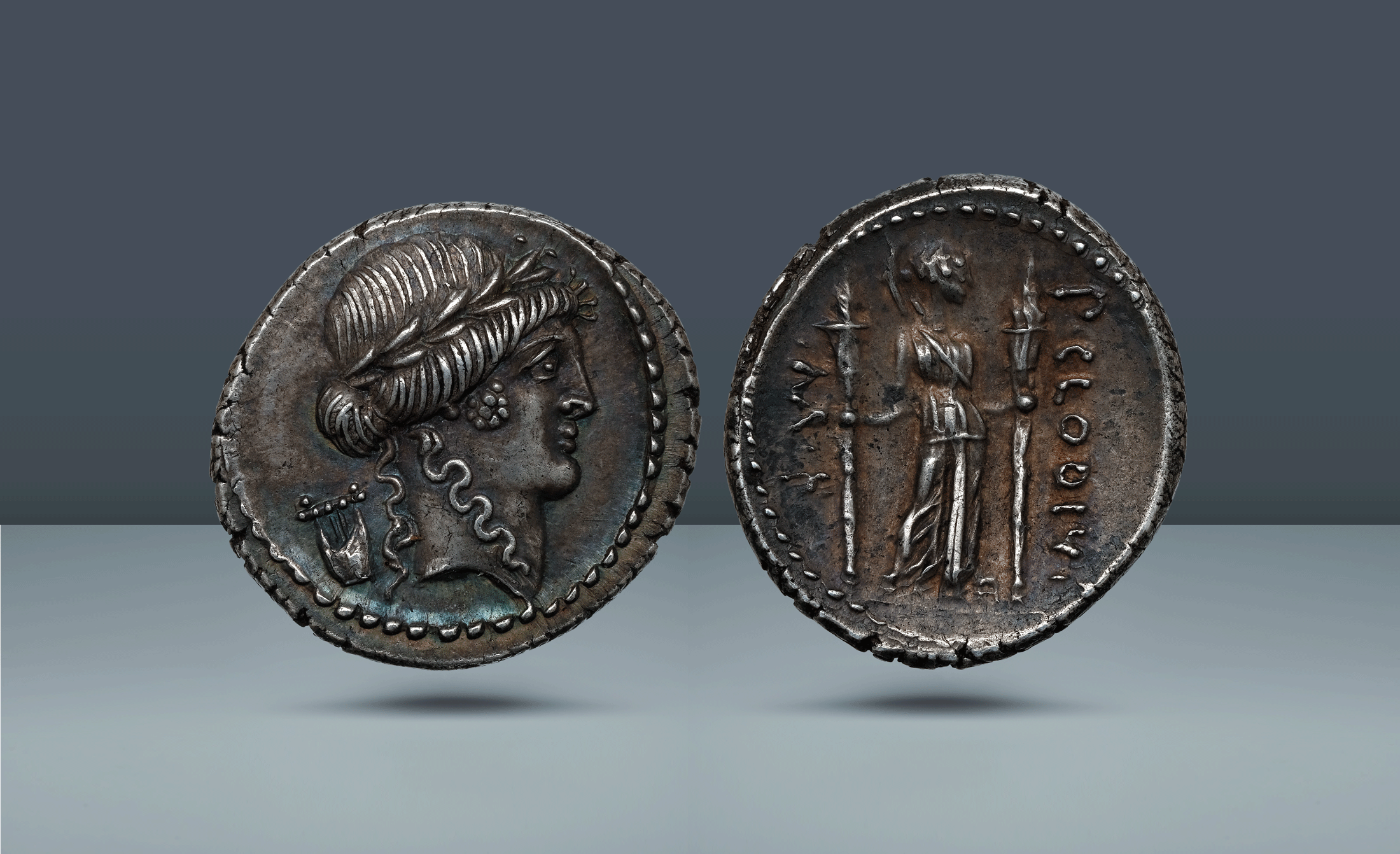
Roman Republic, Italy. P. Clodius Turrinus. Rome , c. 42 BC
AR Denarius, 3.66g (19mm, 10h)
Laureate head of Apollo r. with lyre behind / P•CLODIVS M•F Diana standing facing, head to r., with bow and quiver over shoulder, holding two lighted long torches.
Pedigree: Purchased privately from Edward Waddell
References: Craw 494/23; Syd 1117; Sear Imperators 192
Grade: Lovely toning and some bluish iridescence at bottom of obverse. Toned EF
rr1409
Scroll down for more information about this coin.
Rome in 42 BC belonged to the Second Triumvirate. In late 43 BC Mark Antony, Octavian and Lepidus had been given legal powers to restore the state, and they began by drawing up proscription lists. Anyone named could be killed for a reward and have their property taken. Cicero died in December 43, and the killings and confiscations ran on into the new year, when Lepidus and L. Munatius Plancus held the consulship.
On 1 January the Senate declared Julius Caesar a god, Divus Iulius, and voted him a temple in the Forum. This let Octavian call himself divi filius, son of the god, a title he would lean on for the rest of his life. The moneyers of that year put the triumvirs' portraits and the deified Caesar on their coins.
Armies were expensive, and the triumvirs went looking for money wherever they could find it. They tried to tax 1,400 of the richest women in Rome. Hortensia, daughter of the orator Hortensius, spoke against the tax in the Forum, and the number of women affected was cut.
The decisive fighting happened far from the city. Brutus and Cassius controlled the eastern provinces, and in October Antony and Octavian met them at Philippi in Macedonia. There were two battles about three weeks apart. Cassius killed himself after the first, wrongly believing that all was lost, and Brutus did the same after the second.
With the assassins gone, Antony took charge of the East. Octavian went back to Italy to find land for tens of thousands of veterans, a job that soon led to the Perusine War. Sextus Pompey still held Sicily and could choke off Rome's grain supply. In November, Livia gave birth to Tiberius, the future emperor.