
Roman Republic, Italy. T. Carisius. Rome, c. 46 BC
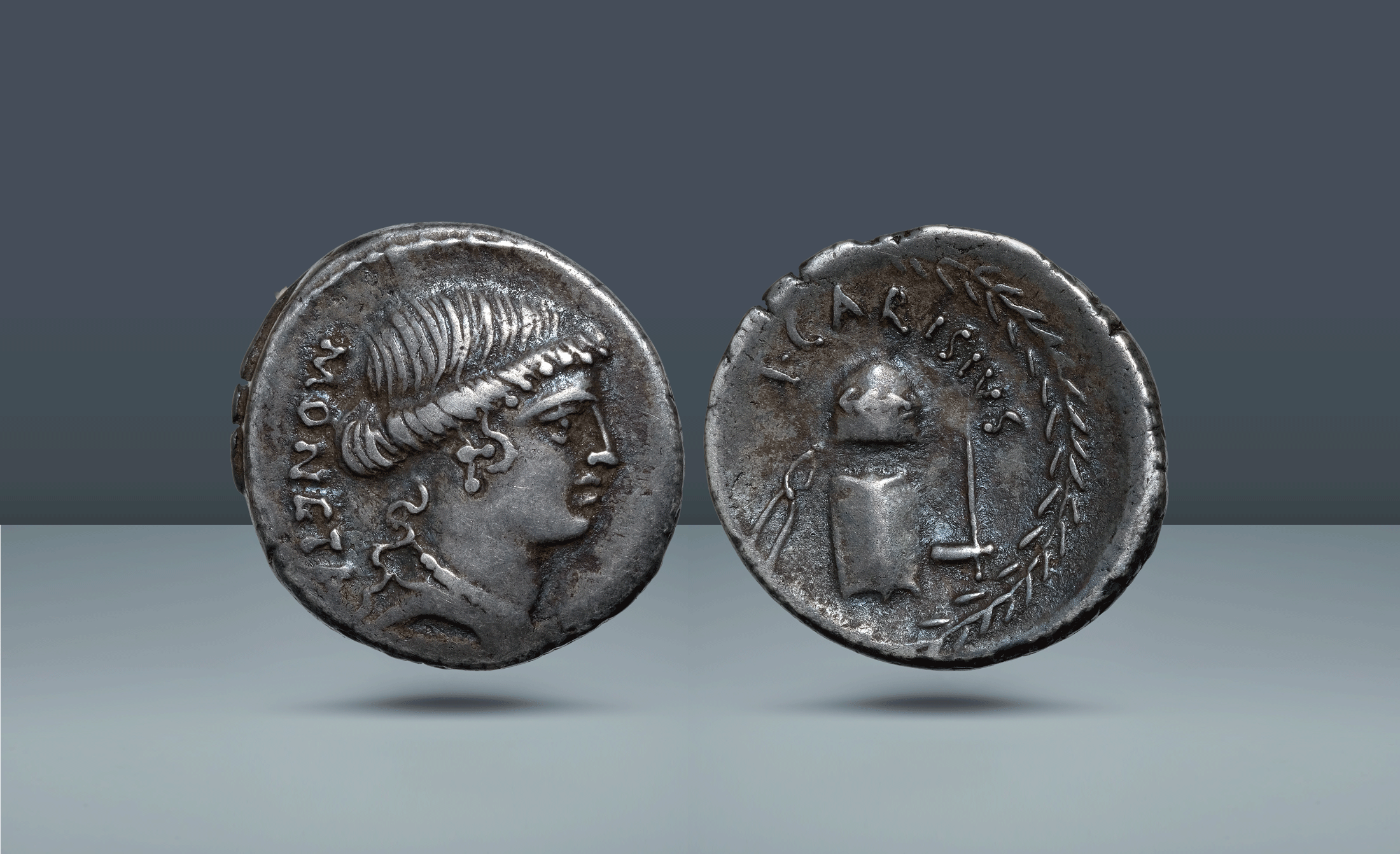
Roman Republic, Italy. T. Carisius. Rome, c. 46 BC
AR Denarius, 3.85g (19mm, 4h)
Bust of Juno Moneta, MONETA before / Anvil, tongs and hammer within a wreath, T·CARISIVS above
Pedigree: Purchased from Baldwin's privately.
References: Crawford 464/2; Sydenham 982a
Grade: Lovely toning with some minor areas of wear. VF+
rr1417
Few Roman coins speak so directly about themselves as this denarius of Titus Carisius. Struck in 46 BC, the year Julius Caesar returned to Rome after his decisive victory at Thapsus, it comes from a moneyer whose output was unusually varied and inventive, and this type stands out within it as a coin about the making of coins. The obverse presents Juno Moneta, the aspect of the goddess whose temple on the Arx of the Capitoline was closely associated with the Roman mint. Her epithet, traditionally connected with the Latin monere, "to warn," passed through the mint's association with her sanctuary into the vocabulary of Rome and from there into our own words "mint" and "money."
The reverse turns from the divine patroness to the workshop itself. An anvil, tongs and hammer, the implements of the moneyer's craft, are set within a wreath beneath the name of T. Carisius. It is among the very few ancient depictions of the tools used to strike coinage, and for that reason it has long been prized by collectors and historians as a rare visual record of how the coins they study were actually produced. Placing these humble instruments within a wreath elevates the labor of the mint into something honored and civic, a fitting statement at a moment when Caesar's coinage was flooding Rome to pay his armies and fund his triumphs.
This example is well centered on a full flan, with an attractive, even portrait of Juno and a clearly legible reverse showing each tool distinctly. Lovely toning enhances both sides, and the minor areas of wear do little to diminish the eye appeal of this iconic type. Purchased privately from Baldwin's, it is an excellent representative of one of the most meaningful designs of the late Republic, and a natural centerpiece for any collector drawn to the history of coinage itself.