Roman Republic. M. Furius L.f. Philus, Rome
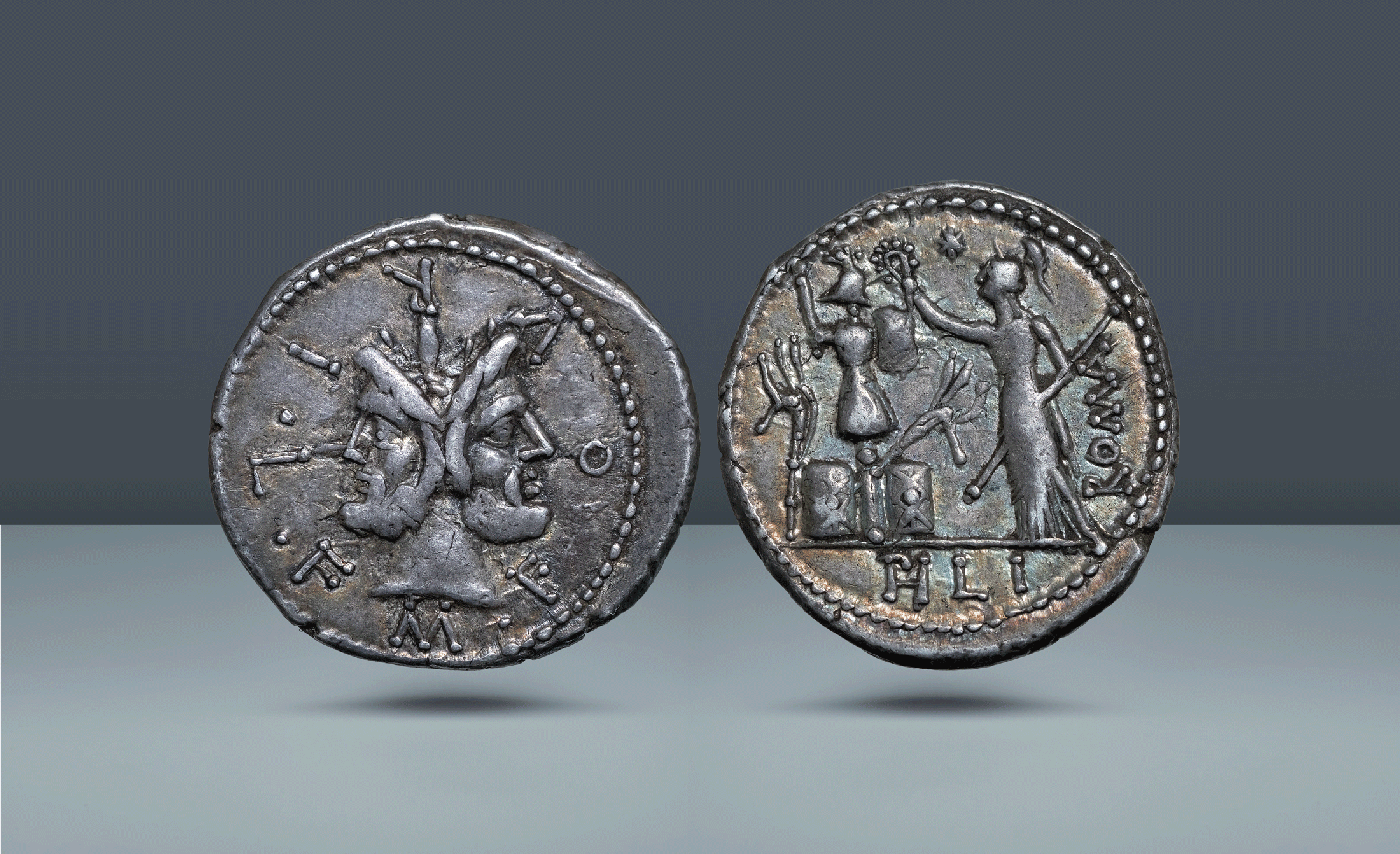
Roman Republic. M. Furius L.f. Philus, Rome
AR Denarius, 3.93g (21mm, 3h).
M FOVRI L F around Janus head; dotted border / Roma standing left erecting trophy
Pedigree: Ex Mark Salton (Schlessinger) Collection, 1915-2005
References: Moretti, RRSC, Vol. 2, D80. Crawford 281/1. Sydenham 529. RSC Furia 18
Grade: Light overall wear. Iridescent toning and pleasant. Good VF+
rr1391
Scroll down for more information about this coin.
This coin is from the Mark Salton (Schlessinger) collection. The Schlessinger family occupies a distinguished-and tragic-place in the history of 20th-century classical collecting. Felix Schlessinger (1878–1944) was a German-born art historian, dealer, and connoisseur whose scholarly eye and humanistic approach shaped important early American collections of classical antiquities and ancient coins. Active in Germany and Switzerland before the rise of National Socialism, Schlessinger was deeply embedded in the intellectual, academic, and museum networks of pre-war Europe.
As a Jewish scholar and dealer, Schlessinger became a direct victim of Nazi persecution. He was arrested and ultimately killed by the Nazis, a fate that befell many members of Europe’s Jewish intellectual and cultural elite. His death represents not only a personal tragedy, but also the violent rupture of a long-standing tradition of Central European scholarship, connoisseurship, and collecting that flourished prior to 1933.
Portions of Schlessinger’s collection survived the war and passed through family hands in the post-war period. The Mark Salton Collection (1915–2005)-Salton having been born Mark Schlessinger-reflects the continuation of this intellectual lineage, emphasizing careful preservation, long-term custodianship, and a historically informed approach to collecting rather than commercial turnover.
Coins from the Schlessinger–Salton family thus stand not only as artifacts of the ancient world, but also as witnesses to the cultural destruction of the Nazi era and to the survival of knowledge, memory, and responsibility across generations.