
Roman Republic. Mn Acilius Gabrio, Rome, c. 49 BC
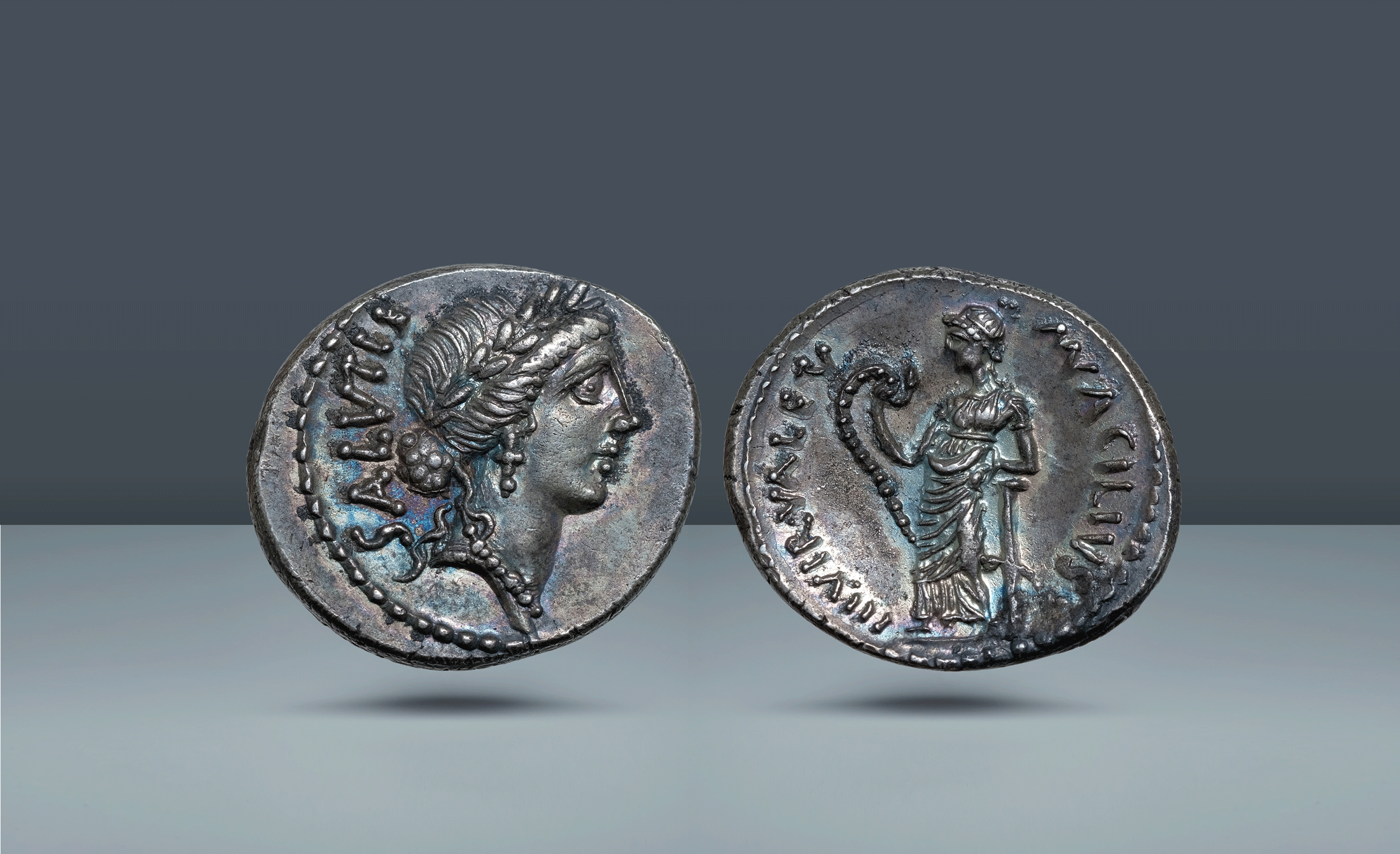
Roman Republic. Mn Acilius Gabrio, Rome, c. 49 BC
AR Denarius, 4.01g (19mm, 6h).
Laureate head of Salus right; behind, SALVTIS upwards / Valetudo standing left, resting left arm on column and holding snake; on right, MN.ACILIVS; on left, III.VIR.VALETV
Pedigree: Ex Tom Cederlind, Portland, Oregon, c. 1990
References: Moretti, RRSC, Vol. 2, D234a. Crawford 442/1a. Sydenham 922
Grade: Beautiful iridescent toning and sharp strike. A bit o/c on obverse. Mint State
rr1388
The denarius of Manius Acilius Glabrio, minted in Rome in 49 BC, represents a notable example of health deities on late Republican coinage. This coin features a distinctive pairing of related goddesses: the obverse displays the laureate head of Salus with the legend SALVTIS, while the reverse shows Valetudo standing left, resting her left arm on a column and holding a serpent in her right hand. The choice to feature both Salus and Valetudo is quite meaningful. While both goddesses relate to health and well-being, Salus traditionally embodied the broader concept of safety and public welfare, whereas Valetudo personified individual health and physical condition.
The gens Acilia was a plebeian family that flourished from the middle of the third century BC until at least the fifth century AD, and is considered one of Rome's longest-lived political families. The most famous Acilius Glabrio was the consul of 191 BC who defeated Antiochus the Great at Thermopylae and was credited with building Rome's Temple of Piety. The specific reason the moneyer Manius Acilius Glabrio chose health deities for his 49 BC issue remains uncertain, though several possibilities exist: the family may have had ancestral connections to temples or cults of these goddesses, an Acilius might have recovered from serious illness and made dedications to them, or the choice could reflect concerns about health during the turbulent late Republican period marked by civil war.