
Roman Republic, Q. Pomponius Musa. Rome, c. 66 BC
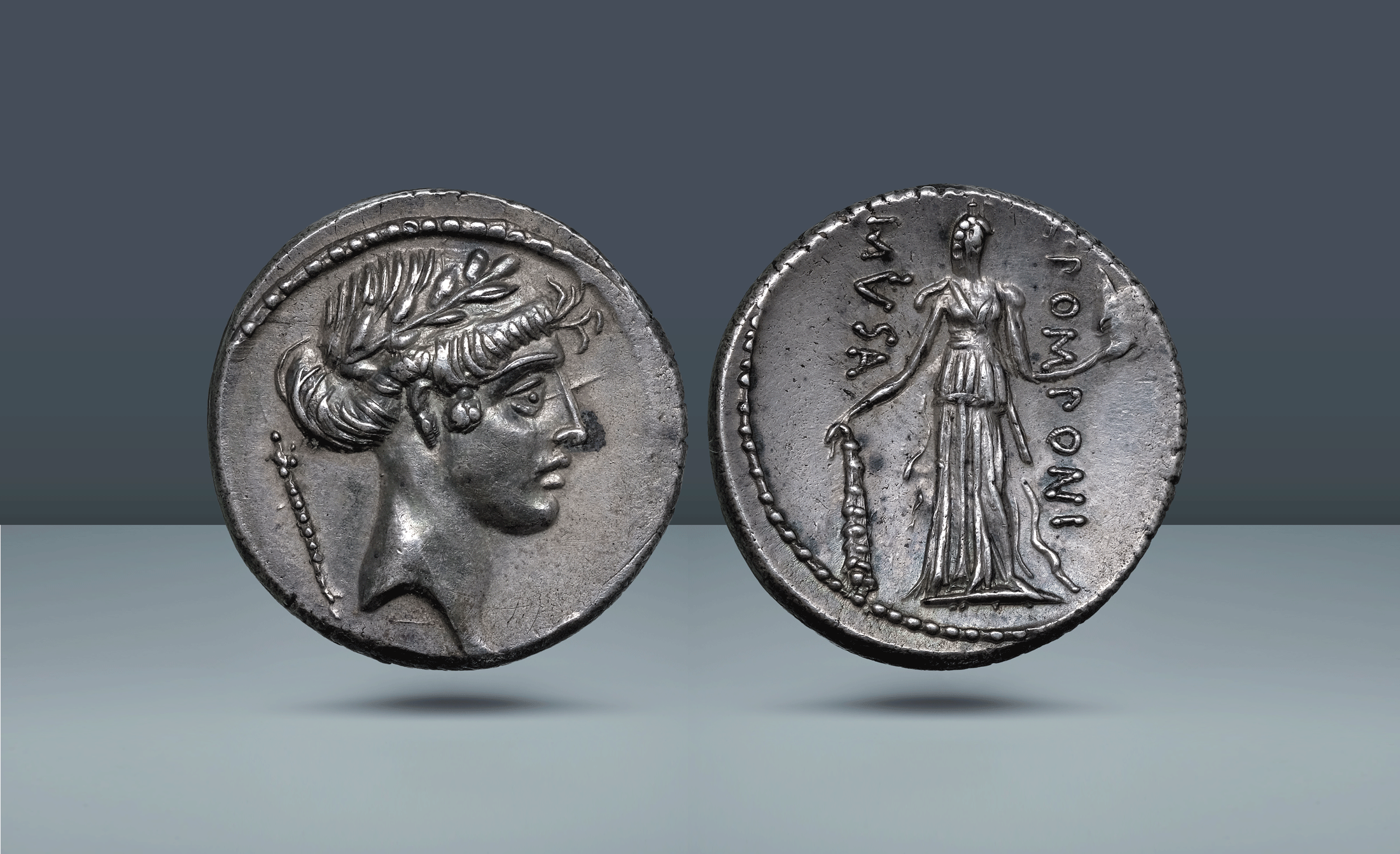
Roman Republic, Q. Pomponius Musa. Rome, c. 66 BC
AR Denarius, 3.75g (17.5mm, 6h)
Laureate head of Apollo r.; behind, scepter. / POM - PONI - MVSA, Melpomene (Muse of tragic poetry and of lament) standing facing, with sword at her belt, holding club and theater mask.
Pedigree: From the collection of Hugo von Zeigler-Schindler (ended 1966)
References: Crawford 410/4; Sydenham 816; RRSC D202.4
Grade: Small speck of black encrustation at nose of Muse on obverse. Beautifully toned and sharply struck. Theater mask is at edge of flan and is distorted due to shift during striking. EF
rr1434
Scroll down for more information about this coin.
Although relatively little is known about the moneyer himself, Q. Pomponius Musa’s coinage is among the most recognizable series of the Roman Republic. The series consists of ten principal reverse types depicting the nine Muses and Hercules Musarum, or Hercules as leader of the Muses. The choice of imagery was a direct reference to the moneyer's cognomen, Musa. Each of the nine Muses is distinguished by her individual attributes and a corresponding symbol behind the portrait of Apollo on the obverse.
This denarius depicts Melpomene, the Muse of tragedy. Her name derives from the Greek verb melpō, meaning to sing or celebrate in song. Greek tragedy developed from religious and musical traditions associated with the worship of Dionysos. By the fifth century BC, dramatic competitions had become an important part of the annual Great Dionysia in Athens. It was through these festivals that playwrights such as Aeschylus, Sophocles and Euripides presented many of their works. Music and the chorus played an integral role in these performances, providing commentary on the dramatic action through song and dance.
Melpomene is depicted holding a theatrical mask and club with a sword at her waist. The mask was an essential element of ancient Greek theater. It allowed the same actors to portray different characters throughout a performance.