Anglo Saxon - Danish Kings, England. Harthacnut, Ælfwine (Moneyer), 1035-1042 AD Wilton, c. 1040 - 1042 AD
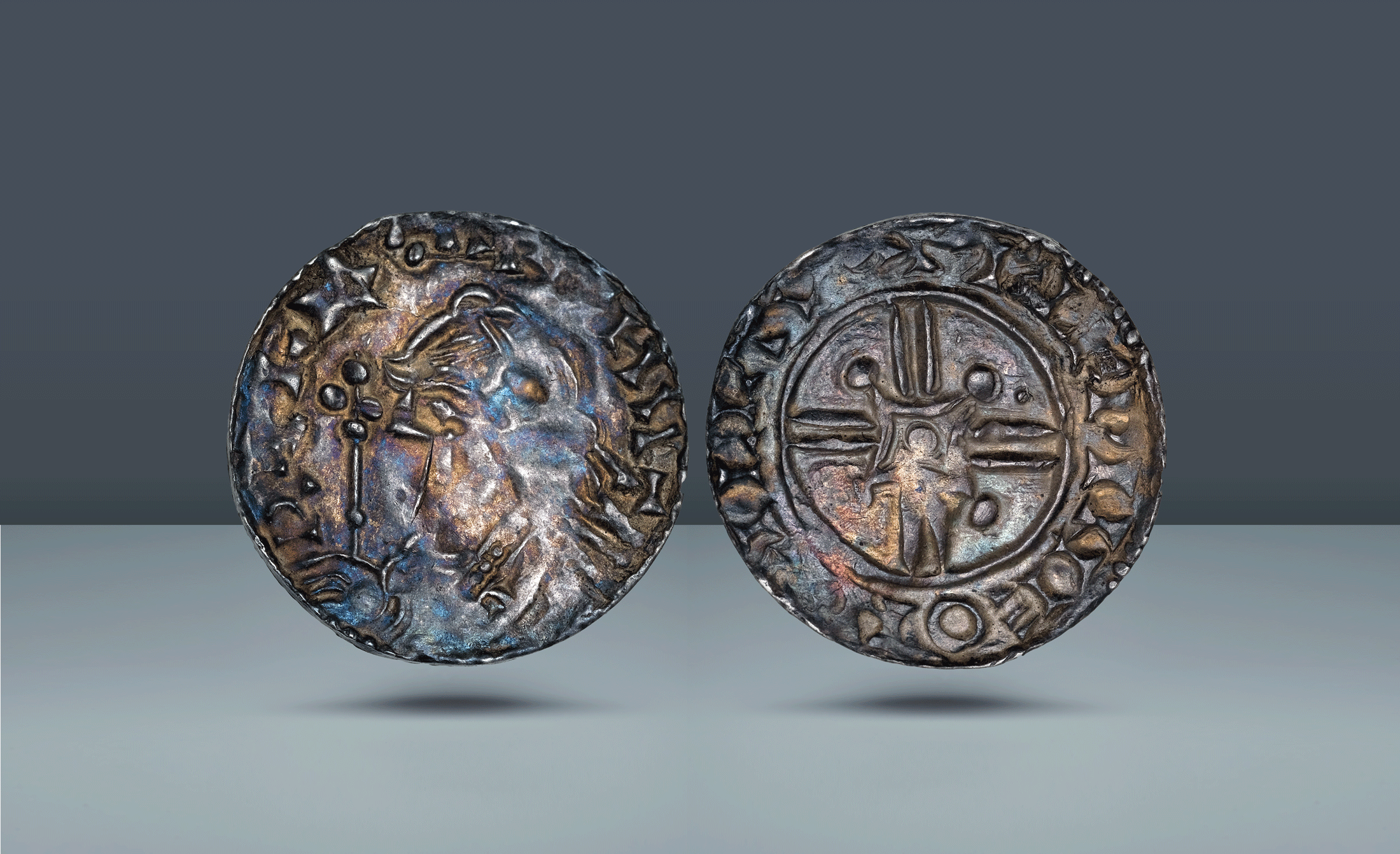
Anglo Saxon - Danish Kings, England. Harthacnut, Ælfwine (Moneyer), 1035-1042 AD Wilton, c. 1040 - 1042 AD
AR Penny, 1.01g (17.5mm, 12h).
Diademed and armored bust to l., holding scepter / Quadrilateral, with pellet in center. All over voided short cross.
Pedigree: From the L. E. Bruun Collection. Accompanied with original red Bruun cabinet ticket
References: Arm and Sceptre (BMC xvii) type in the name of Cnut, S-1169, North-799, cf. Hild-3648, SCBI Cop(Cnut)-3988 (plate coin), Bruun-993 (this coin)
Grade: Previously grade NGC Unc Details--Peck Marked. Very rare posthumous type. Beautiful cabinet iridescent toning. EF for issue
wc1327
Scroll down for more information about this coin.
Harthacnut's brief and unhappy reign left one of the more curious footnotes in Anglo-Saxon numismatics, and this penny sits right at its center. He was the son of Cnut and Emma of Normandy, born to the purple on both sides, yet when his father died in 1035 he was detained in Denmark by unrest that demanded his attention, and England slipped instead to his half-brother Harold Harefoot. Harthacnut only secured the English throne in 1040, after Harold's death cleared the way, and he marked the transition with a vengeance grim enough to become legend, having Harold's corpse exhumed and cast into a fen. His own rule lasted barely two years, remembered for crushing taxation and for his death at a wedding feast in Lambeth, said to have collapsed drink in hand. This coin belongs to the Arm and Sceptre type struck in the final phase of that reign, and it carries a detail that makes the series genuinely strange to handle: rather than bearing Harthacnut's own name, the obverse legend is struck in the name of his father, Cnut, years after Cnut had died. Numismatists read this as a deliberate act of continuity, a young and none-too-secure king borrowing his father's already-established royal name to lend his own coinage legitimacy, and it makes this a posthumous issue in the truest sense, minted for one king under the identity of another. The obverse shows the diademed, armored bust left, scepter in hand, while the reverse carries the type's signature device, a voided short cross beneath a quadrilateral with a pellet at center, struck here at Wilton under the moneyer Ælfwine. The coin's own history is as distinguished as its numismatic puzzle: it comes from the celebrated collection of L. E. Bruun, the Danish shipping magnate and one of the great early twentieth-century collectors of English and Scandinavian coinage, published in the standard Sylloge reference for the Copenhagen cabinet, and it retains its original red Bruun cabinet ticket, an unbroken thread back to that formation. Light peck marks, the small test-cuts and nicks Viking-age recipients used to check silver content, remain visible, consistent with a coin that circulated in a bullion-conscious economy, but the surfaces beneath carry beautiful iridescent cabinet toning built up over more than a century of careful storage, giving the piece an EF appearance for the issue despite its ancient marks of commerce.