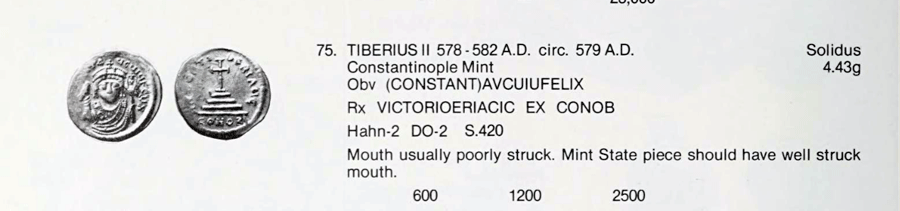
Byzantine Empire, Constantinople. Tiberius II Constantine, 574-582 AD, c. 578-582 AD
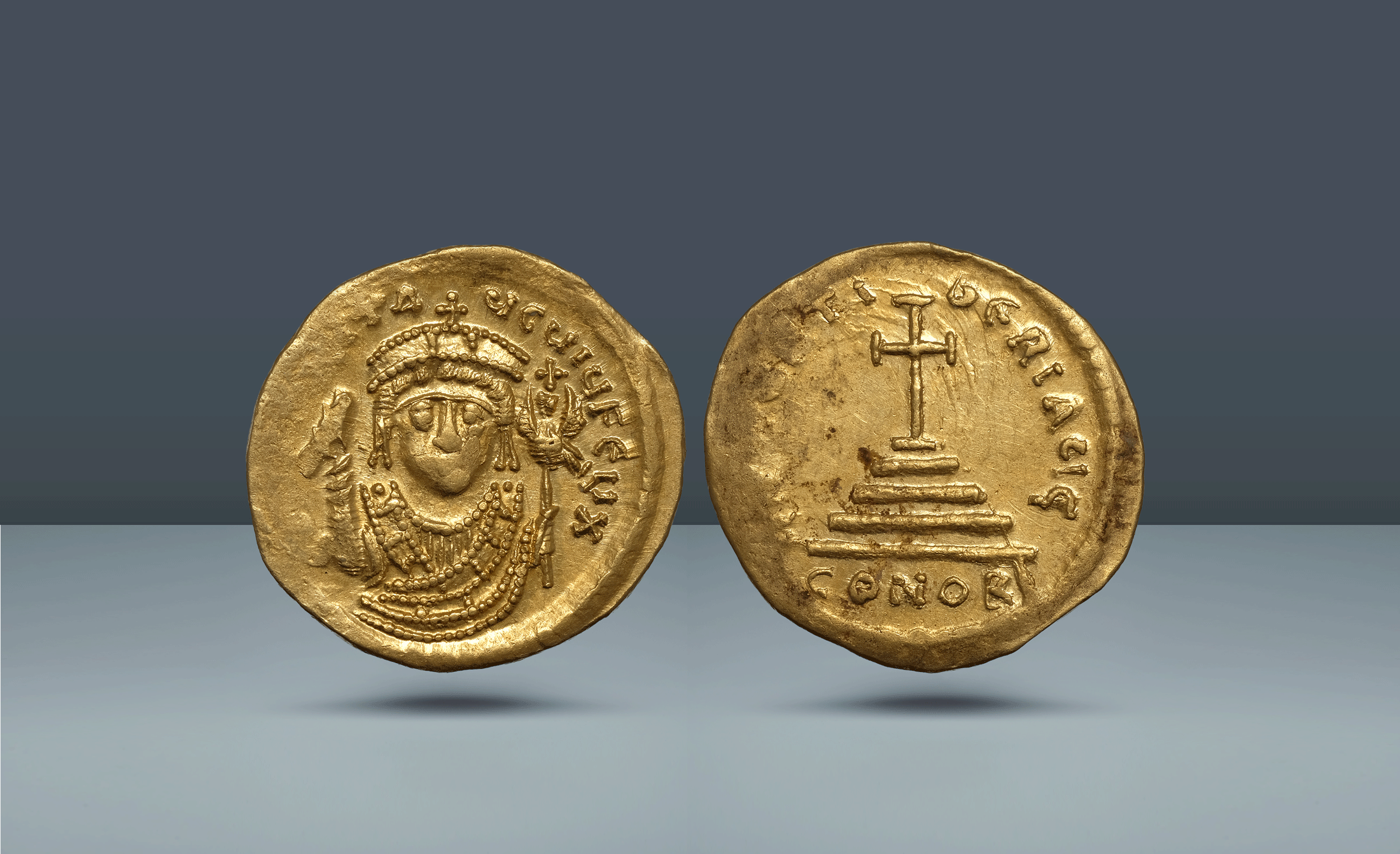
Byzantine Empire, Constantinople. Tiberius II Constantine, 574-582 AD, c. 578-582 AD
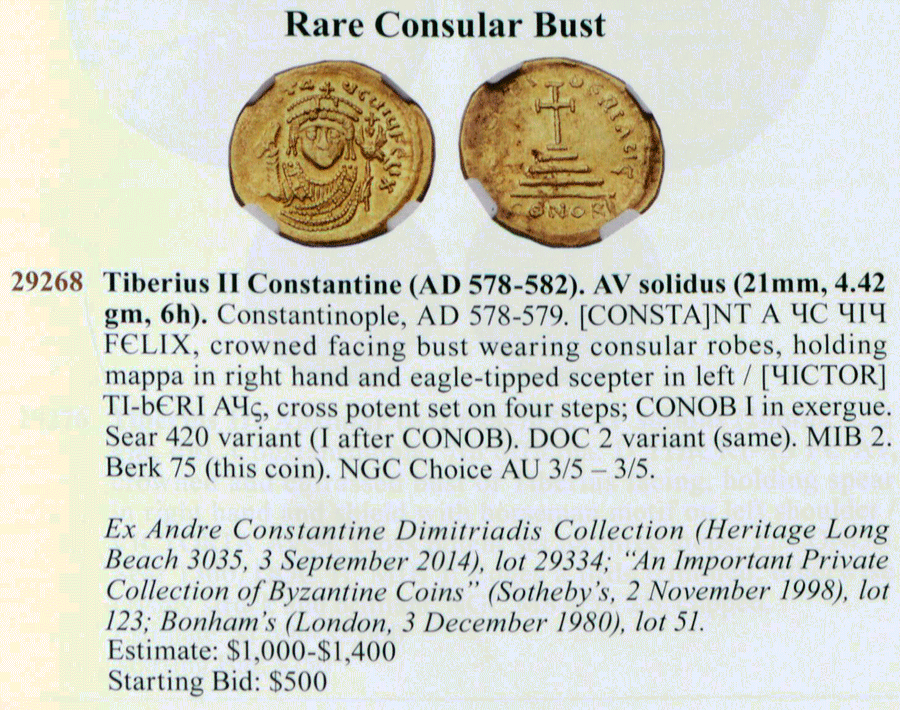
AV Solidus, 4.42g (20.5mm, 6h).
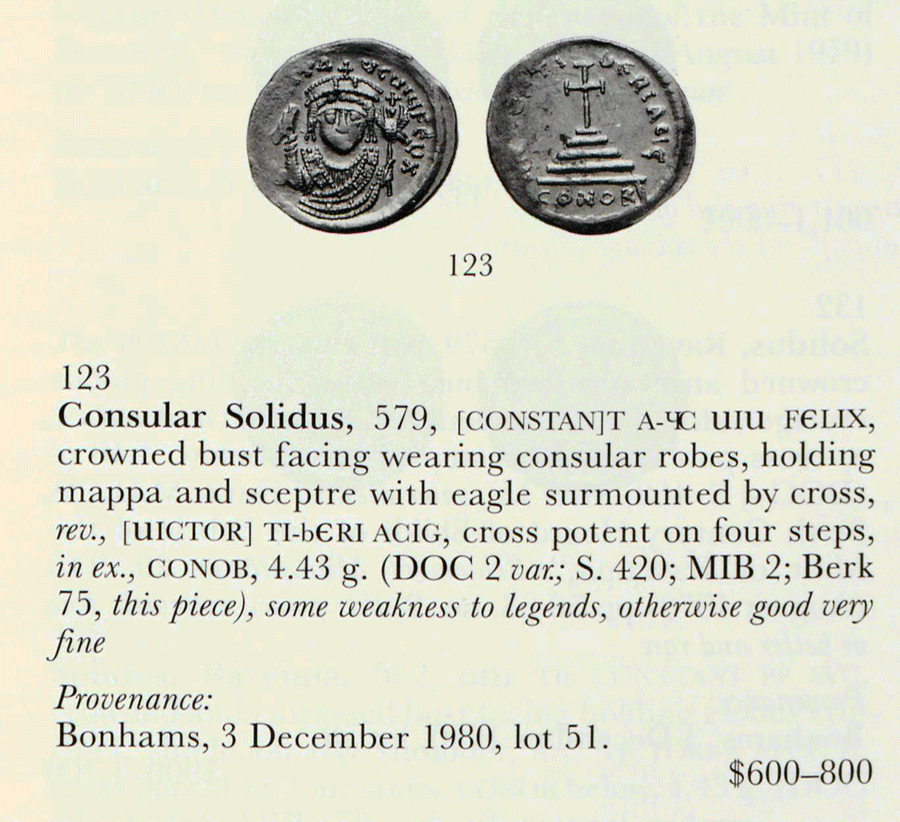
[CONSTAN]T A ЧC ЧIЧ FЄLIX, crowned facing bust, wearing consular robes, holding mappa in raised right hand and eagle-tipped scepter surmounted by cross in left hand / [ЧICTOR] TI bЄRI ACIς, cross potent set on four steps; CONOB.
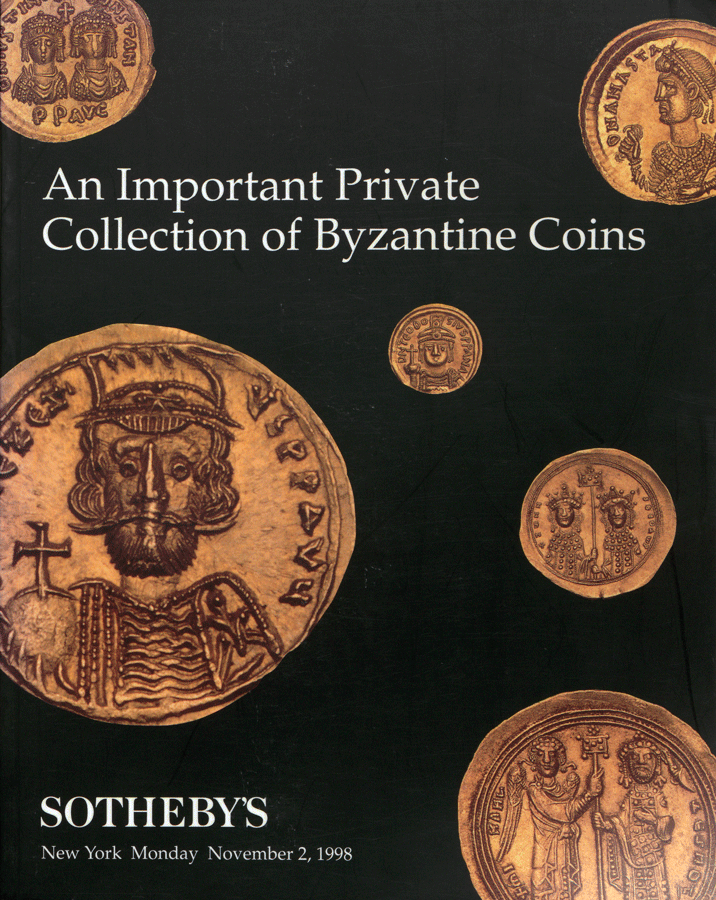
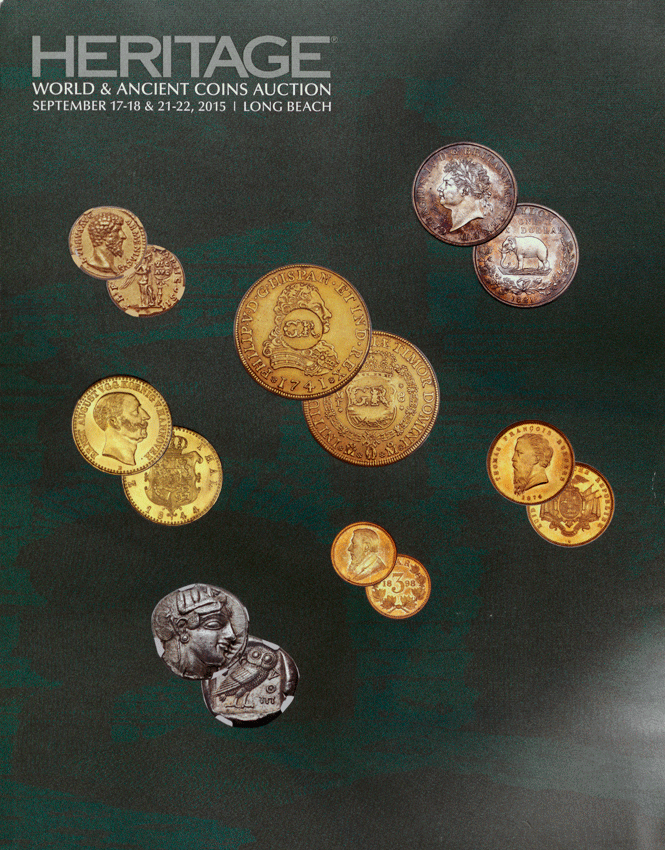
Pedigree: Ex Heritage 3042, 17 Sept, lot 29268; Heritage 3035, 3 Sept 2014, lot 29334; Sotheby's New York, 2 Nov 1998, lot 123; Bonham's, 3 Dec 1980, lot 51. From the Andre Constantine Dimitriadis and Harlan J Berk collections, as well as "An Important Private Collection of Byzantine Coins"
References: DOC 2; MIBE 2; Berk, Roman 75 (this coin); SB 420 S.420.
Grade: Previous NGC encapsulation 4184433-001, graded Ch AU, Strike: 3/5, Surface: 3/5.
bz1088
Scroll down for more information about this coin.
Tiberius II Constantine ruled the Byzantine Empire from 574 to 582 AD, a critical period that saw the empire struggling to maintain its territorial integrity against mounting external pressures. Originally named Tiberius, he adopted the name Constantine upon his elevation-a deliberate invocation of the empire's illustrious founder to legitimize his rule and inspire confidence during troubled times. Tiberius rose to power as comes excubitorum (commander of the palace guard) under Emperor Justin II. When Justin suffered a mental breakdown in 574, Empress Sophia selected Tiberius as Caesar and regent. Upon Justin's death in 578, Tiberius became sole Augustus, though he faced immediate challenges on multiple fronts including Persian Wars with the Sasanian Empire, devastating Avar and Slavic incursions into the Balkans, severe depletion of the imperial treasury, and continued religious tensions. Despite these challenges, Tiberius earned a reputation for generosity and justice, praised by contemporary sources for his liberal disbursement of funds to the military and the poor, though this largesse further strained imperial finances. His untimely death in 582 cut short what many hoped would be a rejuvenating reign.
The gold solidus remained the cornerstone of Byzantine monetary policy throughout Tiberius II's reign. Weighing approximately 4.4 grams of high-purity gold, the solidus served as the international currency of the Mediterranean world and beyond, accepted from Western Europe to India. This particular issue represents the standard type for Tiberius's sole reign as Augustus, maintaining the weight and fineness standards established by Constantine I nearly 250 years earlier-a testament to Byzantine monetary stability even during periods of military and political turmoil.
The coin's imagery presents a fascinating blend of imperial Roman tradition and emerging Byzantine Christian symbolism. The obverse depicts Tiberius in consular robes holding the mappa-the ceremonial cloth dropped to signal the start of games in the Circus. This iconography deliberately evokes the traditional Roman consulship, linking Byzantine emperors to the ancient republican magistracy and emphasizing continuity with Rome's glorious past. By the late 6th century, the consulship had become a purely ceremonial honor bestowed exclusively upon emperors, but its imagery remained potent propaganda. The emperor's scepter is crowned with an eagle and cross, merging the ancient Roman eagle (symbol of Jupiter and imperial authority) with the Christian cross. This synthesis represents the Byzantine ideology of Christian Roman Empire-a state that saw itself as the direct continuation of Rome but under explicitly Christian auspices.
The reverse features a cross potent (a cross with bars at the ends of each arm) set on four steps, representing Golgotha. The inscription ЧICTOR[I] TI bЄRI ACIς ("Victory to Tiberius Augustus") explicitly frames imperial success in Christian terms. The CONOB mark in the exergue indicates the coin was struck at Constantinople (CON) from refined gold (OB = obryzum, meaning pure gold).
This solidus carries exceptional provenance documentation, having passed through some of the most important Byzantine coin collections and auctions of the past 45 years. Harlan J. Berk was one of the most respected names in ancient numismatics, a pioneering dealer and scholar who published extensively on Roman and Byzantine coinage. This coin is illustrated as plate coin 75 in his seminal work "Roman Gold Coins of the Medieval World." The Andre Constantine Dimitriadis Collection was a distinguished assemblage of Byzantine coins celebrated for its quality and historical significance. The anonymous Sotheby's sale of 1998, "An Important Private Collection," was a landmark event in Byzantine numismatics, featuring museum-quality specimens that had been off the market for decades. This documented pedigree significantly enhances the coin's desirability through multiple expert examinations over decades, association with important collections and collectors, publication in Berk's reference work, and established market history across major auction houses.
Coins of Tiberius II Constantine hold special significance for collectors. His eight-year reign produced a relatively limited coinage, particularly in his name alone (as opposed to coins struck under Justin II with Tiberius as Caesar). These coins bridge the classical Roman imperial style and the more explicitly Byzantine aesthetic that would emerge under Maurice Tiberius and his successors. Tiberius II's solidi represent one of the last emissions to regularly employ consular imagery, a tradition that would largely fade in subsequent decades as Byzantine coinage became increasingly dominated by religious iconography. Despite financial pressures, the Constantinople mint maintained exceptional standards during this period, producing solidi of consistent weight and purity that upheld Byzantine monetary credibility.