
Argolis, Argos. c. 270-260/50 BC
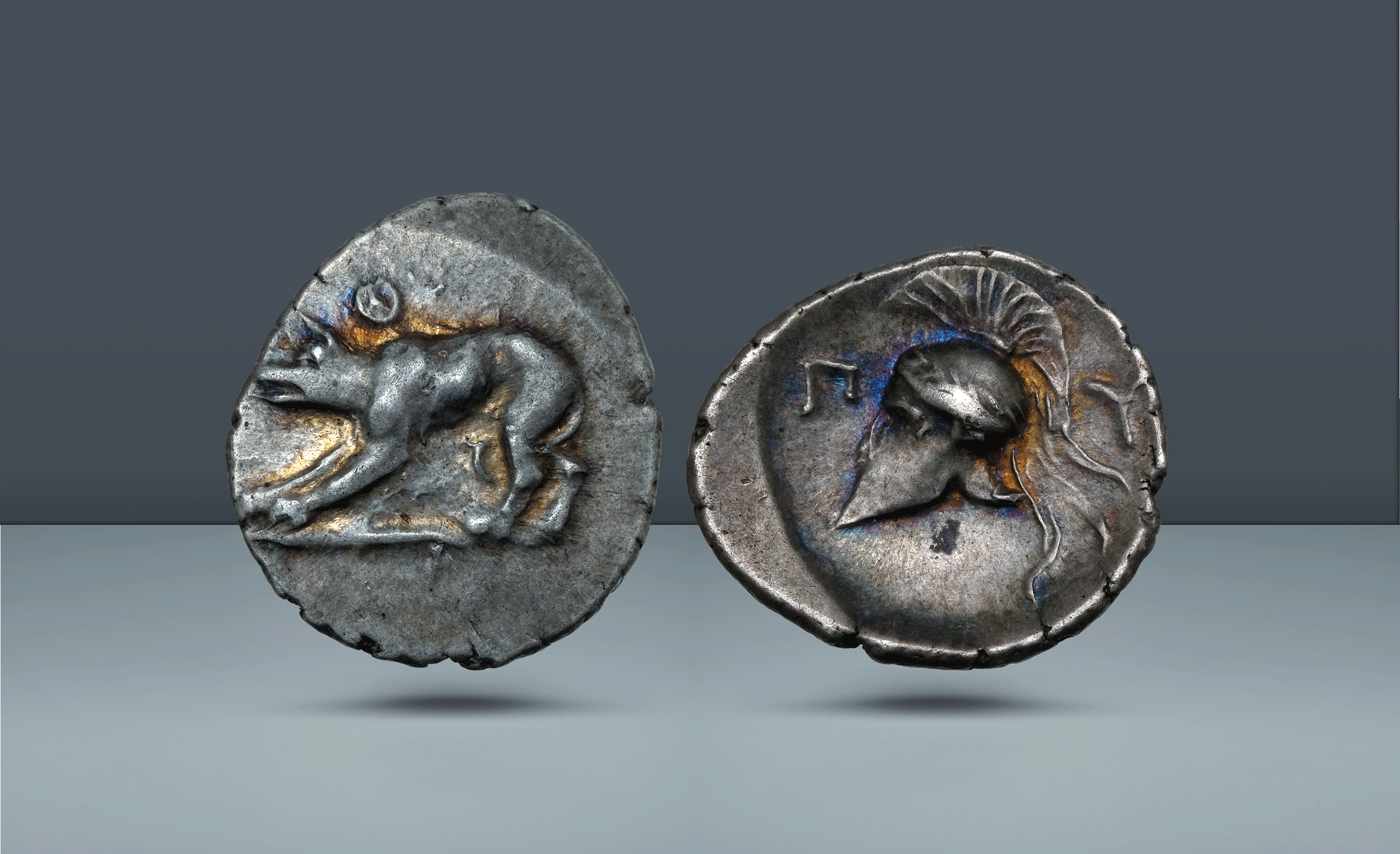
Argolis, Argos. c. 270-260/50 BC
AR Trihemiobol, 1.15g (13mm, 3h)
Wolf at bay left; Θ above / Crested Corinthian helmet left; Π-Y flanking
Pedigree: From the Colin E. Pitchfork Collection. Ex Classical Numismatic Group inventory 831981; BCD Collection (not in prior BCD sales)
References: BCD Peloponnesos 1114–5; HGC 5, 674.
Grade: Iridescent tone, underlying luster. Near EF.
gk2213
Scroll down for more information about this coin.
Argos was among the oldest cities in Greece, and its people never forgot it. The wolf on this coin's obverse reaches back into that deep mythic past. Pausanias records that when Danaos arrived in the Argolid to claim the kingship, the Argives watched a wolf fall upon a herd of cattle and kill the lead bull. Reading the stranger as the wolf and their own ruler as the bull, they accepted Danaos as king, and he in turn founded the sanctuary of Apollo Lykios, Apollo of the Wolf, which stood in the agora of Argos for centuries afterward. The animal became the city's emblem, and the wolf in its alert, braced posture appears on Argive coinage across several generations.
The decades in which this trihemiobol was struck were turbulent ones for the city. In 272 BC, Pyrrhus of Epiros, the most celebrated general of his age, forced his way into Argos at night and died in the street fighting that followed, struck by a roof tile that, according to Plutarch, was thrown by an old woman trying to protect her son. In the years after his death, Argos fell under a series of tyrants who held power with the backing of the Macedonian king Antigonos Gonatas, and the city would not shake off that arrangement until it joined the Achaean League in 229 BC. The crested Corinthian helmet on the reverse speaks to the martial tradition the Argives prized, a city whose great festival of Hera awarded a bronze shield as its prize.