
Ionia, Colophon. c. 5th century BC
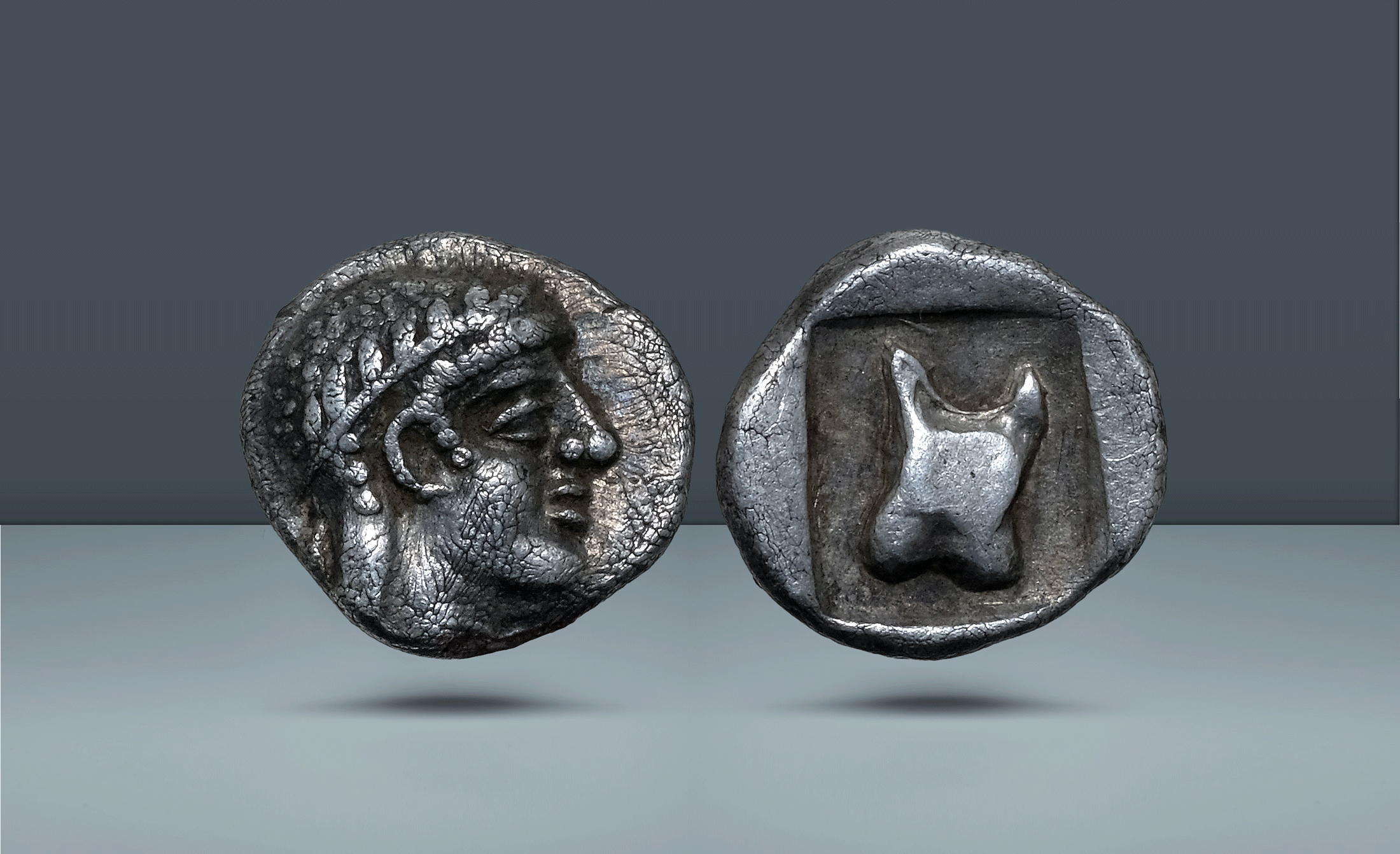
Ionia, Colophon. c. 5th century BC
AR Hemiobol, 0.33g (7mm, 3h).
Head of Apollo (?) r. / Astragalus within incuse square
Pedigree: Ex Numismatik Naumann sale 83, 2019, 278.
References: SNG von Aulock 7903. Klein 402 (these dies). Milne, ANSNNM 96, –.
Grade: Unusually well struck for such a tiny coin. Interesting and appealing imagery. Mint State
gk2082
The astragalus, known anatomically as the talus bone, occupies a remarkable place in ancient cultural history. In antiquity, astragali from sheep and goats became some of the earliest gaming pieces, functioning much like dice. Their uneven sides produced characteristic throws, turning them into tools of chance, competition, and entertainment across Greece, Rome, and the Near East. Yet their role extended into the sacred: astragali were also used in divination, deposited as votive offerings, and associated with rituals meant to safeguard herds and households. Their durability and symbolic resonance even prompted the Greeks and Romans to both engrave them on coins and to cast coins in their shape, bridging the worlds of play, religion, and exchange. Because the astragalus sits at the intersection of anatomy, ritual, and early economic behavior, it offers a vivid window into how ancient societies transformed everyday objects into carriers of meaning, luck, and identity.