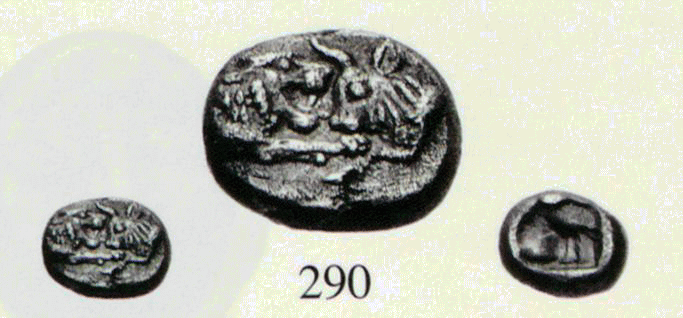
Lydia, Sardis. Croesus, 560-546 BC
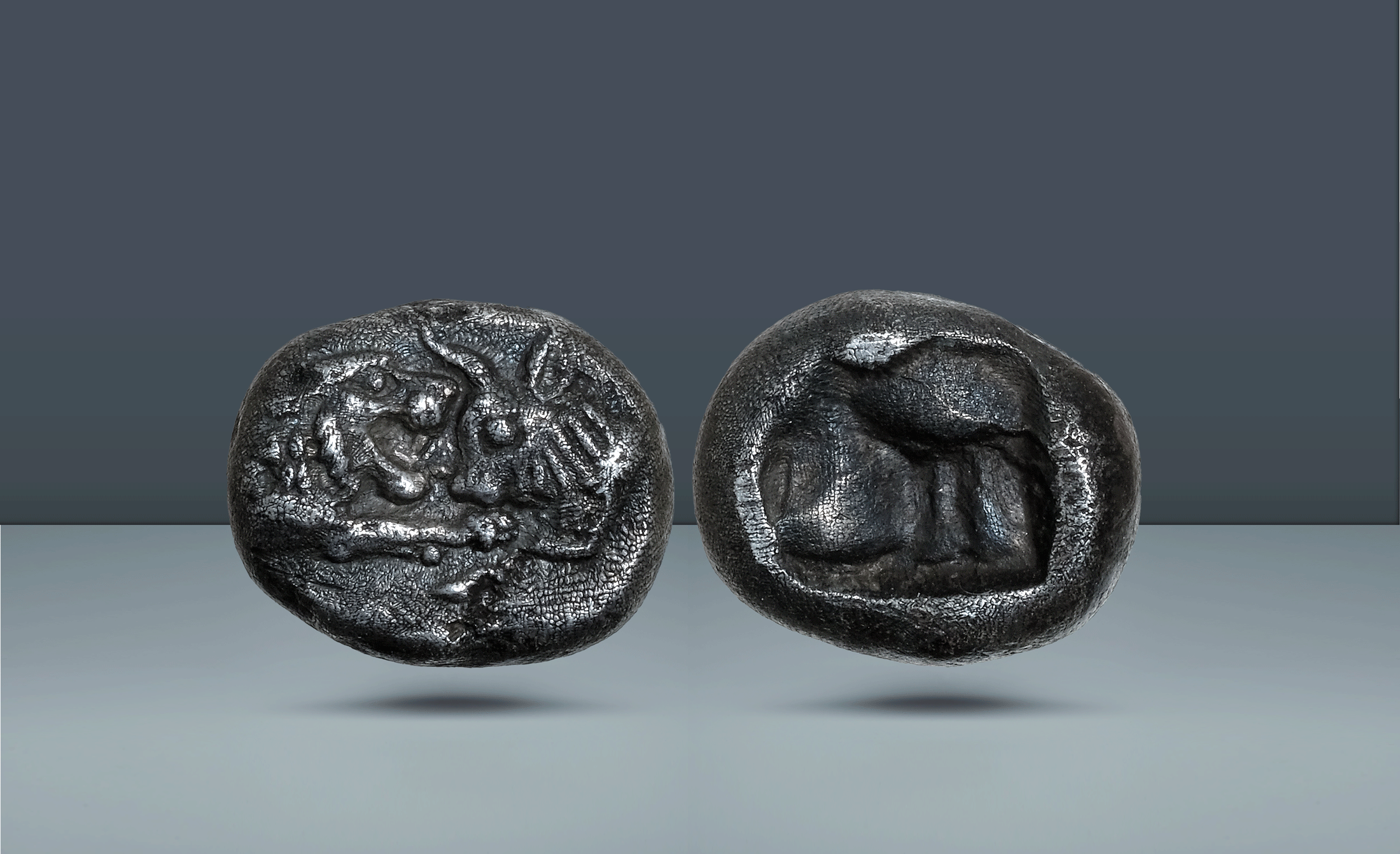
Lydia, Sardis. Croesus, 560-546 BC
AR Hemihecte, 0.86g (8mm, n/a).
Confronted foreparts of lion and bull / Incuse square
Pedigree: Ex CNG MBS 112, 2019, lot 290.
References: Berk, The Coinage of Croesus in 100 Greatest Ancient Coins, 26-27.
Grade:Minor surface porosity but in incredibly good condition for coin of this size. EF for issue
gk2091
Scroll down for more information about this coin.
This small silver hemihecte belongs to the historic coinage of Croesus, the last king of Lydia, whose reign marked a pivotal moment in the history of money. Struck at Sardis between approximately 560 and 546 BC, these issues represent the earliest widely recognized system of bimetallic coinage, consisting of both gold and silver denominations issued under royal authority. Croesus’ reform replaced the earlier electrum coinage of Lydia with a more precise and reliable standard, fundamentally transforming monetary systems throughout the ancient Mediterranean.
The obverse displays the iconic confronting foreparts of a lion and a bull, a design that became emblematic of the Croeseid coinage. The lion, long associated with Lydian royalty and possibly with the dynasty itself, faces a bull, a symbol often interpreted as representing strength, fertility, or a divine association. Their dramatic confrontation creates a powerful and instantly recognizable motif that reflects both royal authority and symbolic duality.
The reverse bears a simple incuse square punch, characteristic of early Greek coinage. Such punches were a byproduct of the striking process, created when the metal blank was struck between obverse and reverse dies. On fractional denominations like this hemihecte-one-twelfth of a stater-the punch often appears as a single square cavity.
Although tiny in size, Croeseid fractions like this hemihecte played an important role in everyday commerce, facilitating smaller transactions within the rapidly expanding economic networks of the Archaic Greek world. These coins circulated widely and influenced the adoption of coinage across Greek cities and beyond.
Compact yet historically significant, this piece represents one of the earliest chapters in the evolution of coinage-an innovation that would permanently reshape economic life in the ancient world.