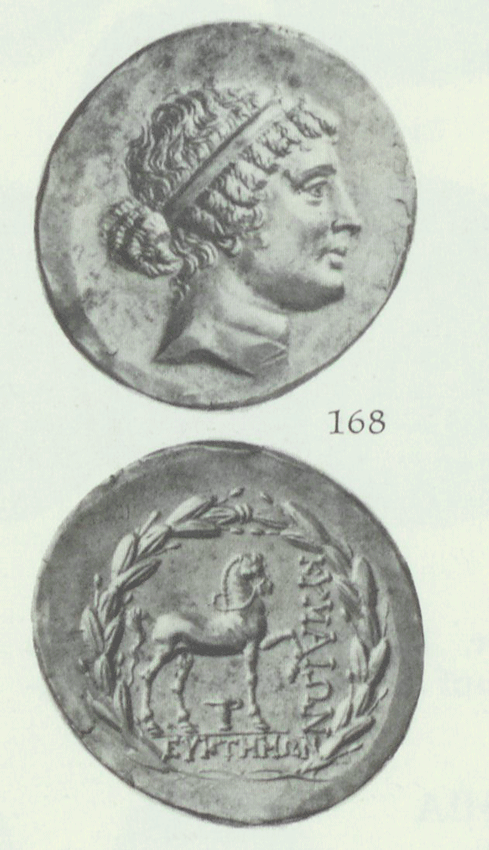
Aeolis, Cyme. magistrate Euktemon, c. 160-150 BC
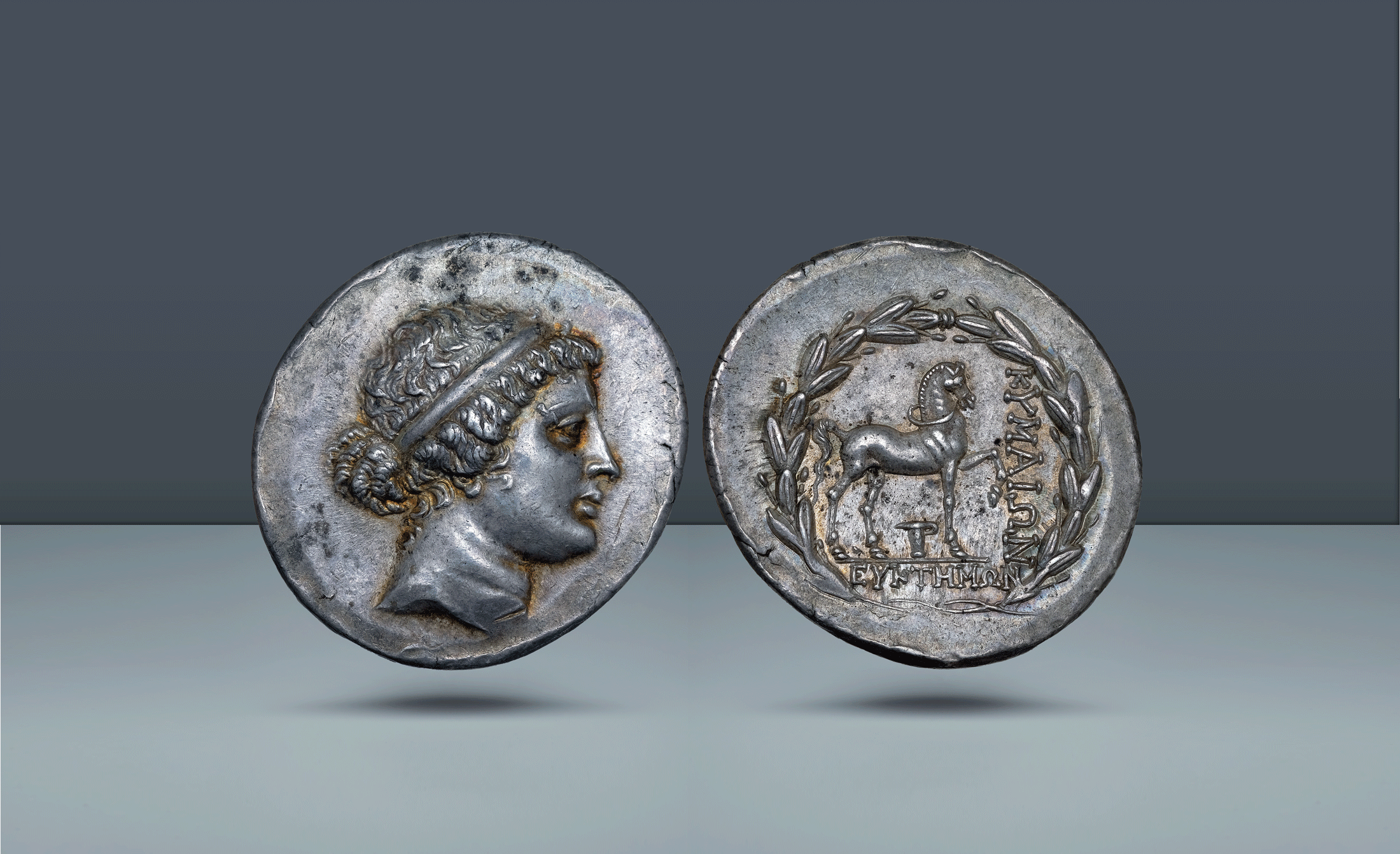
Aeolis, Cyme. magistrate Euktemon, c. 160-150 BC
AR Tetradrachm, 17g (34mm, 1h).
Diademed head of Kyme r. / Horse standing r., l. foreleg arched high in the air; below, one-handled cup, all within oak wreath
Pedigree: Ex Giessener Münzhandlung 33, 1986, 168. NAC 114, 2019, 1192 sales. From the Harald Salvesen (1928-2016) collection.
References: Oakley, Kyme, ANS MN 27, 55-57.
Grade: A few minor spots of discoloration, otherwise sharply struck and lustrous EF
gk2081
Scroll down for more information about this coin.
Stephanophoric coinage, literally “wreath bearing” coinage, emerged in the mid 2nd century BCE as one of the most artistically refined and historically significant monetary developments of the Hellenistic world. These coins are defined by a laurel or olive wreath encircling the reverse design, a feature that distinguished them from nearly all earlier Greek issues. The origins of the series lie in the shifting political landscape after the Treaty of Apamea (188 BCE), when the Seleucid Empire lost control of Asia Minor. Freed from imperial oversight, several cities, most notably Kyme, Myrina, and Magnesia ad Maeandrum, began issuing new, high relief silver tetradrachms around 154 BCE. This is often connected to regional upheavals, including conflicts involving Prusias II of Bithynia, whose defeat may have inspired civic expressions of autonomy.
Athens also played a crucial role: its New Style tetradrachms, introduced in the 180s–160s BCE, featured a wreath on the reverse and influenced the broader adoption of the stephanophoric format. These Athenian issues popularized broad, thin flans and lower relief dies, innovations that spread across the Aegean. The resulting coinages represent a late flourishing of Greek civic artistry, combining political symbolism, technical refinement, and coordinated regional identity.