Attica, Athens. c. 420-404 BC
Attica, Athens. c. 420-404 BC
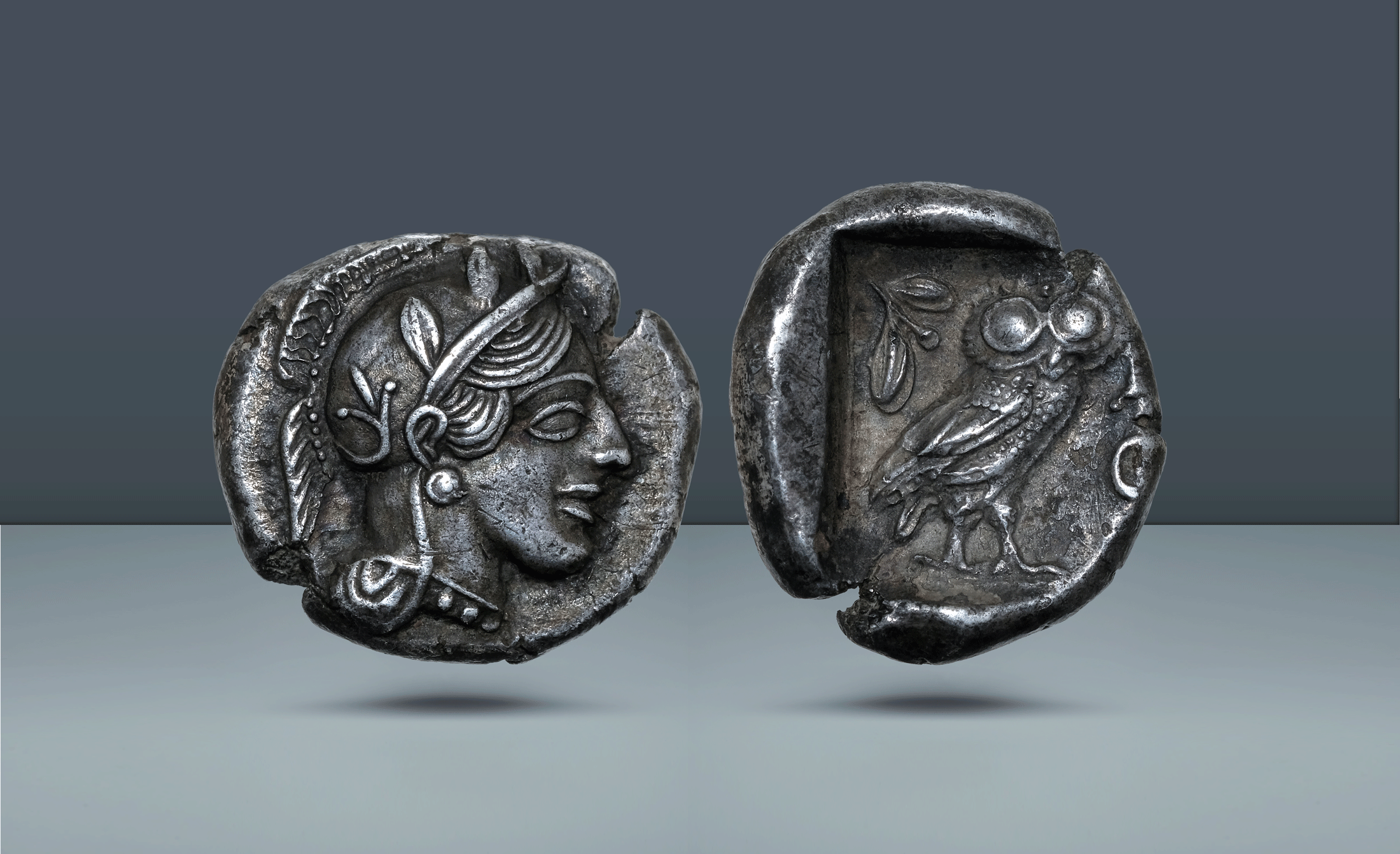
AR Drachm, 4.20g (16mm, 3h).
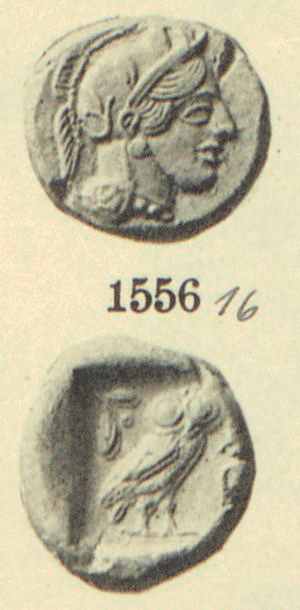
Head of Athena to r., wearing crested Attic helmet decorated with three olive leaves and palmette / Owl standing r., head facing. To l., olive sprig and crescent. All within incuse square
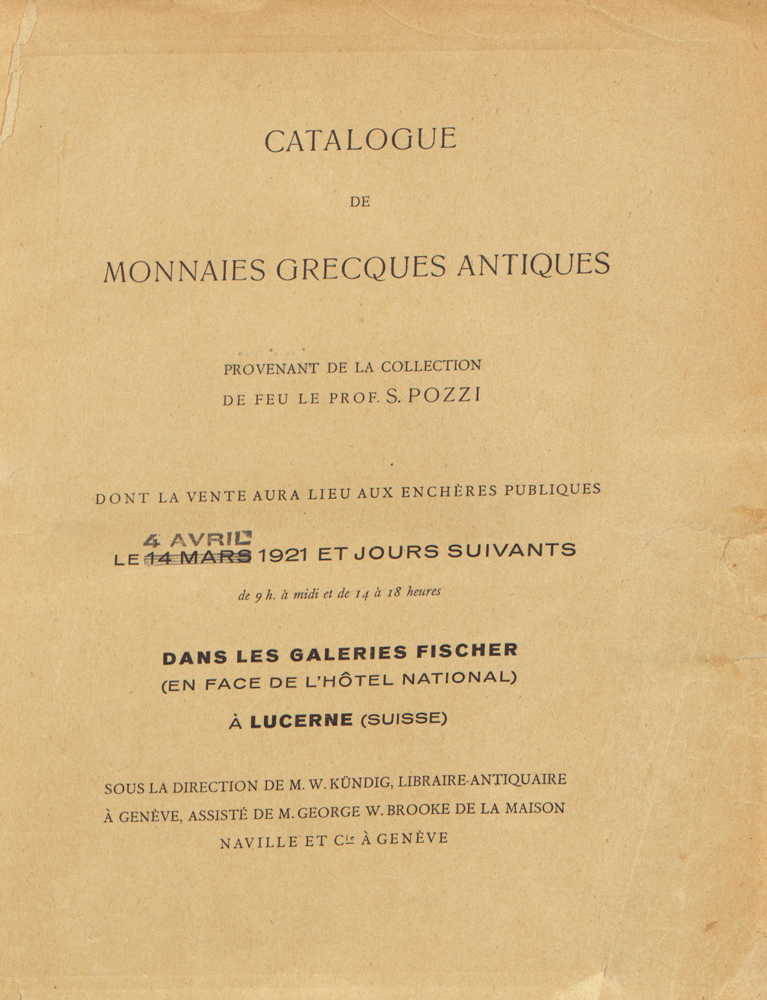
Pedigree: Samuel Pozzi (1846-1918) Collection, Naville I (4 April 1921), 1556.
References: HGC 4, 1631; S. Boutin, Catalogue des Monnaies Greques Antiques de L'Ancienne Collection Pozzi, 1979, 3492 (this coin)
Grade: Off center on reverse which impacts the legend. Wonderfully struck and with cabinet toning. Mint State
gk2103
Scroll down for more information about this coin.
The silver coinage of classical Athens stands among the most recognizable and influential monetary issues of the ancient world. This drachm, struck during the later years of the Peloponnesian War, bears the famous types that made Athenian silver the dominant trade currency of the eastern Mediterranean for centuries.
The obverse presents the head of Athena, the city’s patron goddess, wearing a crested Attic helmet adorned with olive leaves and a palmette. Athena embodied wisdom, strategy, and civic order, and her image served as a direct representation of the Athenian state itself. Her helmet, both martial and decorative, symbolized the city’s military strength and cultural refinement.
On the reverse appears the owl, sacred to Athena and the enduring civic emblem of Athens. The bird stands alert, its large frontal eyes rendered in the distinctive archaic style that remained largely unchanged on Athenian coinage for generations. To the left is an olive sprig, alluding to the sacred olive tree of Athena on the Acropolis and to the city’s prosperity through trade in olive oil. The crescent above may reference the Athenian calendar or religious symbolism tied to the goddess.
These coins were struck during one of the most dramatic periods in Athenian history. Between 420 and 404 BC, Athens was locked in the final and most destructive phase of the Peloponnesian War against Sparta. Despite military setbacks and economic strain, the city continued to produce high-quality silver coinage, much of it funded by the vast reserves of silver from the Laurion mines. Even in wartime, the “owl” coinage maintained its trusted weight and purity, ensuring its continued acceptance across the Mediterranean.
This particular drachm is especially notable for its prestigious provenance. It once formed part of the celebrated collection of Samuel Pozzi, the distinguished French surgeon, art patron, and renowned collector of antiquities. Pozzi’s collection was dispersed in the famous Naville sales of the early 20th century and remains one of the most storied provenances in classical numismatics.
An attractive example with rich cabinet toning and a pedigree to one of the great collectors of the Belle Époque, this coin represents both the economic power of classical Athens and the enduring allure of the Athenian “owl.”