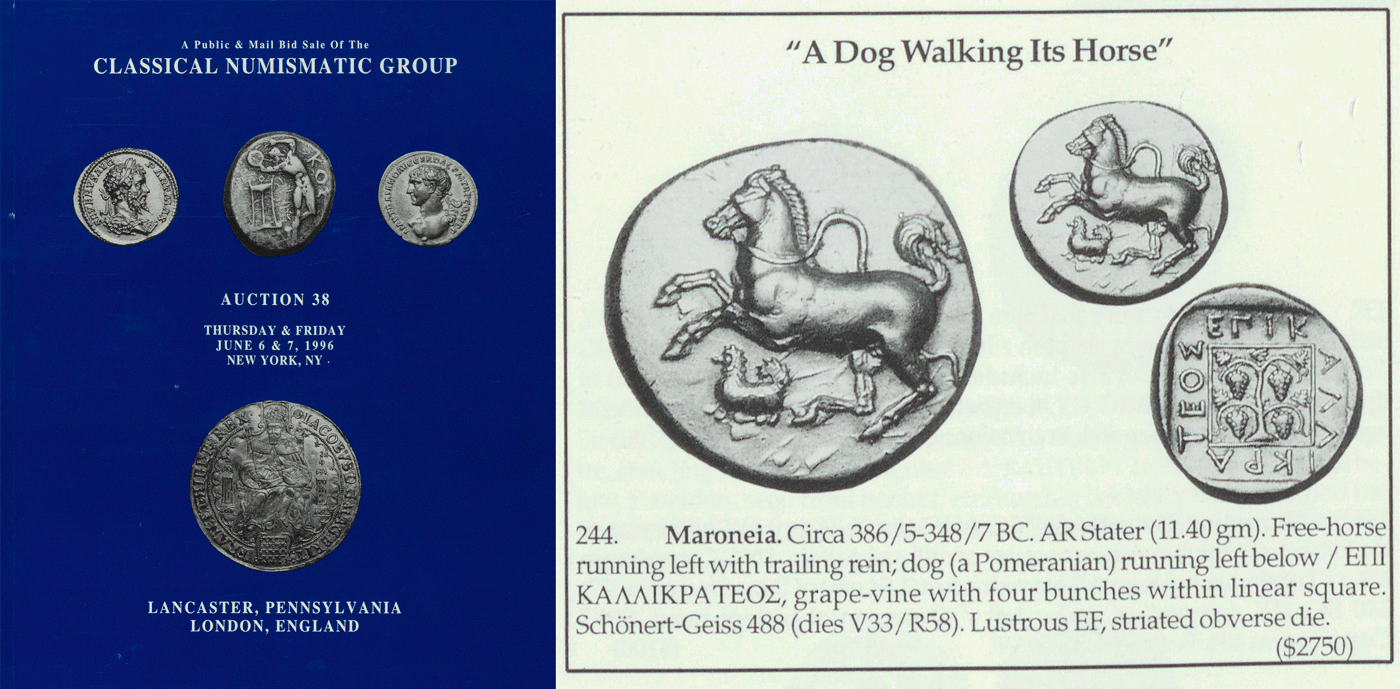
Thrace, Maroneia. c. 386 - 347 BC
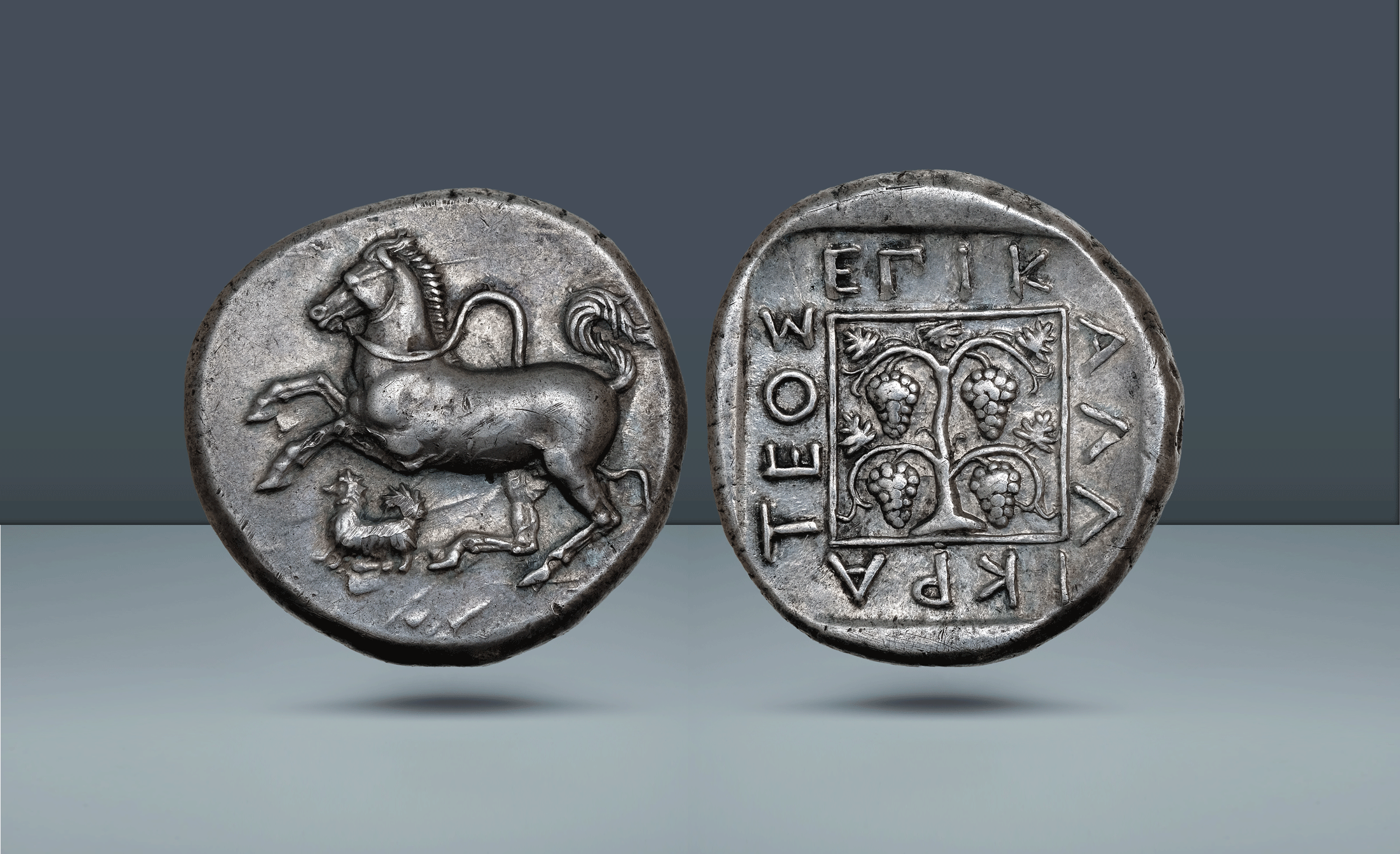
Thrace, Maroneia. c. 386 - 347 BC
AR Tetradrachm, 11.4g (21mm, 3h).
Free-horse running l. with trailing rein; below, dog running l. / ΕΠΙ ΚΑΛΛΙΚΡΑΤΕΟΣ Grape-vine with four bunches within linear square
Pedigree: Ex CNG sale 38, 1996, 244.
References: Jameson 1061. Schönert-Geiss 488. SNG Copenhagen 603. A.B. West, Fifth and Fourth Century Gold Coins from the Thracian Coast, ANS NNM 40, 84. Zhuyuetang 71 (this coin).
Grade: Some very light wear, otherwise a lovely strike with cabinet toning. Toned EF
gk2060
Scroll down for more information about this coin.
The coinage of Maroneia often displayed grapes because the city was one of the most famous wine-producing centers in the ancient Greek world. The grape vine imagery served as both a civic symbol and commercial advertisement, promoting Maroneia's most valuable export product. Wine from Maroneia was celebrated throughout the Mediterranean for its exceptional quality and strength. It was even mentioned in Homer's Odyssey as the potent wine that Odysseus used to intoxicate the Cyclops Polyphemus. The grape motif also had religious significance, as Maroneia claimed a special connection to Dionysus, the god of wine. According to local tradition, Dionysus himself founded the city and taught its inhabitants the art of viticulture. By placing grapes so prominently on their coinage, the Maroneans were declaring their identity as a wine city, establishing their brand in international trade, and honoring their divine patron.