Bactrian Kingdom, near Aï Khanoum. Euthydemos I, 225-200/195 BC Mint A, c. 206-200 BC
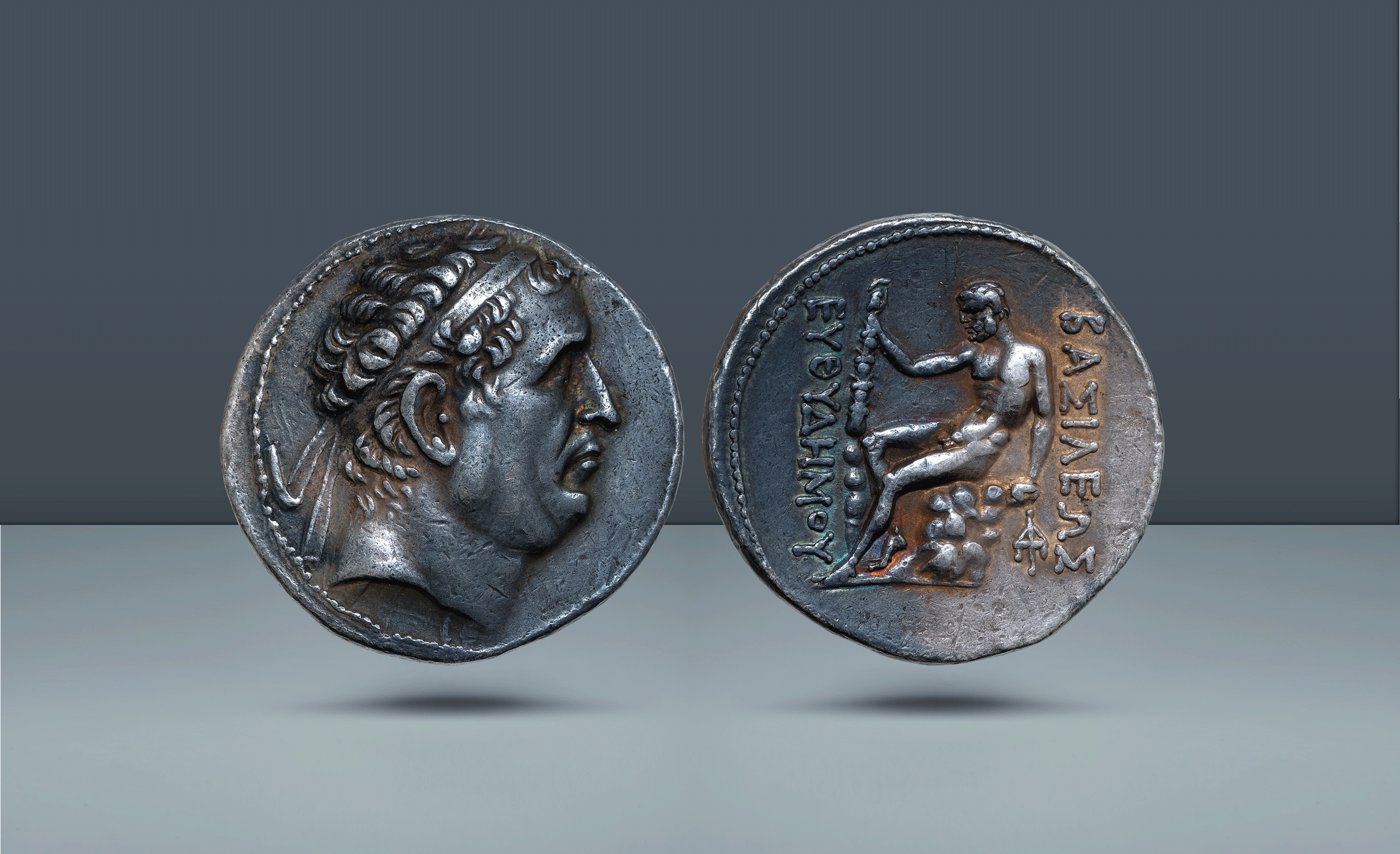
Bactrian Kingdom, near Aï Khanoum. Euthydemos I, 225-200/195 BC Mint A, c. 206-200 BC
AR Tetradrachm, 16.56g (29mm, 12h).
Diademed head r., with elderly features / BAΣIΛEYΩΣ to r., EYΘYΔHMOY to l., nude Herakles seated l. on rock, holding a club in r. hand. monogram to lower r.
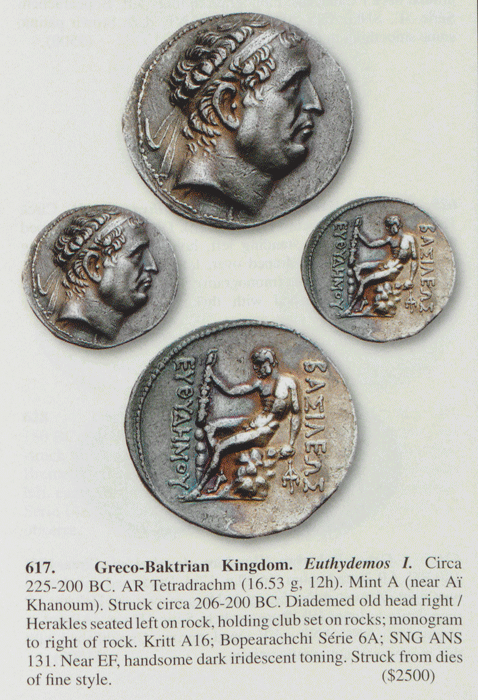
Pedigree: Ex CNR XLI.2, Summer 2016, no. 436186; Spink USA 325, 21 June 2016, lot 62; CNG 75, 23 May 2007, lot 617. From the Collections of Professor Emeritus N. Keith Rutter and Donald Squires
References: Bopearachchi 11A; Kritt A17; MPHB A Group III, 249 (this coin); Bopearachchi & Rahman –; SNG ANS –; MIG Type 89c; HGC 12, 4.
Grade: Minor marks with good strike and toned surfaces. EF
gk2110
Scroll down for more information about this coin.
Euthydemos I was one of the most important early rulers of the Greco-Bactrian Kingdom, a Hellenistic state that flourished in what is now Afghanistan and parts of Central Asia. Originally a satrap under the Seleucid Empire, Euthydemos seized power in Bactria and established an independent dynasty around the mid-3rd century BC. His rule was soon challenged by the Seleucid king Antiochus III, who campaigned deep into the east. After a prolonged siege of Bactra, Euthydemos successfully negotiated peace, securing recognition as king and arranging a dynastic marriage between his son Demetrios and the Seleucid royal family.
The coinage of Euthydemos is among the most distinctive of the Hellenistic world. His portrait is notable for its realistic and unidealized features, showing the king as an elderly man with heavy jaw and lined face. This is a striking departure from the youthful, idealized portraits common on earlier Hellenistic coinage and may reflect a deliberate attempt to emphasize experience, authority, and dynastic legitimacy.
The reverse type depicts Herakles seated on a rock, resting after his labors. The hero was a favored emblem among Hellenistic kings, symbolizing strength, endurance, and divine favor. In the context of Euthydemos’ reign, the image may allude to the king’s successful resistance against Antiochus III and the hard-won survival of the Bactrian kingdom.
Struck at a principal mint near Aï Khanoum, this tetradrachm belongs to a well-studied series. The coin also carries an impressive modern pedigree, including the collections of Donald Squires and Professor Emeritus N. Keith Rutter, adding both scholarly and collector interest to this attractive example.