Satraps of Caria, Halicarnassus. Paussolus, 377 – 353 BC, c. 365-353 BC
Satraps of Caria, Halicarnassus. Paussolus, 377 – 353 BC, c. 365-353 BC
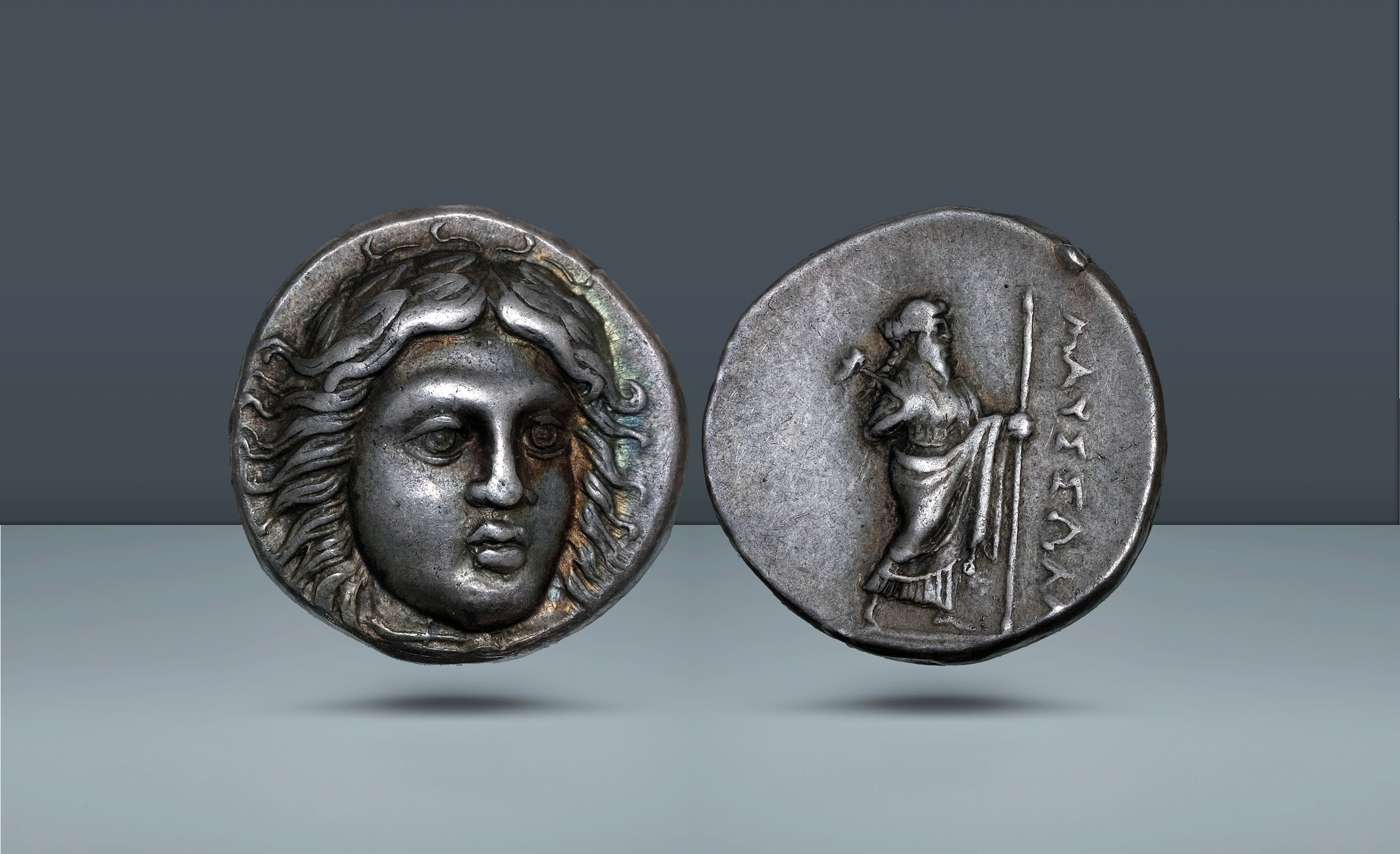
AR Drachm, 3.7g (15mm, 11h).
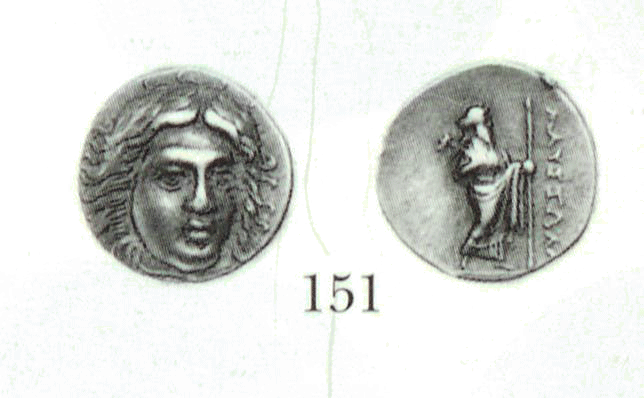
Laureate head of Apollo, three-quarter facing r. / MAYΣΣΩΛΛ[O] Zeus Labraundos standing r., holding double-axe and spear
Pedigree: Ex Sotheby's 9 October 1995, 151. Kirk Davis 25, 1999, 64. Ira & Larry Goldberg 106, 2018, 1083 sales. From the Eric von Post (1899-1990) collections. From the Muğla Hoard, 1950 (IGCH 1215).
References: SNG von Post 260 (this coin). Konuk, Identities, –, cf. 21 (tetradrachm). SNG Keckman 276. Babelon, Traité II, 2, 96. Pl. 90,7 (this coin)
Grade: Some minor wear on reverse. Obverse strike is lovely with iridescent toning. EF/aEF
gk2088
Scroll down for more information about this coin.
This impressive drachm was struck for Mausolus, the powerful Hecatomnid satrap of Caria who ruled under the Achaemenid Persian Empire from 377 to 353 BC. Although technically a Persian provincial governor, Mausolus ruled Caria with considerable autonomy and effectively established a regional dynasty whose influence reshaped the political and cultural landscape of southwestern Anatolia.
The obverse features a finely rendered laureate head of Apollo shown in three-quarter facing perspective, a sophisticated artistic choice rarely encountered in earlier Greek coinage. This dynamic orientation reflects the growing experimentation of Classical engravers and lends the portrait a remarkable sense of depth and vitality. The refined style aligns with the broader cultural ambitions of the Hecatomnid court, which consciously promoted Greek artistic traditions within a Persian imperial framework.
On the reverse stands Zeus Labraundos, the principal deity of Caria, holding a long spear and the distinctive double-axe (labrys) from which his epithet derives. The cult of Zeus Labraundos was centered at the important sanctuary of Labraunda in Caria and served as a powerful symbol of regional identity and dynastic legitimacy. By placing this deity prominently on his coinage, Mausolus connected his rule to longstanding Carian religious traditions while simultaneously presenting himself as a legitimate Hellenized ruler.
Mausolus is perhaps best remembered for the monumental tomb constructed for him at Halicarnassus, the Mausoleum, which became so famous in antiquity that it was counted among the Seven Wonders of the Ancient World. The structure was commissioned by his sister-wife Artemisia II following his death and gave rise to the very word “mausoleum.”
This particular specimen boasts an extraordinary provenance. It comes from the distinguished collection of Eric von Post (1899–1990), a Swedish diplomat and accomplished numismatist whose holdings of Greek coins were widely respected and carefully documented. The coin was published in the Sylloge Nummorum Graecorum volume devoted to his collection (SNG von Post 260), as well as illustrated in Babelon’s Traité. Even more significantly, it traces back to the Muğla Hoard discovered in 1950 (IGCH 1215), one of the important hoards illuminating the circulation of Carian coinage in southwestern Anatolia.
With its exceptional artistic quality, strong pedigree, and direct connection to one of the most famous dynasts of the Classical world, this drachm represents a remarkable example of Hecatomnid coinage and the cultural synthesis of Greek and Carian traditions during the fourth century BC.