Bithynia, Kalchedon. c. 380-360 BC
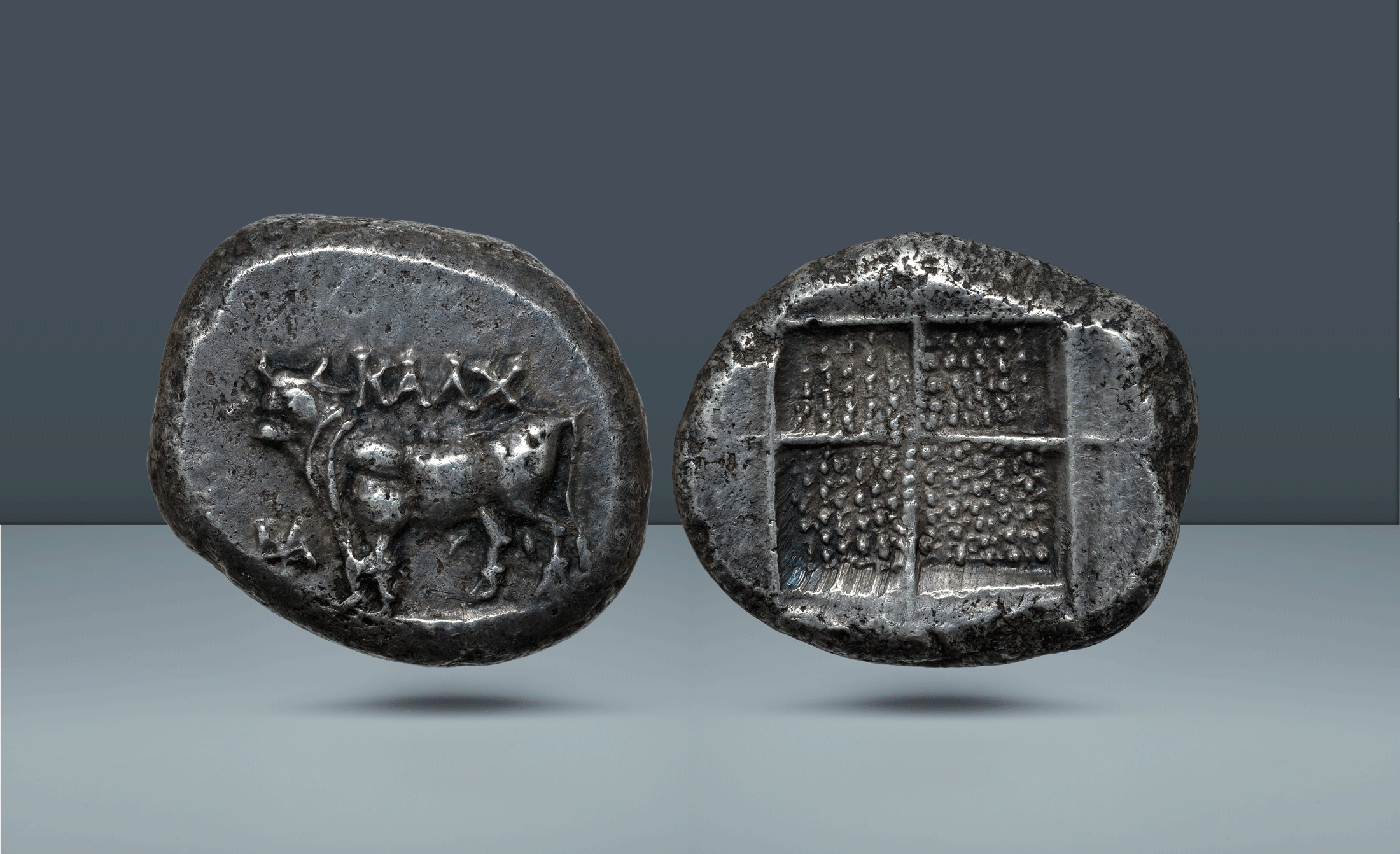
Bithynia, Kalchedon. c. 380-360 BC
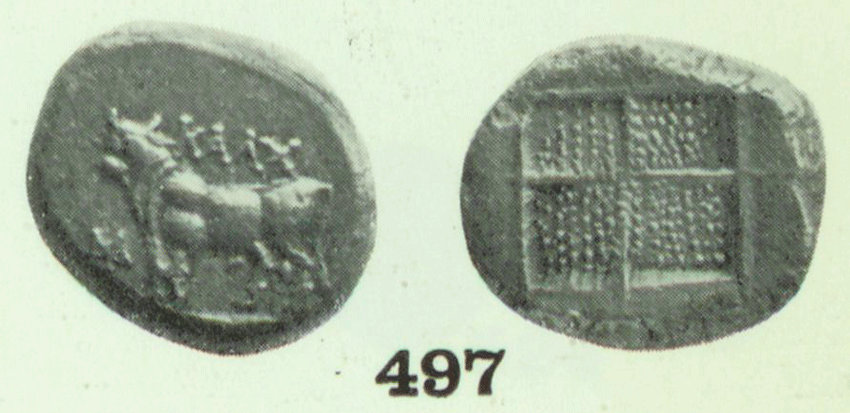
AR Tetradrachm, 15.23g (25mm, na).
KAΛX Bull standing l. on ear of grain, in front, monogram MT. / Four-part incuse square with granulated fields
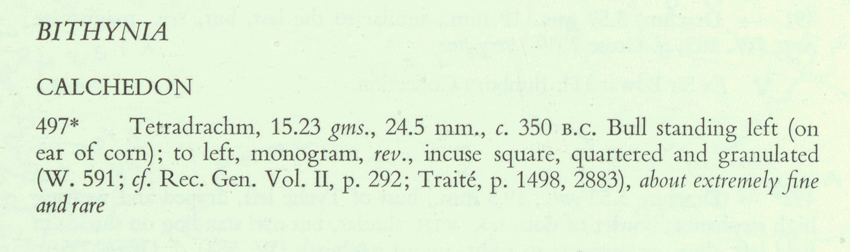
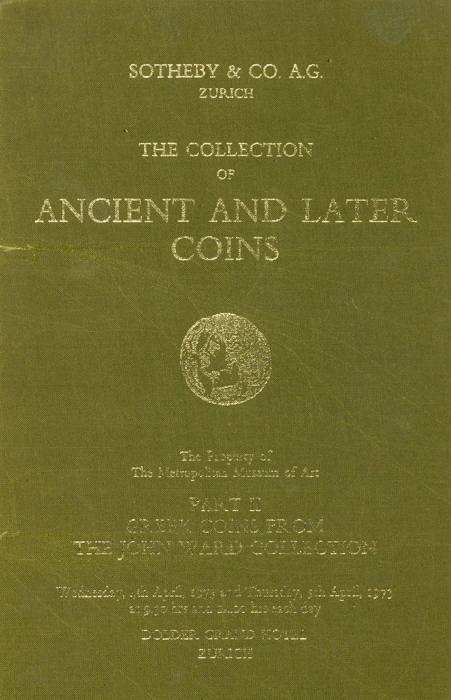
Pedigree: Ex. Sotheby & Co. AG, Zurich - The Collection of Ancient and Later Coins, The Property of the Metropolitan Museum of Art / Part II: Greek Coins from the John Ward Collection 4-5 April 1973, 497. Auction Leu Numismatik AG, Zurich 65 (1996), 185. From the J. Ward (1832-1912) and Metropolitan Museum of Art, New York collections.
References: Receuil général I/2, 292, 14 (this specimen mentioned); SNG von Aulock 486; Ward, Greek Coins and Cities 96, 591 (this specimen, illustrated on pl. XV).
Grade: Historically significant pedigree being a coin that was part of the Metropolitan Museum of Art in New York's collection and owned by John Ward. Plate coin in Ward's book on Greek Coins and Cities. Some porosity in the fields but lovely cabinet toning. Well struck and Mint State
gk2183
Scroll down for more information about this coin.
Kalchedon started minting silver in the fifth century BC and by the fourth, the design had settled into its classic form: a bull standing left on an ear of grain, KAΛX above, and on the back an incuse "mill-sail" square with granulated quarters. That punch was old-fashioned even then. Most Greek mints had moved on to pictorial reverse designs generations earlier. But Kalchedon, like Athens, kept the archaic look. The silver followed the Persic weight standard, a standard that made sense for a city trading into Anatolia and the Black Sea rather than the Aegean.
You can't really read the design without Byzantium's coinage next to it. Byzantium struck almost the same bull - but on a dolphin, not a grain ear, with the archaic legend ΠΥ for Byzantion in its local spelling. The two cities sat on either side of the Bosporus, the choke point for Black Sea grain heading to the Aegean, and in the fourth century they ran something close to a monetary alliance: shared types, shared standards, coins accepted in both markets. Hence the paired symbolism. Same civic bull, but Byzantium's stands on the sea and Kalchedon's on the land's produce - the maritime city and its agricultural twin across the water.
So why a bull at all? The prettiest answer is Io. Turned into a heifer and chased across the world by Hera's gadfly, she swam the strait between Europe and Asia - which is what "Bosporus" means: river-ford, “bous” and “poros”. A cow at the cow-crossing. Greek mints loved this kind of visual pun. The duller answer is probably just as true: bull plus grain equals agrarian wealth. Kalchedon's hinterland was fertile, and the ear of grain under the hooves says it plainly - this city feeds itself, and makes money feeding everyone else.