Bruttium, Kaulonia. c. 475 - 425 BC
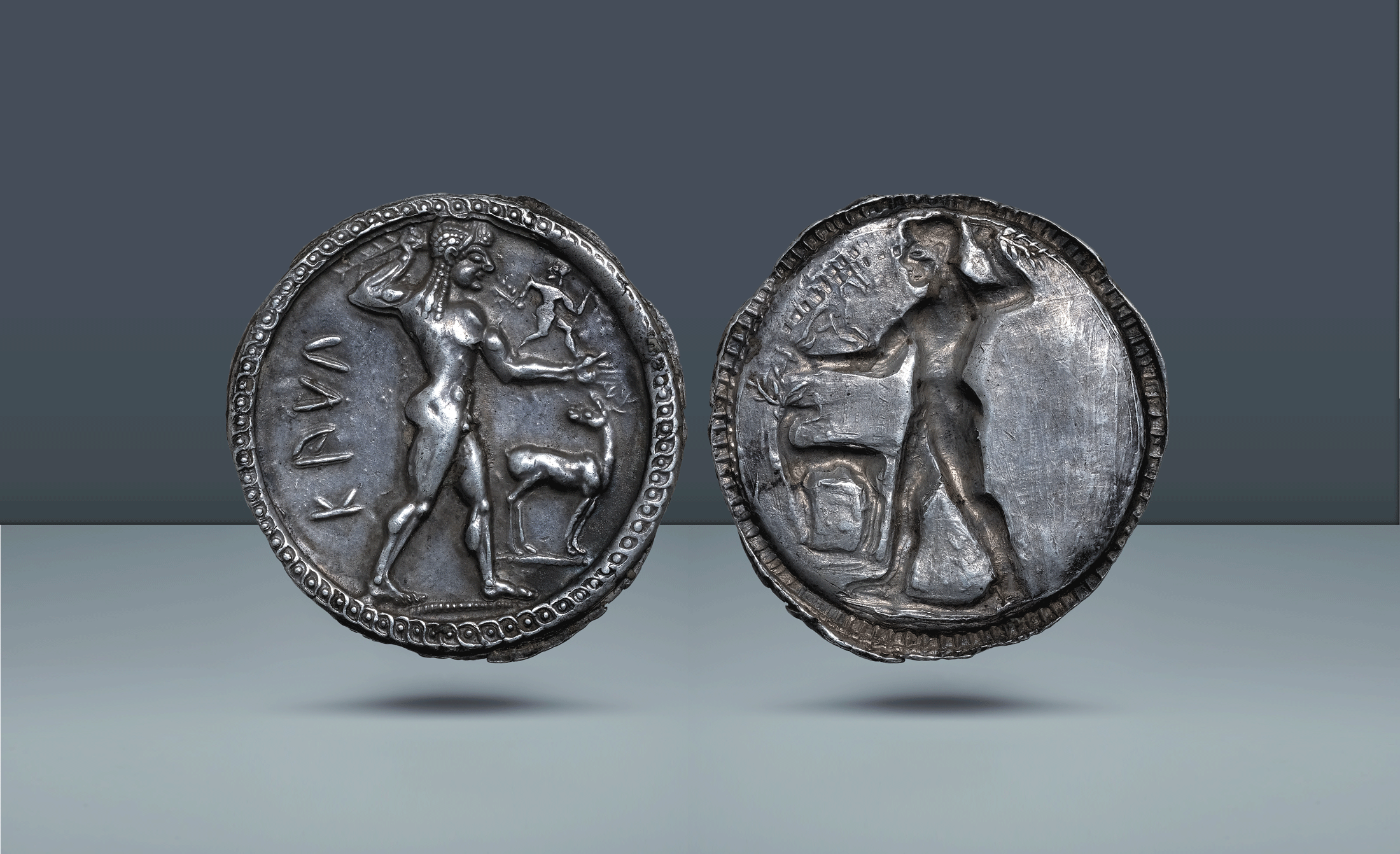
Bruttium, Kaulonia. c. 475 - 425 BC
AR Didrachm, 8.38g (31mm, 12h).
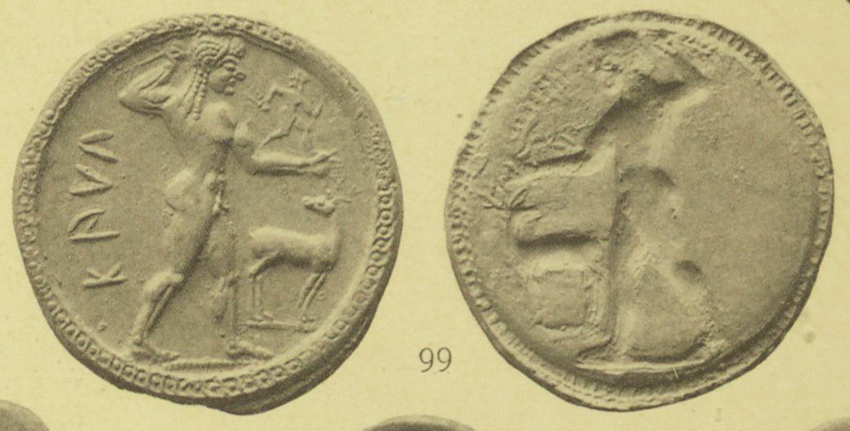
KAVΛ; Apollo striding to r., holding a branch aloft in his raised r. hand and a small daemon on his outstretched l.; in front of him, a stag walking to the r. with its head turned back. / Same design, incuse.
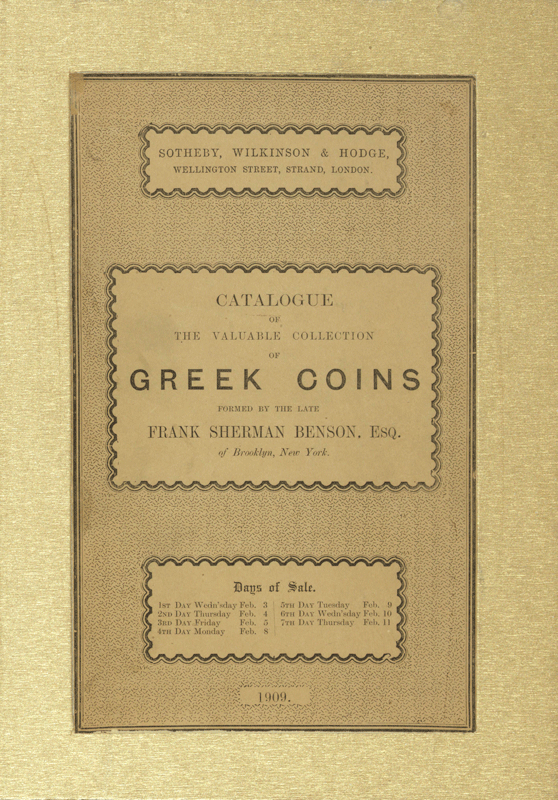
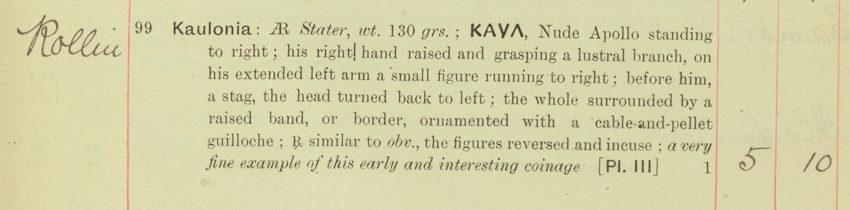
Pedigree: Ex. CNG Triton XXII, 2019, lot 76. Ex NGSA 7, November 2012, Lot 133. Manhattan Sale II, 2011, Lot 5. Ex Freeman & Sear FPL 11 (Spring/Summer 2006), Lot 11. Ex Münzen und Medaillen 52, 1975, lot 51. Sotheby's, Wilkinson & Hodge, 3 February 1909, lot 99, and sold by Rollin & Feuardent. From the PML, Gasvoda, Peter Guber, and Frank Sherman Benson collections
References: SNG ANS 142; SNG München 1396; HN Italy 2035; Noe, Caulonia Gruppe A 5h (this coin)
Grade: A near perfect example with an incredible pedigree back to 1909. This coin has lovely cabinet toning and fine style details. FDC for issue. Graded by NGC (tag: 4284630-001, Ch AU*, Strike: 5/5 - Surface: 5/5
gk2128
Scroll down for more information about this coin.
Kaulonia was among the most artistically ambitious of the Greek colonies of Bruttium, and her silver staters and didrachms count among the most visually compelling achievements of archaic South Italian coinage. The obverse of this magnificent example presents Apollo in full stride, moving to the right with an easy, athletic grace that belies the technical demands of the archaic die cutter's art. In his raised right hand he carries an upward-sweeping laurel branch, while on his outstretched left a small daemon perches - a mysterious attendant figure whose exact significance has been much debated but whose presence lends the composition an otherworldly density. Before Apollo, a stag walks to the right with its head turned back toward the god, completing a scene of remarkable spatial complexity for its period. The reverse reproduces the same design in incuse, a hallmark of the early South Italian tradition inaugurated by the Pythagorean communities of Magna Graecia, where the incuse reverse was understood as both an aesthetic and perhaps a philosophical counterpart to the relief obverse. The inscription KAVΛ identifies the issuing city with the quiet confidence of a mint at the height of its powers.
This is a near-perfect example of the type, graded by NGC as Choice AU* with a strike of 5/5 and surface of 5/5 - the star designation acknowledging exceptional quality within the grade, and in this case the coin is fully deserving of it. The cabinet toning is precisely what one hopes for in a coin of this age and metal, a warm, even patina that enhances rather than obscures the fine style details. The dies are beautifully centered, the fields clean, and the relief sharp throughout.
The pedigree is exceptional by any standard and traces an unbroken chain of distinguished ownership back over a century. The coin was sold by Rollin & Feuardent at Sotheby's, Wilkinson & Hodge on 3 February 1909, passing from that historic sale through the collections of Frank Sherman Benson, Peter Guber, and the celebrated Gasvoda Collection before appearing in Freeman & Sear's Fixed Price List 11 in Spring/Summer 2006. It subsequently passed through the Manhattan Sale II in 2011 and NGSA 7 in November 2012 before being offered at CNG Triton XXII in January 2019. Crucially, the coin is cited as Noe, Caulonia Gruppe A 5h - identified as this very piece - giving it the additional distinction of being a plate coin in the specialist literature on Kaulonian coinage.
Coins of this type with this quality of style, surface, and provenance depth appear rarely, and the combination of NGC's top designation with over a century of documented history makes this an opportunity that collectors of Magna Graecia material will not want to overlook.