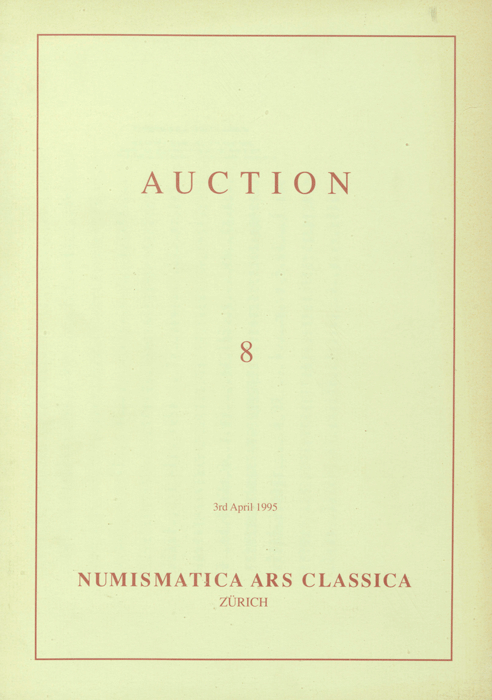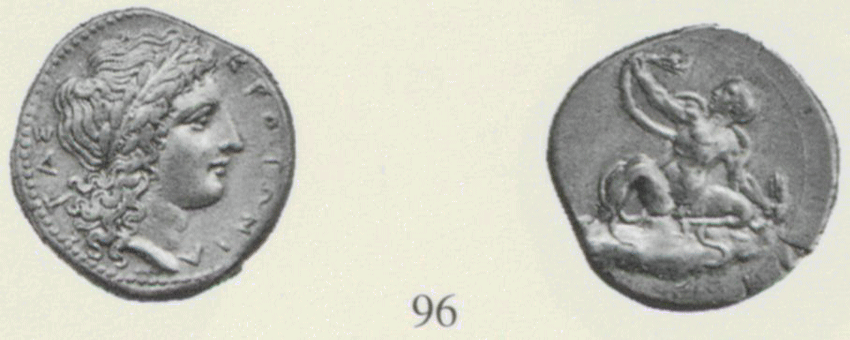
Bruttium, Kroton. c. 350-340 BC
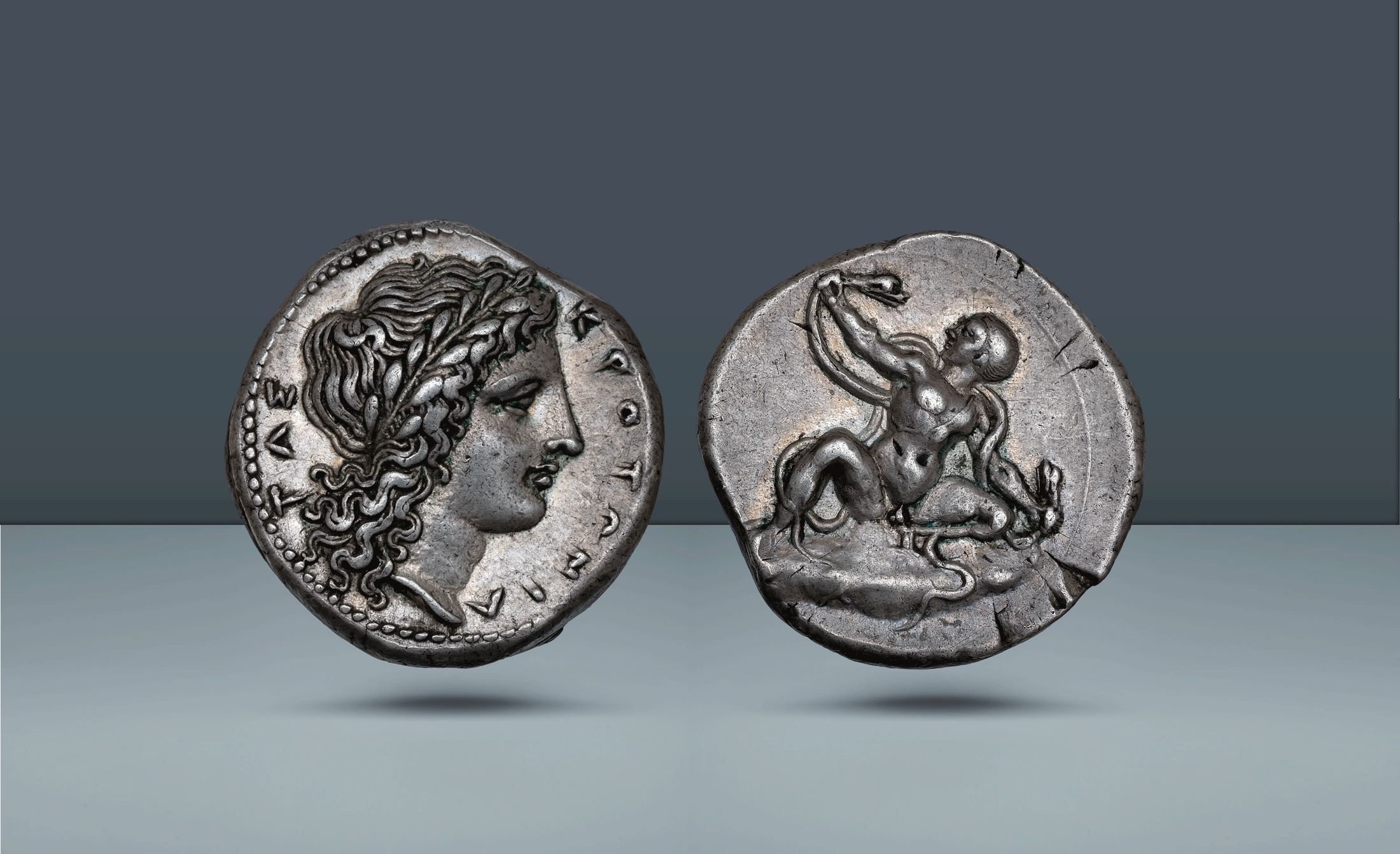
Bruttium, Kroton. c. 350-340 BC
AR Didrachm or Nomos, 7.74g (20mm, 3h).
ΚΡΟΤΟΝΙΑ-ΤΑΣ Laureate head of Apollo with long hair to right / Herakliskos Drakonopnigon: the infant Herakles, nude, crouching facing on rocky floor, his head turned to left, strangling a serpent in each hand
Pedigree: From the Appassionato Collection, ex Leu FPL 1, January 2023, 34, from the Kleinkunst Collection, Leu 6, 23 October 2020, 47, and ex NAC 8, 3 April 1995, 96.
References: Dewing 513. HN Italy 2157. SNG ANS 385 (same dies)
Grade: A few minor marks in the field on reverse. Superb high relief and lustrous surfaces. Mint State
gk2164
Scroll down for more information about this coin.
As one of the most dramatic mythological scenes on any ancient Greek coin, the image of the baby Herakles strangling a pair of serpents, the Herakliskos Drakonopnigon type, sits at the intersection of foundation myth, religious politics, and the turbulent history of Magna Graecia in the early fourth century BCE.
The story is best known from Pindar's first Nemean ode. Jealous of her husband's infant son, Hera sent two serpents to kill the child in his cradle. Instead of fleeing, the baby seized one snake in each hand and throttled them both, the first proof of his divine strength. For the citizens of Kroton, this was no generic heroic scene. In fact a local legend held that Herakles founded the city after accidentally killing the hero Kroton.
While the design is broadly dated to 400-325 BCE, most numismatists narrow the main issues to the first decades of the fourth century as is reflected in the dating of this coin. The dating matters, because the type is usually read politically. Around the same time, an alliance coinage with the identical design and the legend ΣΥΝ was struck by Rhodes, Ephesos, Samos, Knidos, Iasos, and Byzantion, where the image plainly symbolized liberation from an oppressor. At Kroton, the backdrop is the city's leadership of the Italiote League in the fight against Dionysius I of Syracuse. However, he crushed the League at the Elleporus in 389 BCE and seized Kroton itself around 379/8.
The infant conquering the snakes becomes an emblem of a young city surviving mortal threats in its cradle. Others prefer a religious reading tied to Hera Lakinia and Herakles as founders, noting the political case rests on shaky chronology. Most likely, both coexist, and the little strangler carried extra resonance in dangerous times.