Calabria, Tarentum. c. 280-272 BC
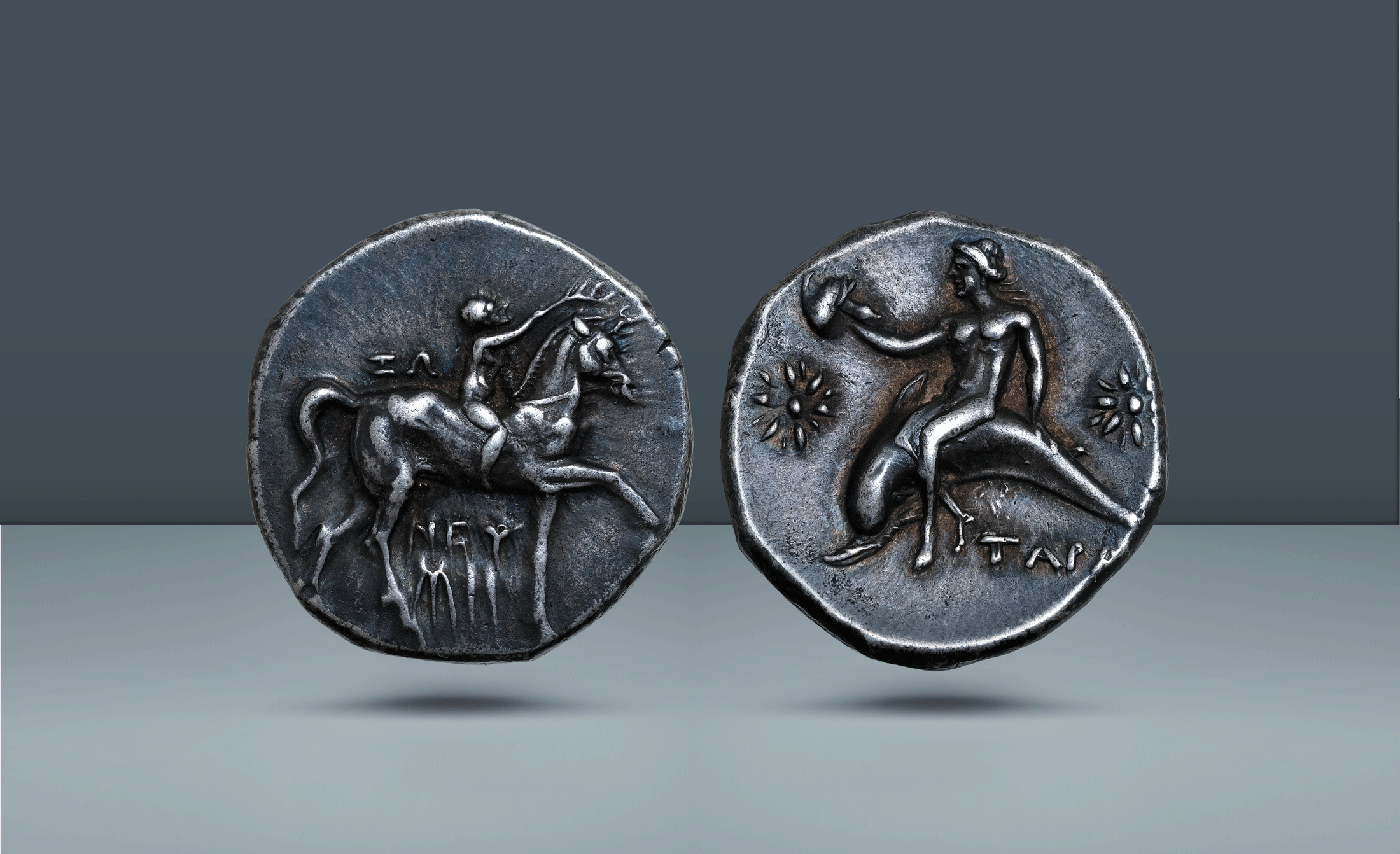
Calabria, Tarentum. c. 280-272 BC
AR Nomos (Reduced standard), 6.50g (20mm, 11h).
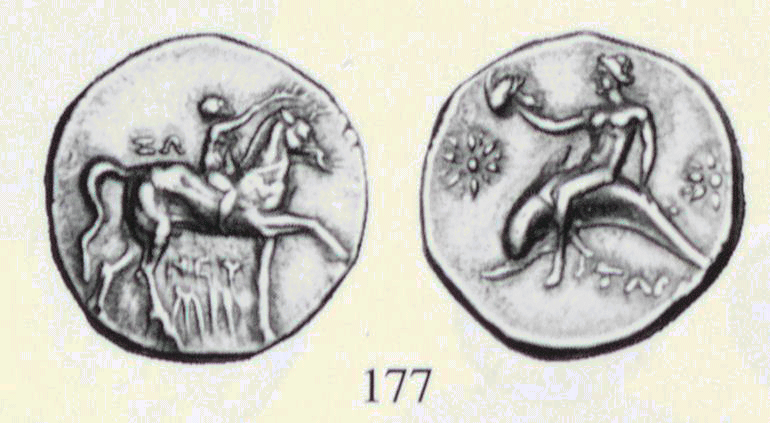
Nude youth riding r., crowning horse with wreath held in r. hand, and holding rein in l.; ZΩ to l., NEY/MH below / Phalanthos, holding helmet inr. hand, legs crossed, riding dolphin l.; stars flanking, [ΠΟΛΥ to upper r.], TAPAΣ below.
Pedigree: From the Deer Creek Collection. Ex Matthew Curtis Collection (CNG 112, 11 September 2019), lot 33; Triton III (30 November 1999), lot 48; Freeman & Sear 5 S.5 (14 May 1999), lot 177.48
References: Vlasto 739-45; HN Italy 1006; Goldberg 96, lot 1498 (same dies).
Grade: Nicely toned and beautifully struck, particularly on the reverse which is stylistically superior. Obverse strike is somewhat elongated due to a possible shift during striking. This effects just the legs of the horse and the lettering which is elongated. Toned EF
gk2106
Scroll down for more information about this coin.
The silver nomoi of Tarentum are among the most celebrated coinages of Magna Graecia, admired for their dynamic compositions, refined engraving, and deep connection to the city’s identity and mythology. This attractive example belongs to the final phase of Tarentine silver coinage, struck during the turbulent decades at the end of the 3rd century BC, when the city was caught between the ambitions of Rome and the campaigns of King Pyrrhus of Epirus.
The obverse depicts a nude youth riding a horse, crowning it with a wreath. Such equestrian scenes were a hallmark of Tarentine coinage and reflect the city’s renowned cavalry and aristocratic traditions. The youth may represent a victorious rider in local games or, more broadly, an idealized image of aristocratic virtue and athletic excellence. The accompanying magistrate’s letters identify the civic authority responsible for the issue.
On the reverse appears Phalanthos, the mythical founder of Tarentum, riding a dolphin. According to tradition, Phalanthos was saved from shipwreck by a dolphin sent by the god Poseidon and subsequently founded the city at the site where he came ashore. This iconic image-Phalanthos borne across the sea by a dolphin-became the enduring civic badge of Tarentum and one of the most recognizable types in Greek numismatics.
This particular issue was struck on the reduced weight standard adopted during the later years of the city’s independence, a period marked by military strain and shifting alliances. Between 280 and 272 BC, Tarentum called upon Pyrrhus of Epirus to defend it against Rome, leading to the famous Pyrrhic War. The eventual Roman victory in 272 BC marked the end of Tarentine autonomy and the conclusion of this long and artistically rich coinage tradition.
An appealing example with pleasing toning and a particularly elegant reverse, this coin represents one of the last artistic expressions of Tarentum before its absorption into the expanding Roman sphere. Its strong pedigree and fine style make it a desirable representative of this historic series.