Caria, Cnidus. c. 210-185 BC
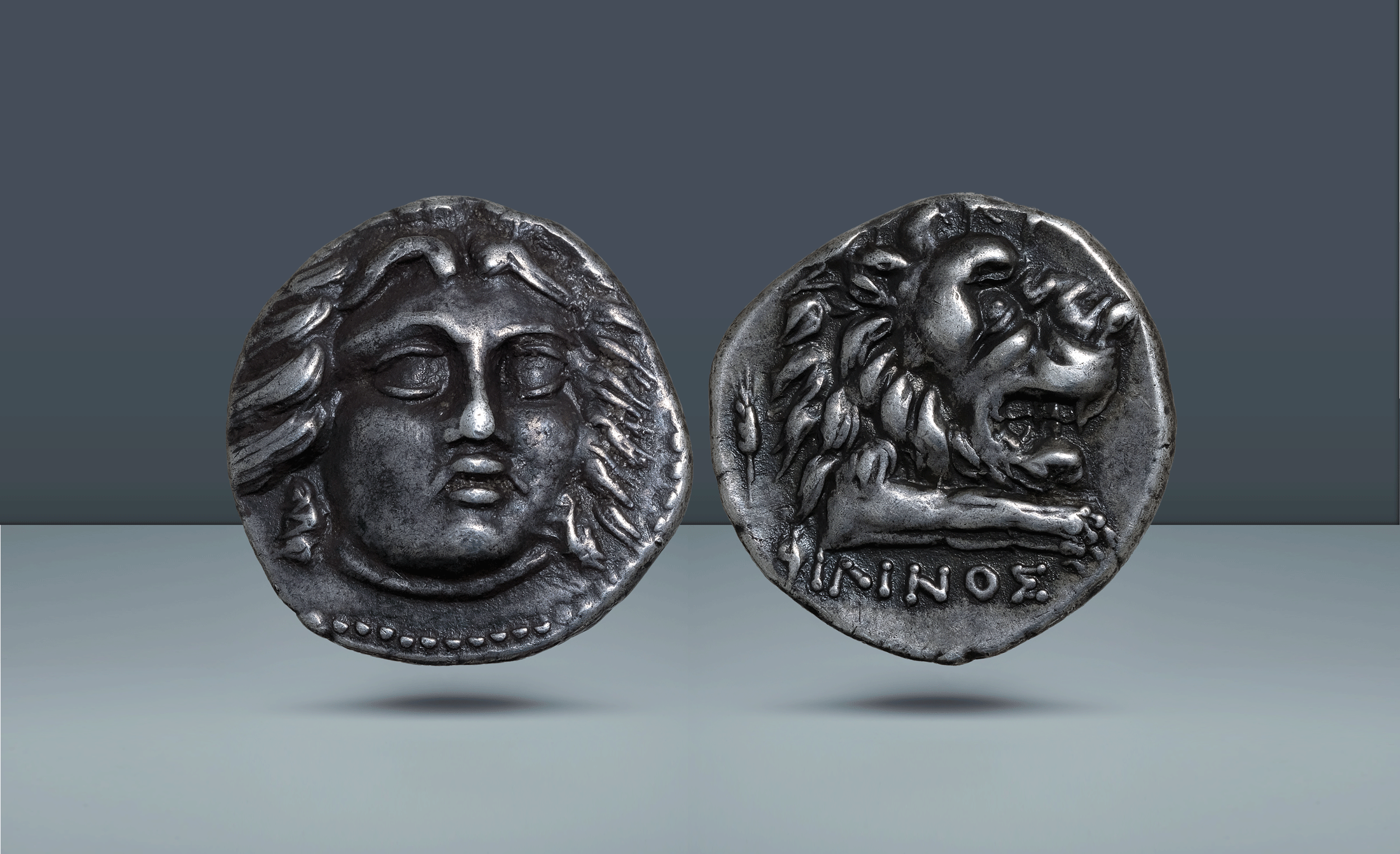
Caria, Cnidus. c. 210-185 BC
AR Octobol or Siglos, 5.27g (19mm, 12h).
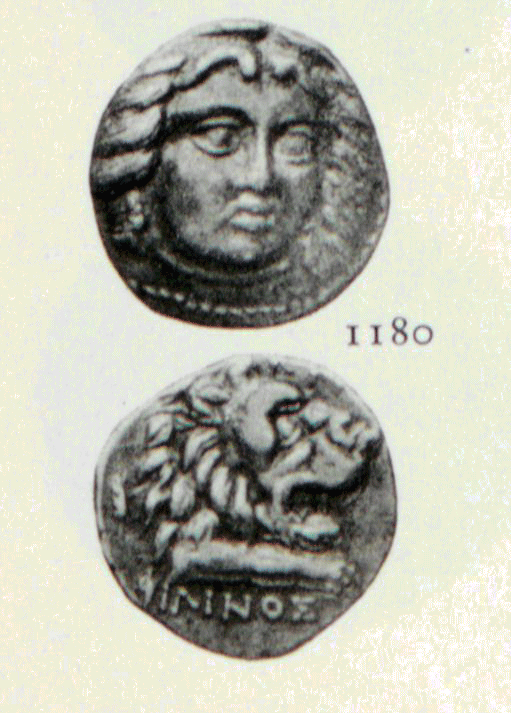
Head of Helios facing slightly r.; dotted border / ΦIΛINOΣ Forepart of roaring lion r.; in l. field, grain ear
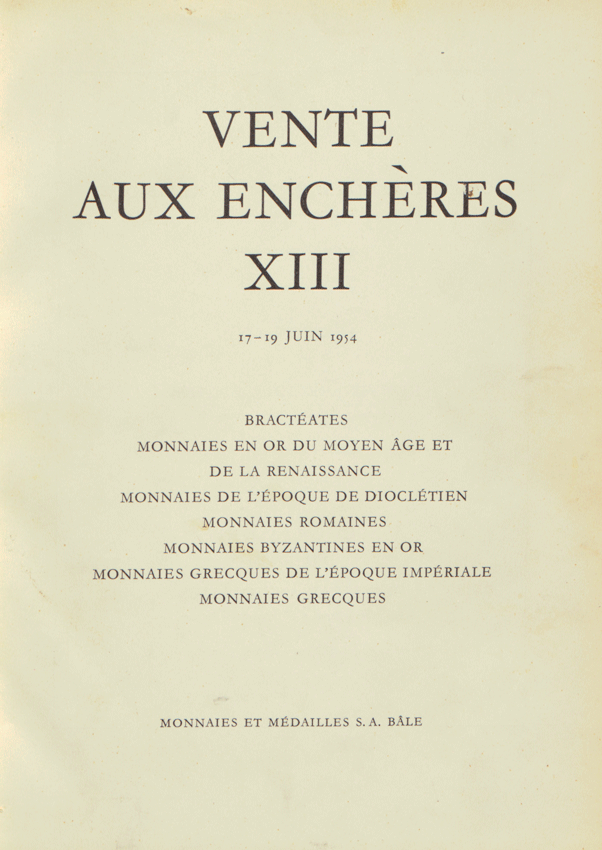
Pedigree: Ex M&M 13, 1954, 1180. Spink 50, 1986, 59. CNG 114, 2020, 352. Privately purchased from M. von Lennep in 1910-1911. From the English Queen's Counsel and Dr. F. Imhoof-Blumer collections. From the Datça (Cnidus) hoard, 1910.
References: Imhoof-Blumer, Karische Münzen, NZ 45, 1912, 37 (this coin). J. H. Nordbø, Utmyntningen på Knidos, 394 f. Kr. - ca. 210 e. Kr., Magistergradsavhandling Numismatikk, 1972, Series 13, 1043. HN Online –.
Grade: Lovely with cabinet toning. Beautiful artistry and EF
gk2086
Scroll down for more information about this coin.
This impressive silver octobol (or siglos-weight piece) was struck at the important Carian port city of Cnidus during the late Hellenistic period, approximately 210–185 BC. Located at the tip of the Datça peninsula in southwestern Anatolia, Cnidus was one of the most prosperous maritime cities of Caria and played a prominent role in regional trade networks throughout the Classical and Hellenistic periods.
The obverse features a striking facing head of Helios, shown slightly turned to the right. Facing portraits remained relatively uncommon in Greek coinage due to the technical difficulty involved in engraving them convincingly. When executed successfully, however-as on the present example-they create a dramatic and lifelike effect. The type clearly reflects the artistic influence of Rhodian coinage, where Helios served as the principal civic emblem. Cnidus maintained strong economic and cultural ties with Rhodes, and the adoption of a Helios portrait likely reflects both these connections and the broader diffusion of Rhodian artistic models in the region.
On the reverse appears the forepart of a roaring lion, a powerful symbol frequently associated with strength, protection, and civic identity. The lion emerges energetically to the right, its mouth open in a vivid display of vitality. In the left field appears a grain ear, perhaps referencing agricultural fertility or prosperity within the territory controlled by Cnidus. The magistrate’s name ΦIΛINOΣ identifies the official responsible for the issue, a common practice in Hellenistic civic coinage that allows scholars to trace monetary administration within the city.
Beyond its attractive style, this coin possesses an extraordinary and deeply documented provenance. It originates from the Datça (Cnidus) hoard discovered in 1910, an important deposit of silver coinage from the region that contributed significantly to the study of Cnidian monetary production. Shortly after its discovery, the coin was acquired privately in 1910–1911 from M. von Lennep, placing it among the earliest dispersed pieces from the hoard.
The coin later entered the collection of Dr. Friedrich Imhoof-Blumer (1838–1920), one of the most important numismatists of the late nineteenth and early twentieth centuries. Imhoof-Blumer’s scholarship profoundly shaped the study of Greek coinage, and his collections formed the basis for numerous foundational publications. Indeed, the present specimen was illustrated and discussed by him in his study Karische Münzen published in the Numismatische Zeitschrift in 1912.
The coin subsequently passed through the hands of a distinguished English Queen’s Counsel, further enhancing its historical collecting pedigree, before appearing in several notable auctions including Münzen & Medaillen (1954), Spink (1986), and Classical Numismatic Group (2020).
With its refined Hellenistic artistry, strong connection to Rhodian iconography, and a pedigree that stretches from the Datça hoard through the cabinet of one of the greatest numismatists of the modern era, this coin represents an exceptional and historically rich example of the coinage of Cnidus.