Celtic, Eastern Europe. Imitating Philip II of Macedon, c. 1st century BC
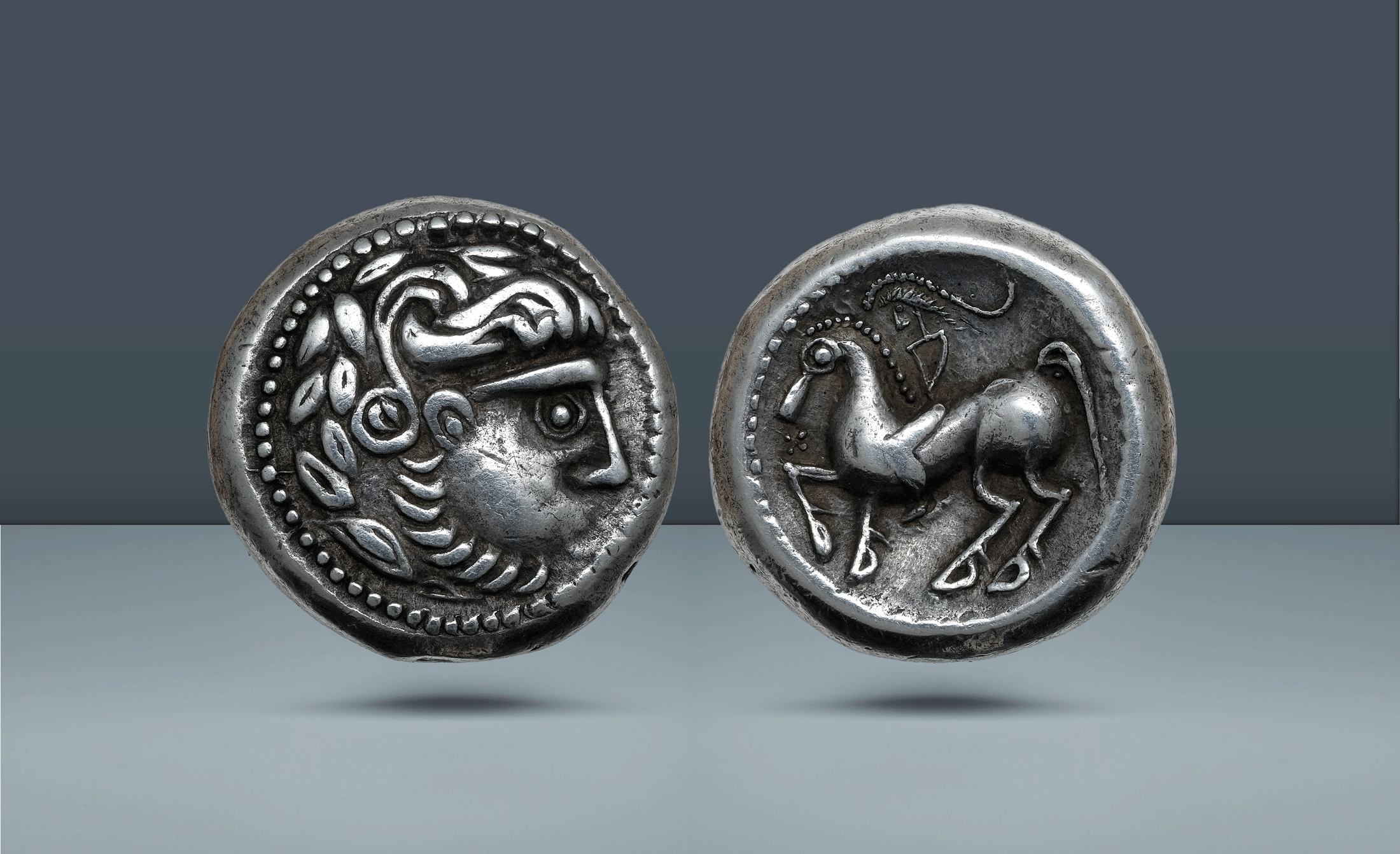
Celtic, Eastern Europe. Imitating Philip II of Macedon, c. 1st century BC
AR Tetradrachm, 14.26g (20.1mm, 11h).
"Dachreiter" type. Stylized head of Zeus / Stylized horseman with a streaming tail above his head.
References: Slg. Lanz -; Göbl, OTA 184/3; Ziegaus, Slg. Flesche -
Grade: Outstanding example of the Eastern Celtic tribes. Lovely artistry with high relief and cabinet toning. FDC for issue
gk2149
Scroll down for more information about this coin.
The conquest of the Mediterranean world by Macedonian arms and Macedonian gold fundamentally transformed the Celtic peoples of central and eastern Europe. When Philip II's tetradrachms and their successors flooded the trade routes and military campaigns of the Hellenistic east, Celtic tribes encountered not merely a new medium of exchange but a powerful symbol of Mediterranean authority and prestige. Rather than accept the foreign prototype passively, the Eastern Celtic moneyers undertook a creative reinterpretation that speaks to the artistic sophistication and cultural independence of these peoples.
This tetradrachm belongs to the "Dachreiter" series, the most stylistically removed iteration of the Macedonian prototype, where the familiar image of Philip on horseback has been transformed into something altogether more mysterious and distinctly Celtic. The obverse retains the Zeusian head, though rendered in the high relief that characterizes this remarkable series, the features simplified and idealized into an almost abstract nobility. The reverse presents the essence of Celtic artistic vision: the horseman no longer rides in classical equilibrium but appears almost to float, the horse's form reduced to essential elements while the rider's streaming tail-a Celtic motif of power and otherworldly status-dominates the composition. This is not degradation or incompetence but conscious artistic choice, a translation of Mediterranean image into Celtic cosmological language.
The exceptional cabinet toning and high relief preserved on this example reveal the care taken in its striking and the pride taken in its production. At this remove from Philip's original, these Eastern Celtic tribes had created something entirely their own-a currency that proclaimed their integration into the Hellenistic economy while asserting their distinct visual and cultural identity. This is numismatic art of the highest order, evidence that the idealized style of the Celtic tribes transcended mere monetary function to express something fundamental about how these peoples understood themselves and their place in the ancient world.