
Dynasts of Lycia, Protodynastic Period. c. 500 BC
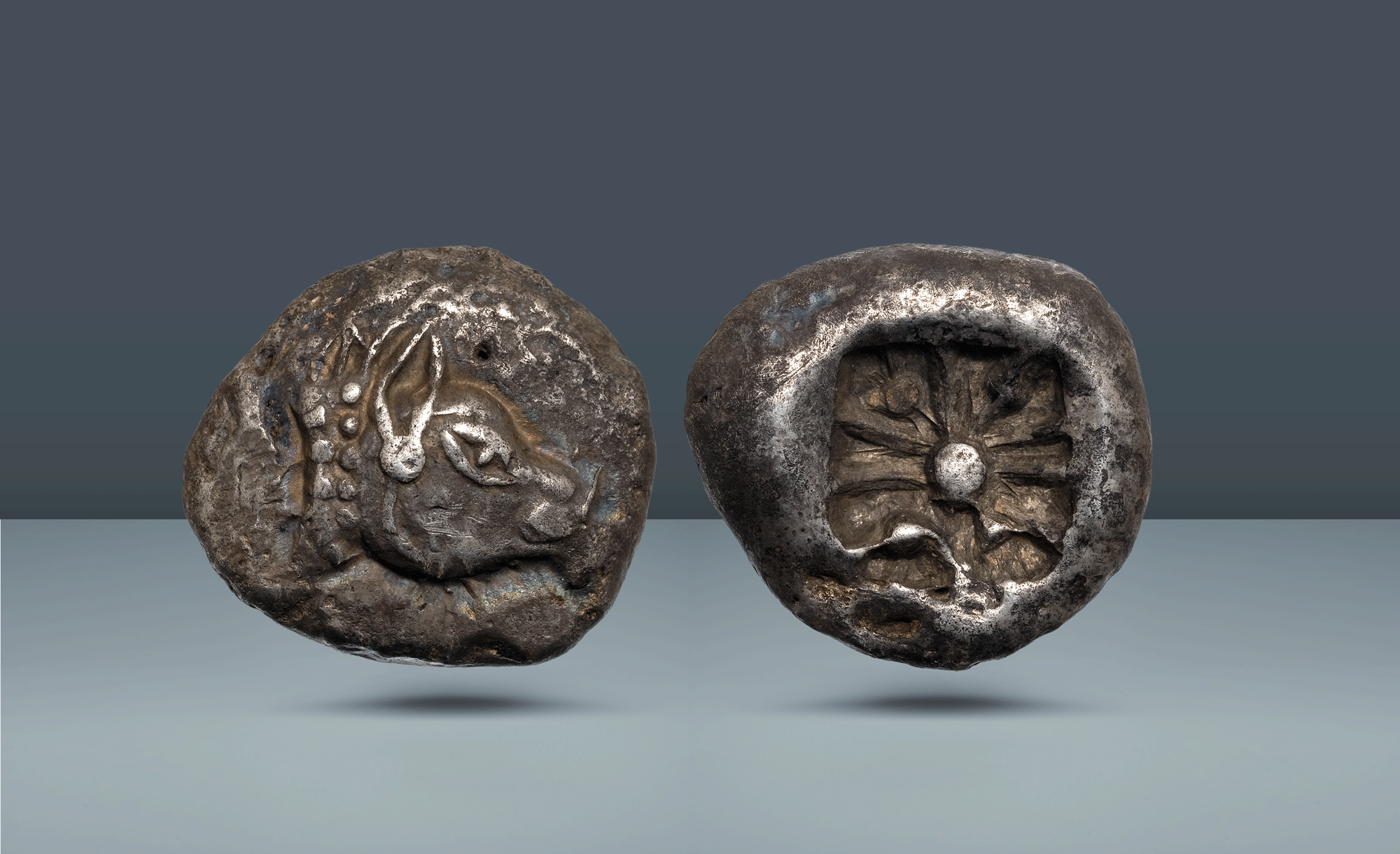
Dynasts of Lycia, Protodynastic Period. c. 500 BC
AR Stater, 9g (19.5mm, ).
Head and neck of boar to r. / Incuse square divided into eight compartments with central pellet.
Pedigree: From the Collection of Jonathan H. Kagan. Ex NAC 25, 2003, lot 190
References: Falghera -. Müseler I, 7 (same reverse die). SNG Copenhagen Supp. -
Grade: Small flan flaw (hole) on obverse above boar and small marks, otherwise, nicely toned with reasonably good strike. aEF for issue
gk1948c
Scroll down for more information about this coin.
This rare and evocative silver stater belongs to the Protodynastic coinage of Lycia, a formative moment just before the emergence of named Lycian dynasts and legends. Struck around 500 BC, it reflects a regional monetary tradition that blends indigenous Anatolian symbolism with broader archaic Greek minting practices.
The obverse presents the head and neck of a boar to right, powerfully rendered and compact in form. The boar-an animal associated across Anatolia with strength, ferocity, and elite status-appears frequently in early Lycian iconography and likely functioned as a local emblem of authority or martial prowess during this pre-inscriptional phase of coinage.
The reverse consists of an incuse square divided into eight compartments with a central pellet, a technically ambitious and visually striking design. This complex incuse pattern distinguishes Lycian protodynastic issues from the simpler quadripartite incuses of many contemporary Greek mints and underscores the experimental character of Lycian monetary production at the dawn of the Classical period.
These early staters circulated within a culturally hybrid environment-Lycia standing at the crossroads of Greek, Persian, and indigenous Anatolian worlds. Their weight standard, iconography, and fabric testify to a local elite asserting autonomy and identity through coinage, even as the region existed within the wider Achaemenid sphere.