GAUL, Massalia. 485-470 BC

GAUL, Massalia. 485-470 BC
AR Hemiobol - Milesian standard, 'Auriol'., 0.58g (8mm, 12).
Head of a gorgon facing, with tongue outstretched. / Irregular incuse square
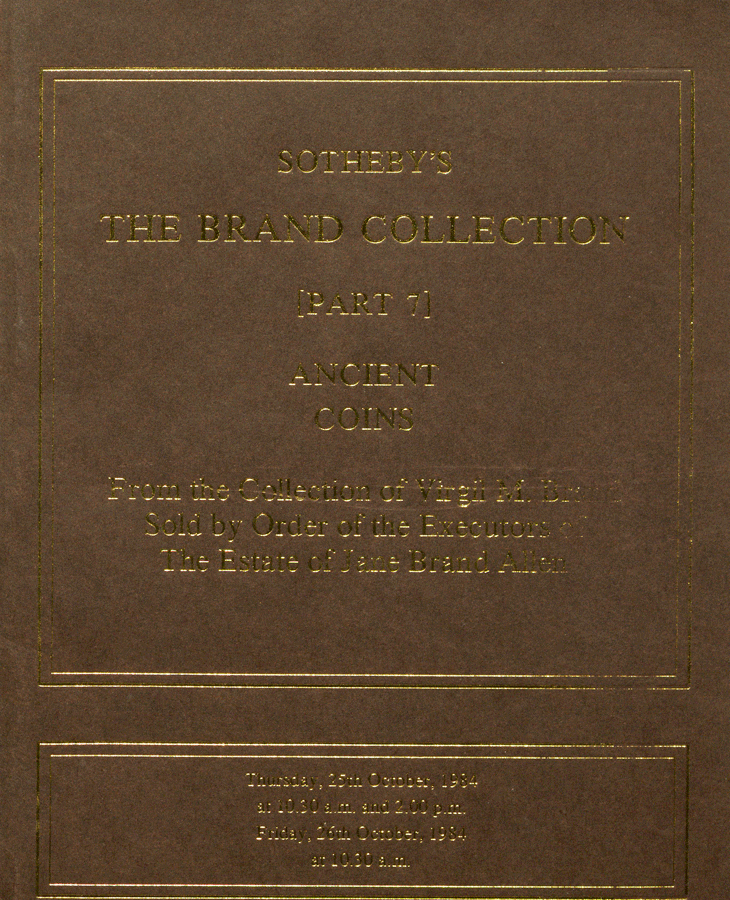
Pedigree: Ex. "Collection sans Pareille" of Ancient Greek Fractions; Ex. the collection of V. M. Brand, 7, Sotheby's 25 October 1984, 3.
References: Furtwängler M 20-22. Maurel 34
Grade: Worn obverse die, with some slught wear on highpoints. Very attractively toned. aEF. (gk1770)
This small coin carries an unusually distinguished provenance, having passed through the hands of two collectors of fundamentally different character and scale.
The earliest recorded owner was the Chicago industrialist Virgil M. Brand (1862–1926), widely regarded as the greatest all-around private coin collector in American history. Brand is believed to have amassed a collection exceeding 350,000 coins, medals, and tokens, a scope that remains virtually unmatched. Upon his death, the collection passed to his two brothers, Horace and Armin Brand, who dispersed it gradually over many decades through a series of private and public sales. Among the most important dispersals for ancient coins were the Sotheby’s auctions held in the early 1980s.
This coin was later acquired by Denyse Bérend, a collector of a very different type. Whereas Brand represented encyclopedic accumulation, Bérend approached collecting from a more academic and curatorial perspective. One of her principal areas of focus was Greek fractional coinage, where she sought to highlight the artistic and historical importance of small denominations often overlooked by collectors.
Bérend was particularly drawn to the aesthetic power of miniature formats, and this coin exemplifies her taste. Measuring only 8 millimeters in diameter, it nevertheless displays a finely engraved and expressive gorgoneion, demonstrating the remarkable artistic ambition of early Greek engravers even at the smallest scale.
The eventual sale of the Bérend collection, offered by Nomos in the Collection sans Pareille, represented the culmination of decades of highly selective and intellectually driven collecting.