Crete, Kydonia, c. 450-330 BC
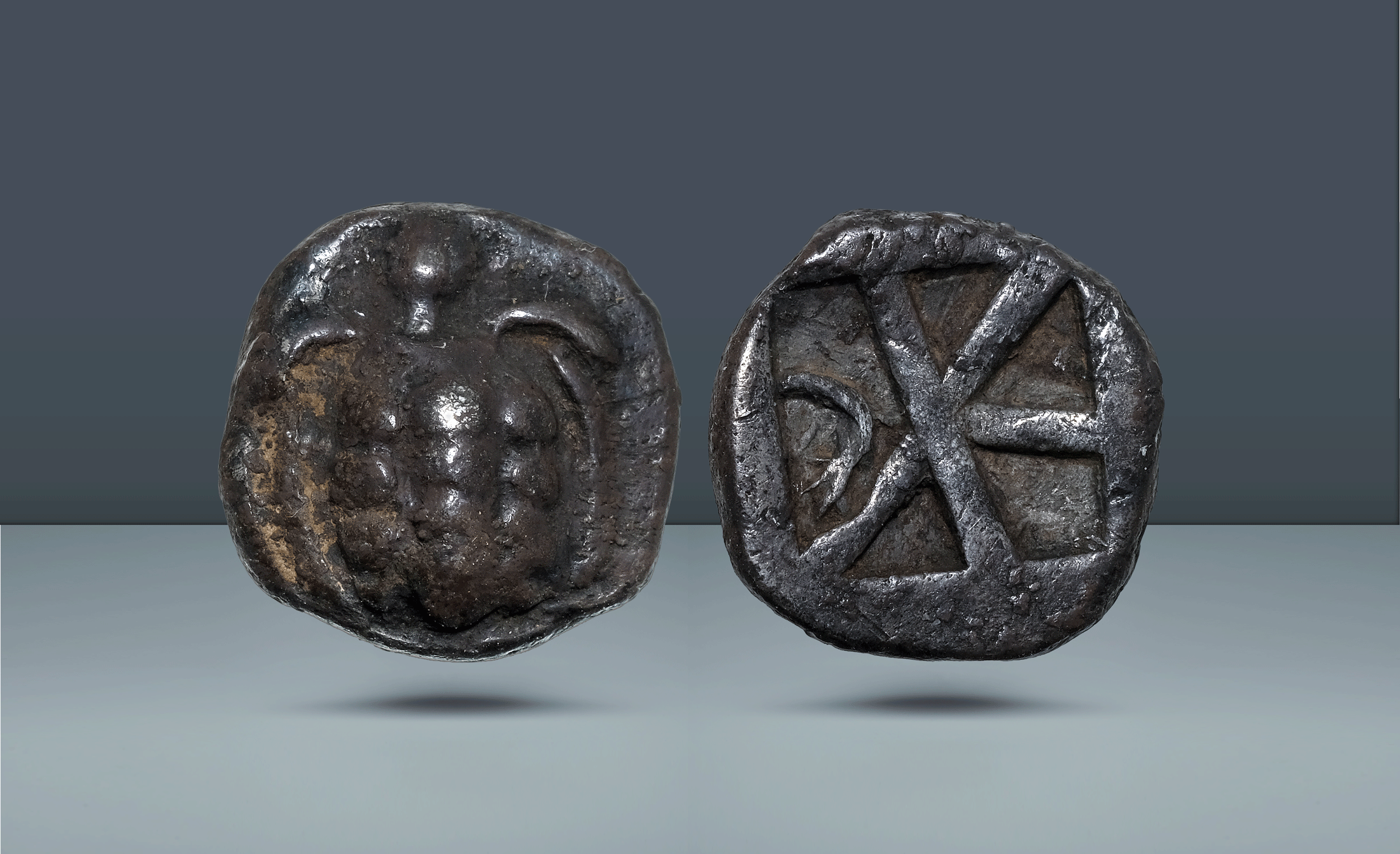
Crete, Kydonia, c. 450-330 BC
AR triobol or hemidrachm - quarter stater, 3.02g (12mm, 9h).
Land tortoise with segmented shell / Large square incuse with skew pattern, crescent in one segment
Pedigree: The Peter Bartlett Collection. Ex early CNG eAuction (18 June 2001), no. 62990 (tag).
References: E.S.G. Robinson, "Pseudoaeginetica" in NC 1928, 9. SNG Copenhagen 402. Svoronos, Crete -. Traeger 213-214
Grade: Some minor encrustation on the obverse. Attractive cabinet toning and in excellent condition for the type/denomination. Toned EF for issue
gk2133
Scroll down for more information about this coin.
The Cretan city of Kydonia was colonized by Aegina in the fifth century BCE and began striking coins approximately around 450 BCE, placing it squarely within the broader flourishing of Cretan minting that occurred throughout the fifth century. The local mint produced numerous silver staters, drachms, and smaller fractions on the Aeginetan weight standard. This early issuance included a small volume of silver hemidrachms bearing a land tortoise, roughly datable to 450–330 BCE. This was not an independent invention but a direct linkage between Kydonia and its mother city across the Aegean, a connection which matters enormously. For Kydonia to adopt this imagery was a statement of allegiance and commercial identity, announcing to any merchant handling the coin exactly which trading network and weight standard it belonged to.