Greco-Bactrian, Bactrian Kingdom. Eukratides I Megas with Heliokles and Laodike, c. 170-145 BC
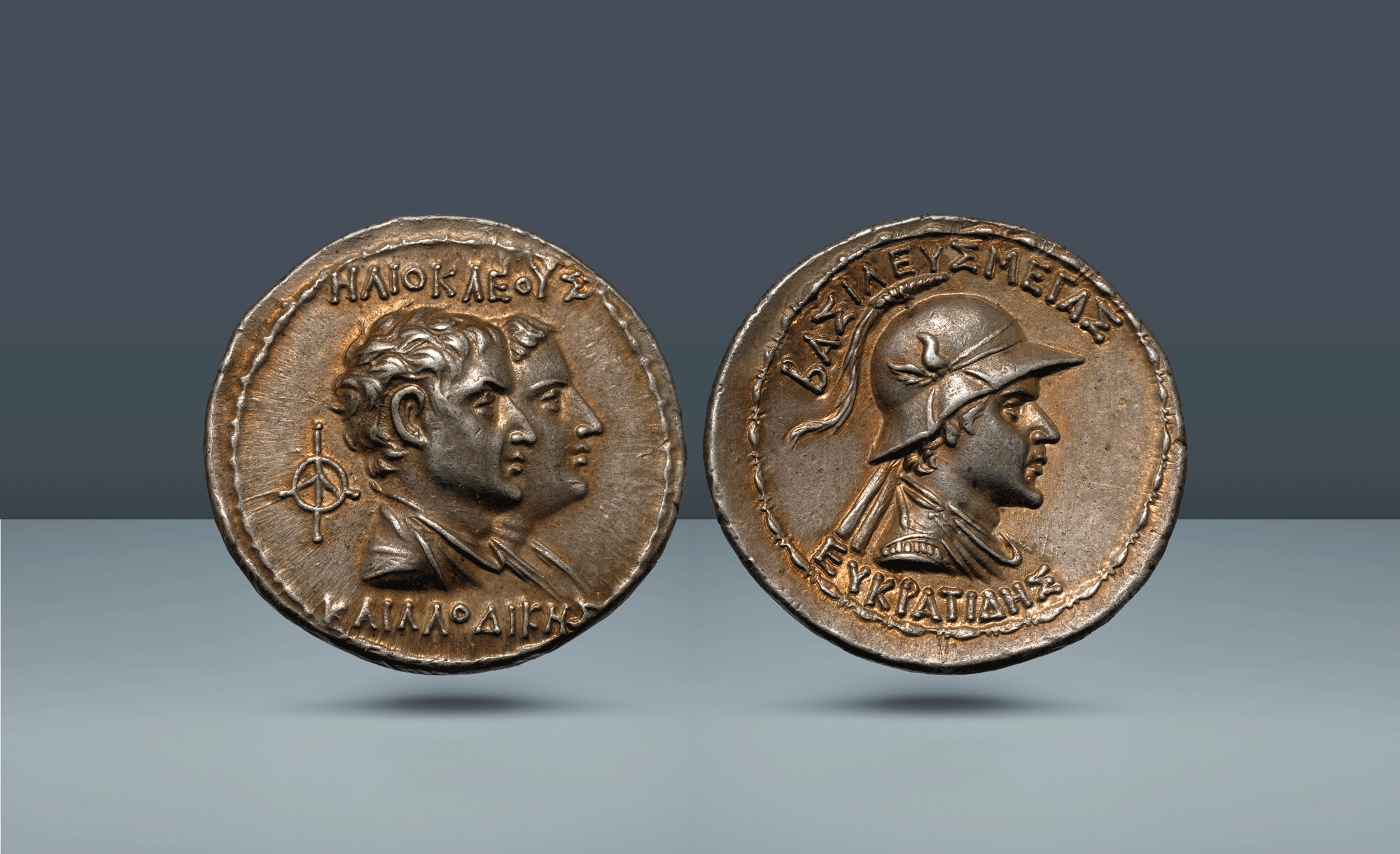
Greco-Bactrian, Bactrian Kingdom. Eukratides I Megas with Heliokles and Laodike, c. 170-145 BC
AR Tetradrachm, 16.94g (32mm, 12h).
Dynastic pedigree issue. Jugate draped busts of Heliokles and Laodice to right, HΛIOKΛEOYΣ above, KAI ΛAOΔIKHΣ below; monogram behind / Diademed and draped bust to right, wearing crested helmet adorned with bull's horn and ear, BAΣIΛEYΣ MEΓAΣ above, EYKPATIΔHΣ below.
Pedigree: Ex Roma XXX, 21 March 2024, lot 316
References: Bopearachchi 15A; Bopearachchi & Rahman 263; Mitchiner 182a; SNG ANS 526-527; HGC 12, 133
Grade: Beautifully struck and toned. Near Mint State
gk1878
Scroll down for more information about this coin.
Eukratides I was the most formidable of the Greco-Bactrian kings, a ruler who seized the throne in the turbulent years around 170 BC and held it by force of arms. Our principal literary source is Justin's epitome of Pompeius Trogus, which describes him fighting a series of hard wars, enduring a long siege by the Demetrian faction, and emerging victorious against far greater numbers. His campaigns carried Greek power deep into northwest India, even as Parthia under Mithridates I took territory from the western edge of his realm. Justin also records that he was murdered on his return from India by his own son, a grim end to a reign that reshaped the Hellenistic East.
This tetradrachm is among the most historically significant coins of the series. Rather than placing the reigning king on the obverse, Eukratides turned the coin into a statement of dynastic legitimacy, presenting jugate busts of Heliokles and Laodike, generally understood to be his parents, each named in the Greek legend. An issue of this kind was a deliberate assertion of lineage by a king who had come to power through usurpation, and Laodike has often been suggested to reflect a link to the Seleucid house, though the identification of both figures has been debated. The king himself appears on the reverse, diademed and draped, wearing a crested helmet with a bull's horn and ear, an ornament with parallels in Seleucid royal imagery. The legend gives him the title BAΣIΛEYΣ MEΓAΣ, Great King, an emphatic claim for a ruler who had fought his way to the throne. The portraits are finely engraved, with a strong sense of individuality that marks the best Greco-Bactrian coin art as among the most accomplished of the Hellenistic world.