
Ionia, Ephesos. c. 500-420 BC
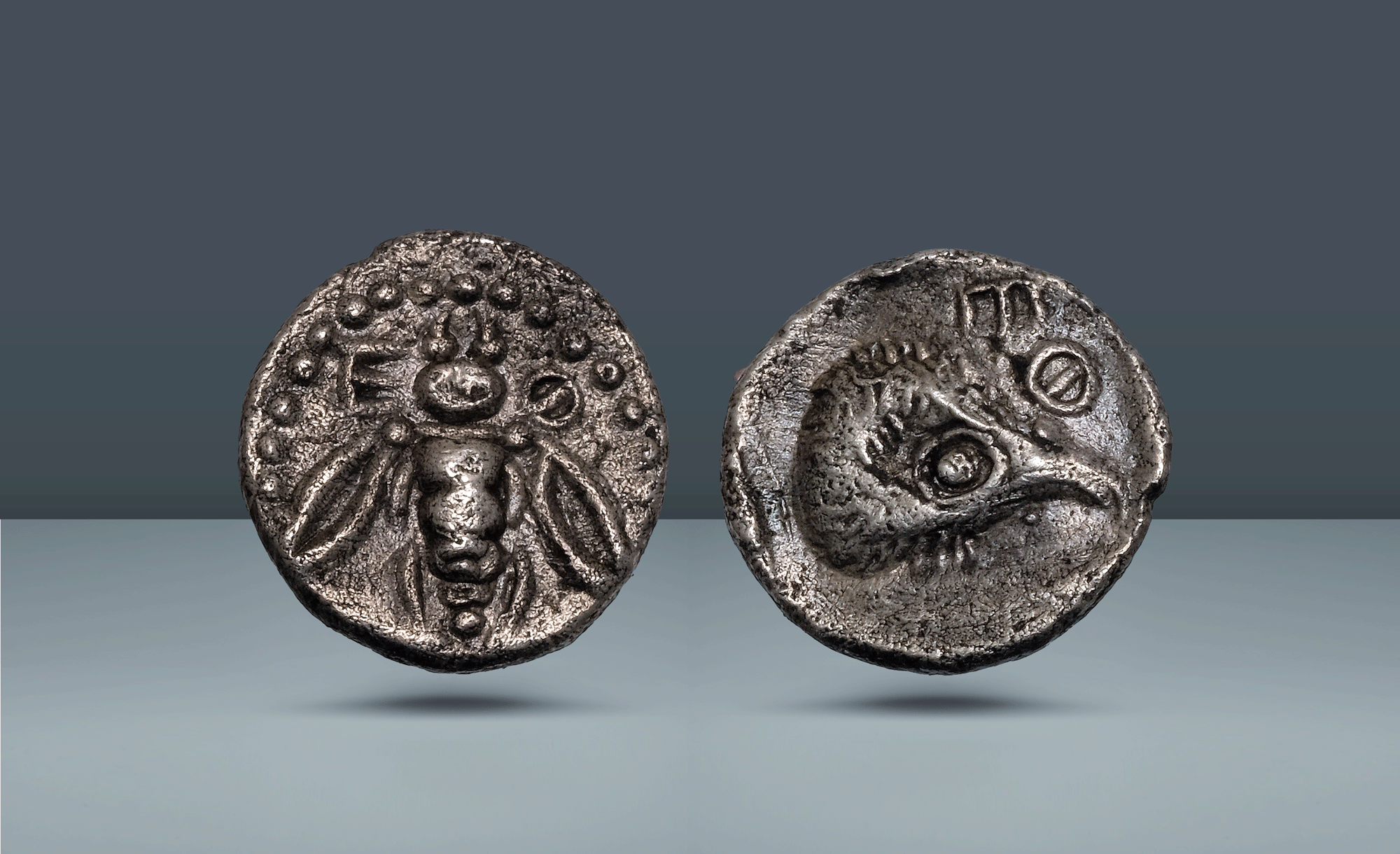
Ionia, Ephesos. c. 500-420 BC
AR Tetartemorion, 0.25g (6.95mm, 10h).
Bee, E to l. and Φ to r. / Head of eagle r. with E Φ in upper r. field
Pedigree: Ex Astarte 23, 28 Oct 2024, lot 20
References: SNG Kayhan 131-134
Grade: Phenomenal strike for only a 6.95mm coin. Artistry is detailed and interesting. Interesting fraction from Ephesos and not typically encountered. EF
gk1967
Scroll down for more information about this coin.
The bee is the emblem most closely tied to Ephesos, appearing on the city's coinage from the archaic period and continuing in various forms for centuries. It is bound up with the cult of Artemis, whose great sanctuary made Ephesos one of the most celebrated religious centers of the Greek world. Strabo records that her priests at Ephesos were known as essenes, a word often connected with the king bee, and the insect became a natural badge for both the goddess and her city. The letters E and Φ flanking the bee abbreviate the name of Ephesos and make the attribution explicit, a helpful clarification on so small a coin.
The tetartemorion, a quarter of an obol, was the humblest of the silver denominations, meant for the smallest daily transactions. It is notable, then, that the engraver devoted such care to this one. The bee is crisply defined despite the tiny flan, and the reverse departs from the plain incuse punch seen on many small fractions, offering instead the head of an eagle with the city's initials in the field. The date range spans a turbulent stretch of Ephesian history, from the years of Persian overlordship and the Ionian Revolt through the Persian Wars and into the period of Athenian leadership in the Aegean. Through all of it the city continued to issue its bee coinage, and fractions like this one document how thoroughly the emblem was woven into local commerce.