IONIA, Ephesos. Phanes, 625-600 BC, c. 625-600 BC
IONIA, Ephesos. Phanes, 625-600 BC, c. 625-600 BC
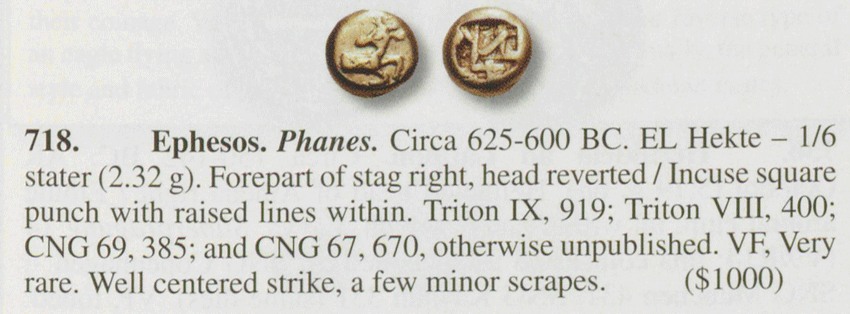
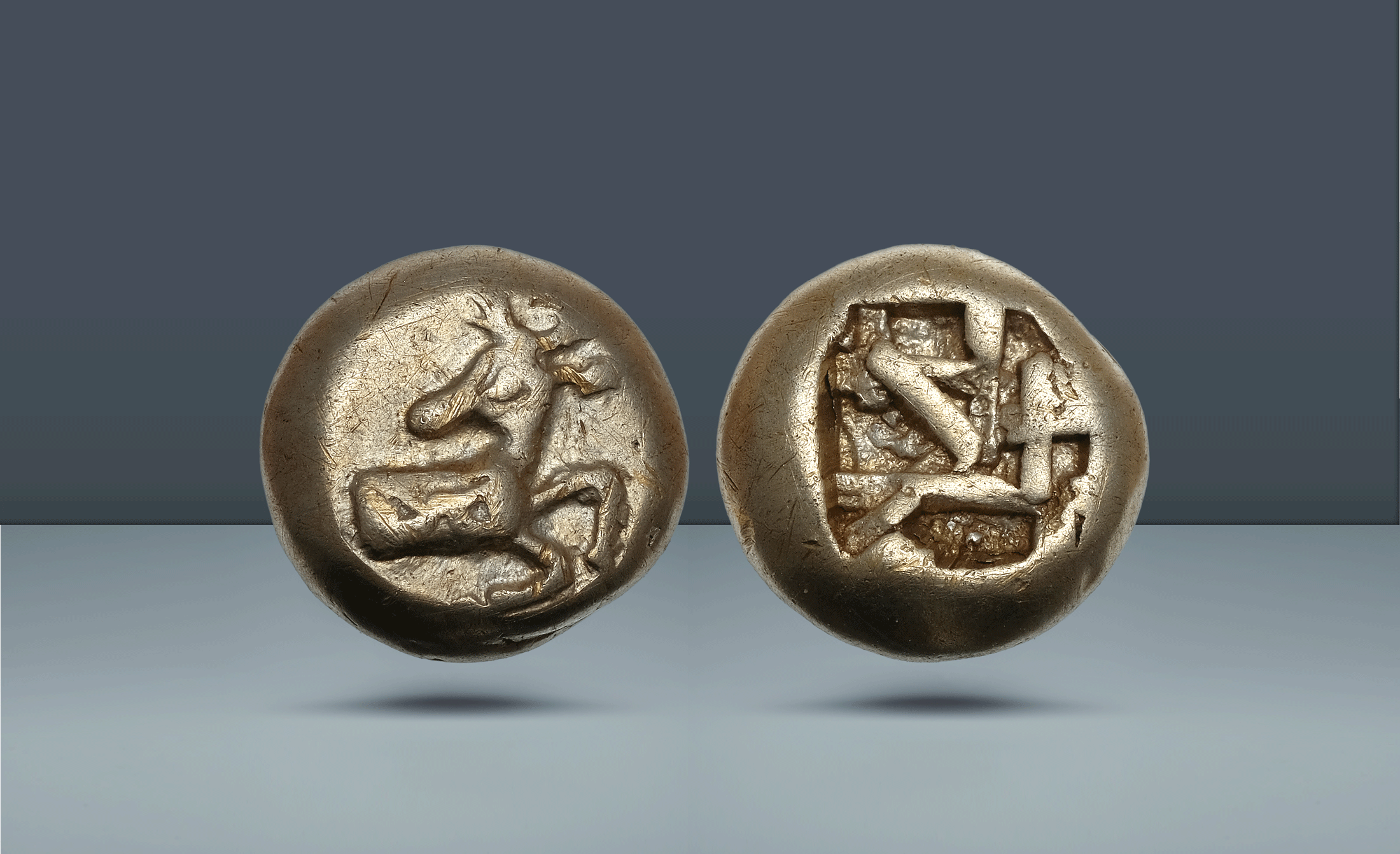
EL hekte or 1/6 stater, 2.32g (9mm, n/a).
Forepart of stag right, head reverted, its dappled coat indicated by indentations on the body / Incuse square with raised intersecting lines within
Pedigree: Ex CNG 72 (14 June 2006) lot 718. From the Peter Bartlett Collection
References: Fischer-Bossert, Phanes 18e (O13/R25L – this coin). Weidauer –. Linzalone LN1103.
Grade: Highly desirable type. Some minor hairlines and marks with a bit of wear on the antlers. aEF. Plate coin in Fischer-Bossert.
gk2146
Scroll down for more information about this coin.
Electrum coinage emerged in western Anatolia in the seventh century BC, struck from the naturally occurring gold-silver alloy of the region's rivers, and the issues attributed to Phanes are among the most celebrated products of this earliest phase. Traditionally assigned to Ephesos, they are best known for a stater that bears the legend "I am the badge of Phanes", one of the earliest inscribed coins in the Greek world. The identity of Phanes remains debated, and he has variously been understood as a ruler, a magistrate, or a wealthy individual responsible for the issue. This hekte, a sixth of a stater of roughly fourteen grams, represents the small change of the same system, a denomination still substantial enough to circulate in the commercial life of Ionia.
The stag is the natural emblem for Ephesos, a city devoted to the worship of Artemis, whose sacred animals included the deer. The forepart is shown with its head turned back over the shoulder, a pose that lets the engraver make the most of the small round flan. The coat is rendered by an array of small indentations, a wonderfully economical way of suggesting a dappled hide. The reverse is a plain incuse square with raised intersecting lines, the standard reverse treatment of these early electrum coins, produced as the flan was driven into the anvil die. The design would have been cut freehand, and it shows a confident feel for animal anatomy at a very early stage in the history of coinage. The stag remained a familiar Ephesian type for centuries afterward.