Ionia, Magnesia ad Maeandrum. Euphemos, son of Pausanios, "magistrate”, c. 155-140 BC
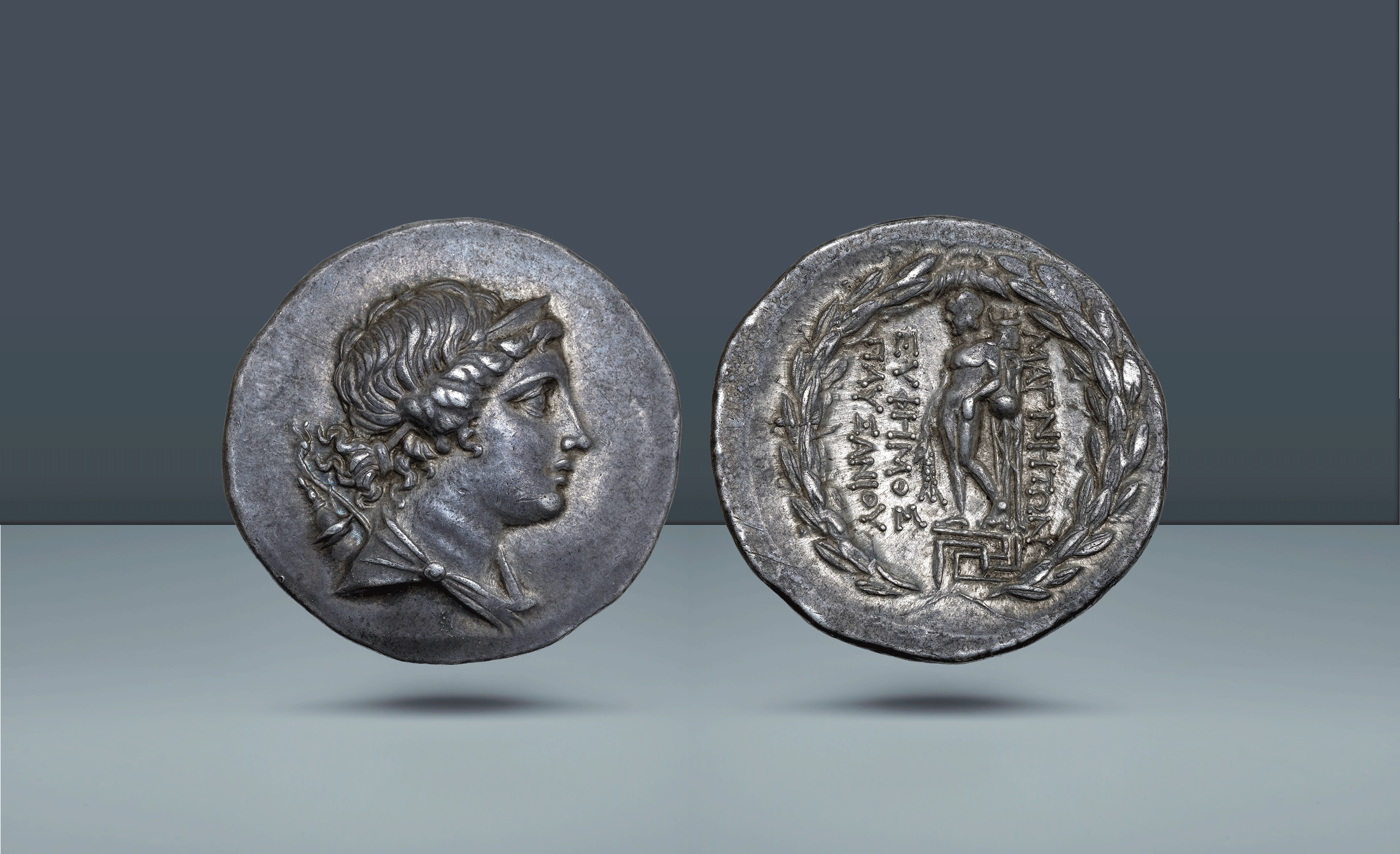
Ionia, Magnesia ad Maeandrum. Euphemos, son of Pausanios, "magistrate”, c. 155-140 BC
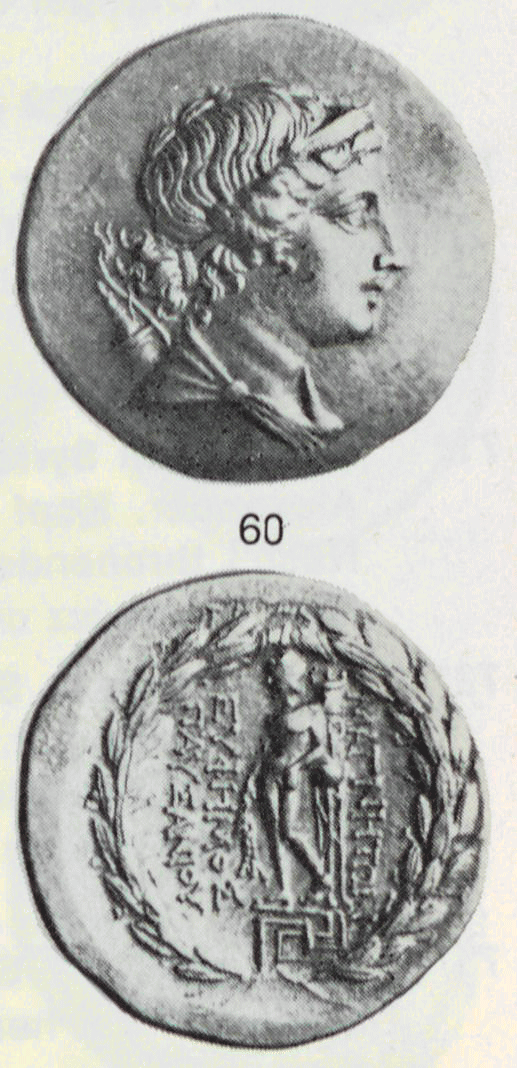
AR Stephanophoric Tetradrachm, 16.84g (31.5mm, 12h).
Diademed and draped bust of Artemis r., bow and quiver over shoulder / Apollo Delphios standing l., l. elbow resting on tripod behind, holding in r. hand a branch tied with fillet; EYΦHMΟΣ ΠAYΣANΙΟΥ to l., MAΓNHTΩN to r., meander pattern below; all within laurel wreath.
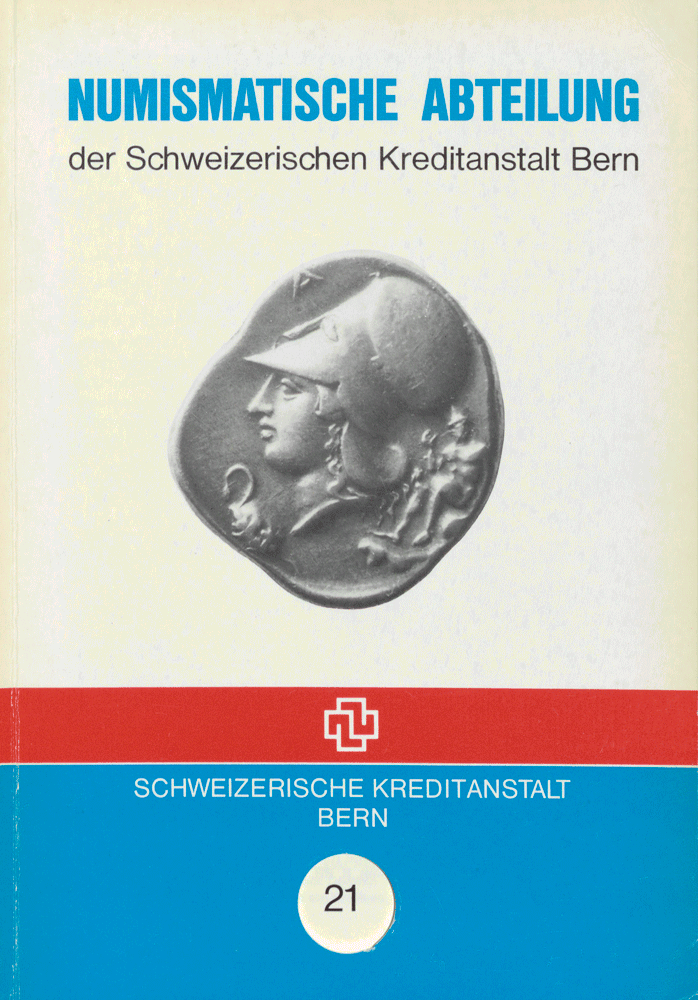
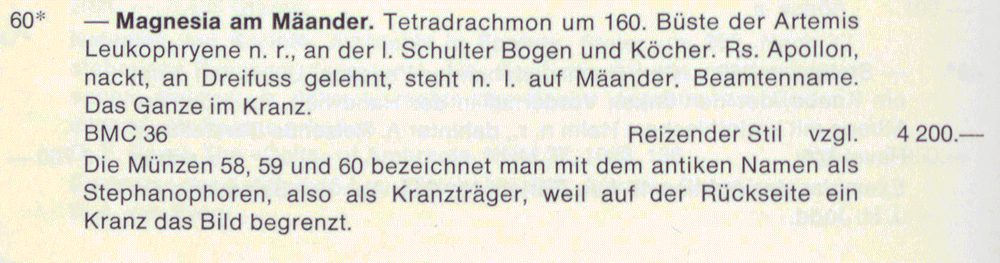
Pedigree: From the Wild Rose Collection. Ex Cederlind 169 (20 May 2013), lot 122; Cederlind 166 (3 October 2012), lot 75; Cederlind 163 (28 February 2012), lot 96; Stack’s Bowers & Ponterio 164 (6 January 2012), lot 255; V. C. Vecchi 1 (with Schwer Coins, 13 May 1983), lot 69; SKA FPL 28 (April 1979), no. 60; SKA FPL 21 (December 1976), no. 60.
References: Ellis-Evans, Wreathed, dies 19/EP24, 3 (this coin); Jones dies 13/a; E&E-Ö 65 (same obv. die).
Grade: Pretty toning and well struck for issue. EF
gk2108
Scroll down for more information about this coin.
This impressive stephanophoric tetradrachm was struck at Magnesia ad Maeandrum in western Asia Minor during the mid-2nd century BC, a period in which the cities of the region enjoyed renewed prosperity and autonomy under the shifting balance of Hellenistic power. The coin belongs to the celebrated “wreathed” tetradrachm series, so called because the reverse design is enclosed within a laurel wreath, the sacred plant of Apollo.
Magnesia’s coinage prominently features its principal deities: Artemis on the obverse and Apollo Delphios on the reverse. Artemis, shown with bow and quiver, reflects the importance of her cult in the city, while Apollo Delphios stands in a relaxed pose beside a tripod, holding a filleted branch-an emblem associated with purification, prophecy, and sacred ritual. The inclusion of the laurel wreath not only frames the design but also reinforces the Apolline symbolism, alluding to the god’s sanctuary and his victory over the Python at Delphi.
The inscription naming Euphemos, son of Pausanios, identifies the civic magistrate responsible for the issue. Such named officials are characteristic of the stephanophoric coinages of western Asia Minor, which often served both as civic prestige issues and as large silver denominations suitable for regional trade. These coins were struck on the Attic weight standard and circulated widely, reflecting the economic vitality of the Ionian cities during this period.
Magnesia ad Maeandrum itself was an important religious center, famed for its sanctuary of Artemis Leukophryene, one of the most celebrated temples of the Hellenistic world. The pairing of Artemis and Apollo on the coinage therefore represents not only traditional Greek divine siblings but also the central cults that defined the identity and prosperity of the city.
This example is particularly appealing, with attractive toning, a broad flan, and an unusually strong strike for the issue. Its long and distinguished pedigree, tracing back to the 1970s, further enhances its desirability, making it a fine representative of the elegant stephanophoric coinage of Hellenistic Ionia.