Ionia, Uncertain. c. 650-600 BC
Ionia, Uncertain. c. 650-600 BC
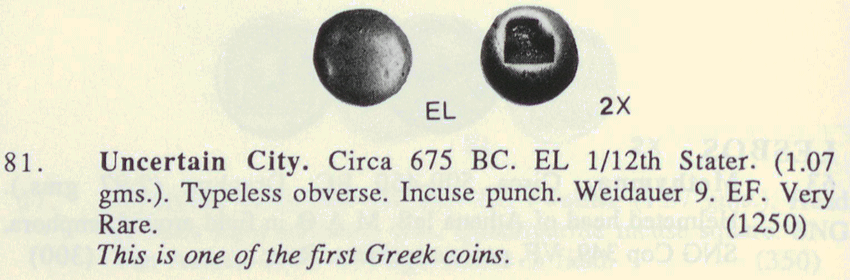
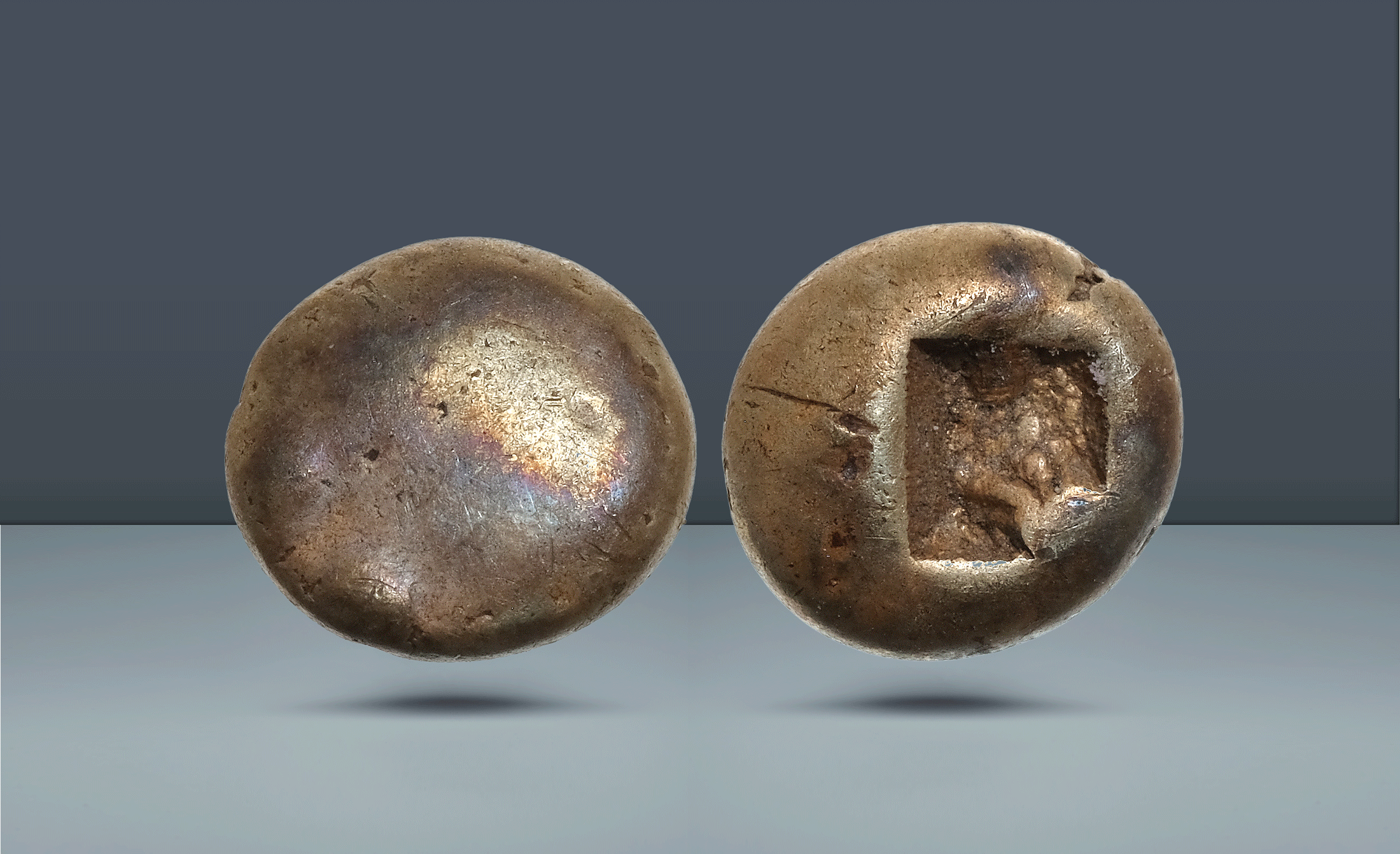
EL hemihekte or 1/12 stater (Lydo-Milesian standard), 1.07g (7mm, n/a).
Plain globular surface / Incuse square punch
Pedigree: The Peter Bartlett Collection. Ex CNA X (21 March 1990) lot 81 - "one of the first Greek coins."
References: SNG Kayhan 676-677. Weidauer Group I, unlisted denomination, cf. 4 (hekte). Karwiese, Artemision Type I.1.
Grade: Early blank type. A few minor marks but in good condition for issue. Some rainbow toning. Mint State for issue
gk2137
Scroll down for more information about this coin.
This hemihekte represents one of the most primordial expressions of coinage in the Greek world, struck at a moment when the very concept of monetized currency was still taking shape. The attribution to uncertain Ionian authorities-most likely Miletus or a closely allied center operating under Lydo-Milesian weight standards-places this piece at the absolute frontier of numismatic innovation, perhaps as early as 650 BC, a full generation before Samos's more refined issues.
What we encounter here is coinage in its most elemental form. The obverse presents merely a globular surface, utterly plain, unadorned by any imagery or inscription. There is no lion's head, no seal of official identity beyond the metal itself and the act of striking. This is a coin from the moment before coins fully understood what they should be-before the iconographic language of authority, before the standardized die types, before the visual rhetoric that would soon dominate Greek numismatics. The reverse incuse square punch, that characteristic mark of the earliest electrum issues, stands as the sole guarantee of authenticity, the official counterstrike that certified weight and fineness.
At 1.07 grams, this hemihekte-one-twelfth of a stater-demonstrates the sophistication of these earliest systems even in their apparent simplicity. The weight standards were deliberate, reproducible, and internationally recognized among the commercial networks of the eastern Aegean. Merchants understood what a Lydo-Milesian hemihekte meant; it carried authority not through elaborate imagery but through the precision of its production.
The CNA sale catalogue that brought this piece to market in 1990 recognized its historical significance immediately: "one of the first Greek coins." That assessment stands unchallenged. We are examining not merely an artifact of early commerce but evidence of the precise moment when Greek city-states began to seize control of monetary authority from natural processes and individual traders. The globular blankness of the obverse is not a deficiency but a document-a record of a civilization learning, in real time, how to monetize power.
For those concerned with the origins of Western economic systems, this hemihekte offers direct testimony to humanity's transition from bullion to currency, from barter to standardized exchange. Few coins anywhere carry such historical weight in such spare, unadorned form.