Islands off Thrace, Thasos. c. 500-480 BC
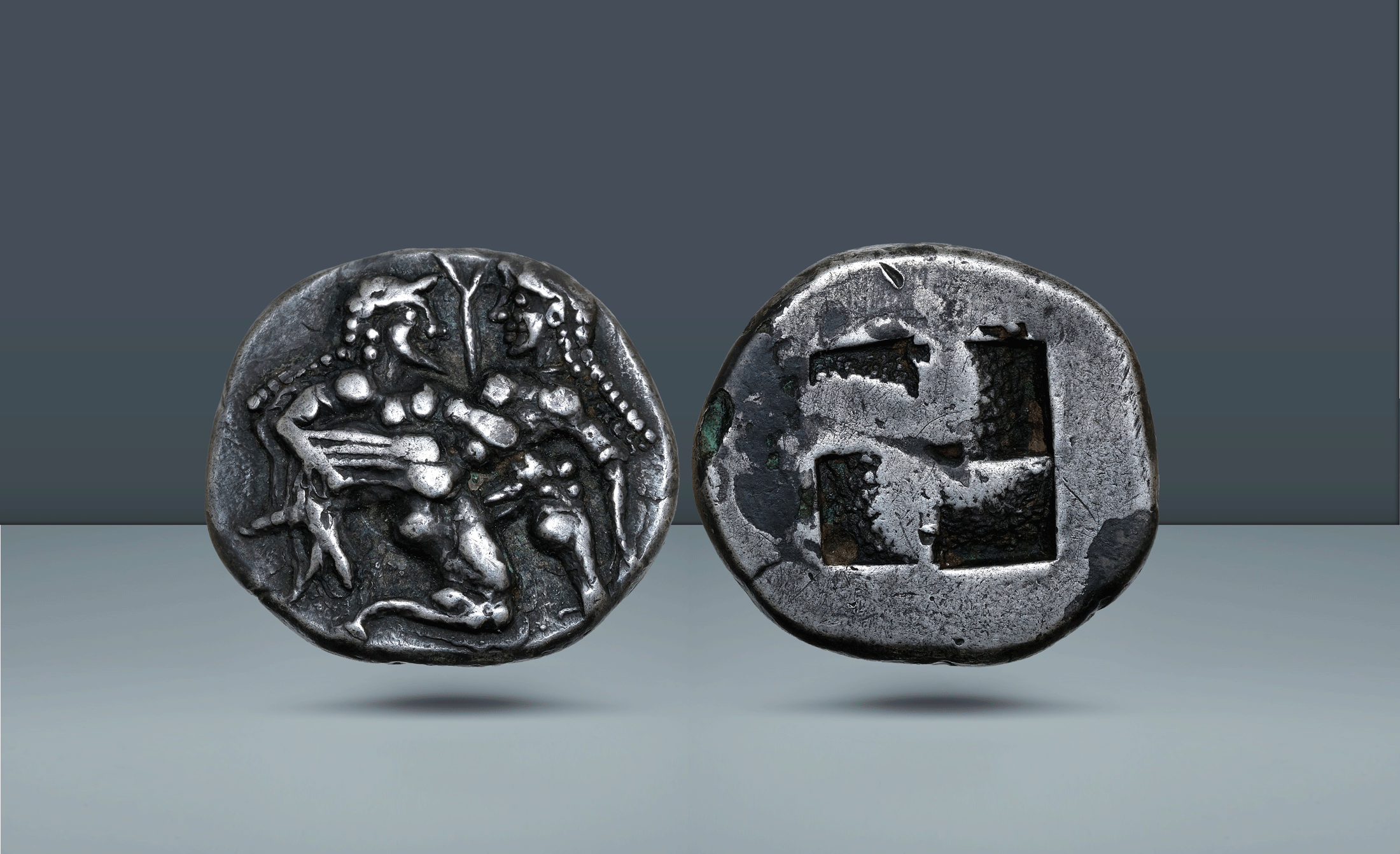
Islands off Thrace, Thasos. c. 500-480 BC
AR Stater, 7.55g (22mm, N/A).
Nude, ithyphallic satyr with long beard and long hair, advancing to r. in archaic "kneeling-running" position, carrying off protesting nymph / Quadripartite incuse square
References: HGC 6, 331. Le Rider, Thasiennes 2
Grade: Beautifully toned and with some minor overall wear. Reverse has some minor marks and patches of horn silver. Pleasant VF+
gk2099
Scroll down for more information about this coin.
This evocative archaic silver stater from Thasos stands among the most arresting and symbolically charged issues of the early Greek world. Struck at the turn of the 5th century BC, it captures the raw vitality and mythic imagination for which Thasian coinage is justly celebrated.
The obverse depicts a nude, ithyphallic satyr, bearded and long-haired, striding energetically to the right in the distinctive archaic “kneeling-running” pose. With one arm he carries off a protesting nymph, the scene rendered with a remarkable sense of motion and dramatic tension. Far from mere provocation, this imagery reflects Thasos’ deep association with Dionysian cult practice, fertility, and the untamed forces of nature-central themes in the island’s religious and cultural identity.
The reverse features a bold quadripartite incuse square, a hallmark of early Greek minting technique. Stark and architectural in contrast to the animated obverse, it underscores the transitional moment in Greek coinage when form, symbolism, and weight standard were being rigorously defined.
Struck on the Thracian weight standard, these staters circulated widely in the northern Aegean and beyond, supported by Thasos’ prosperity from wine production, mining, and maritime trade. Their powerful iconography and early date have long made them cornerstones of serious archaic Greek collections.