
Kings of Macedon, Macedon. Alexander III, 'the Great' (Posthumous), 336-323 BC Amphipolis, c. 323-320 BC
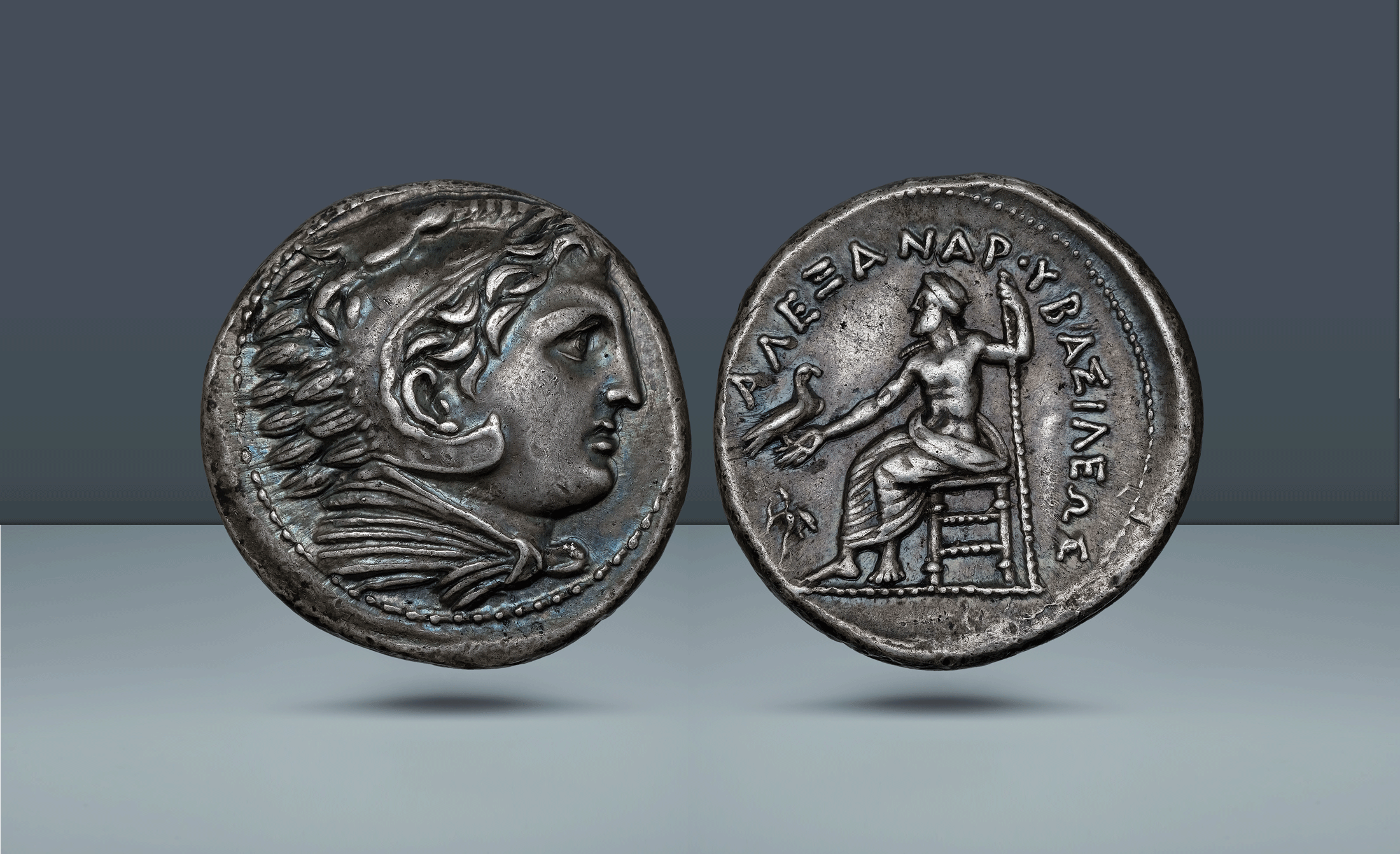
Kings of Macedon, Macedon. Alexander III, 'the Great' (Posthumous), 336-323 BC Amphipolis, c. 323-320 BC
AR Tetradrachm, 17.19g (17mm, ).
Head of unbearded Heracles r., wearing lion skin. / AΛEΞANΔPOY BAΣIΛEΩΣ Zeus, wearing himation, nude to waist, seated l. on diphros, holding sceptre with his l. hand, eagle on his outstretched r. hand; low in l. field l., statuette of Athena Promachos standing r., holding spear and shield
Pedigree: From an old Swiss collection started in the 19th century
References: Price 99, 109; Meydancikkale 29, 52.
Grade: Lovely toned Macedonian lifetime example. Slightly o/c on reverse. Mint State
gk2179
Scroll down for more information about this coin.
Alexander's coinage represents nothing less than the creation of the first true international currency of the Greek world. In a reign of only thirteen years, cut short by his death at thirty-three, he established mints across a kingdom that stretched from the Aegean to the Indus, and the Heracles/Zeus types struck at those mints became so trusted, so universally recognized, that production continued for decades after his death, well into the era when the Diadochi were carving up his empire and asserting their own distinct coinages. This piece belongs to that early posthumous phase, struck at Amphipolis within just a few years of Alexander's death, when the dies were still being cut by engravers who had worked under the king himself.
Numismatists have long debated whether certain of these early Macedonian issues might in fact be lifetime products misdated by convention, the diagnostic detail being Zeus' uncrossed legs, a stylistic marker some scholars associate with the earliest strikings. The theory has never been conclusively settled, but the label "lifetime type" persists in the trade regardless, a reminder of how closely these issues sit to the king's own era.