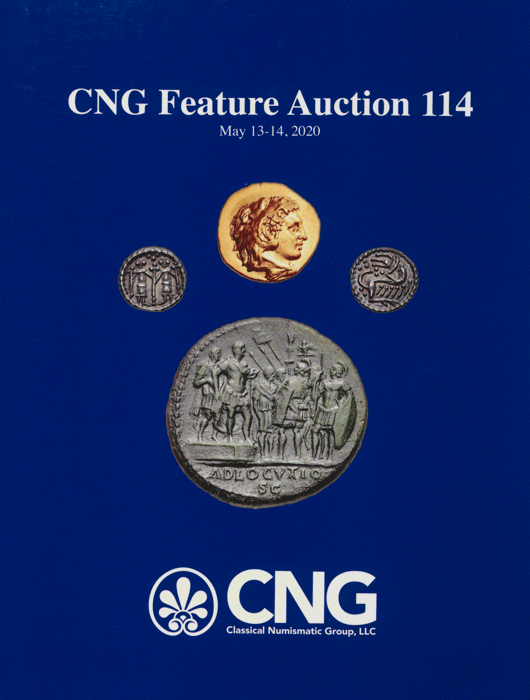
Seleucid Empire, Syria. Seleucus I Nicator, 312 – 281 BC Ecbatana, c. 295-281 BC
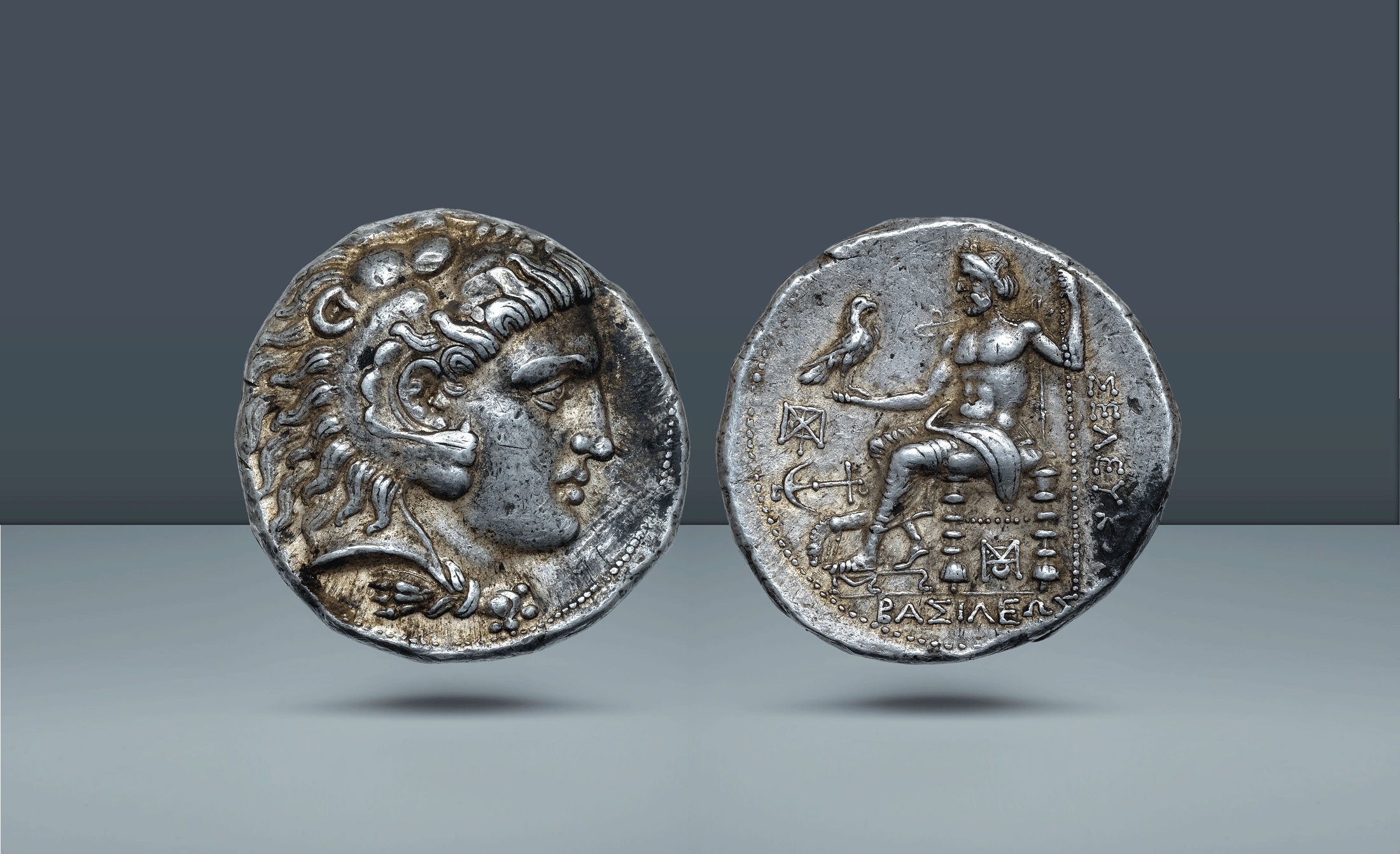
Seleucid Empire, Syria. Seleucus I Nicator, 312 – 281 BC Ecbatana, c. 295-281 BC
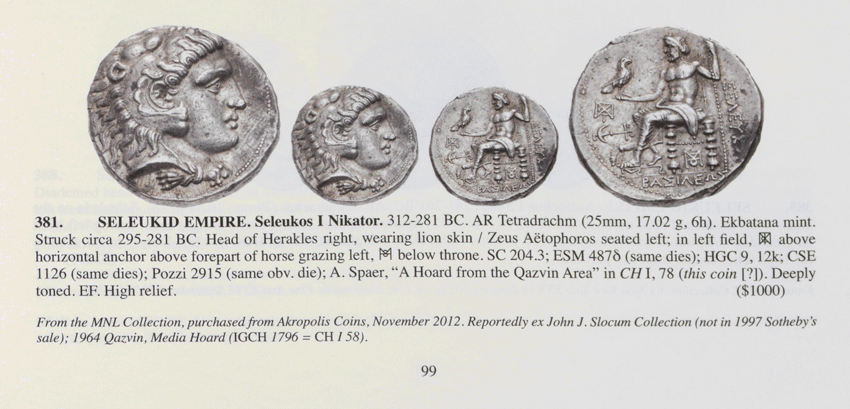
AR Tetradrachm, 17.02g (26mm, 5h).
Beardless head of Heracles r., wearing lion skin headdress / ΣΕΛΕΥΚΟΣΒΑΣΙΛΕΩΣ Zeus seated l. on throne, holding eagle on outstretched r. hand and sceptre in l.; in l. field, anchor and horse forepart grazing l.
Pedigree: Ex CNG sale 114, 2020, 381. Privately purchased from Akropolis Coins in 2012. From the MNL and John J. Slocum collections. From the Qazvin, Media Hoard, 1964.
References: A. Spaer, A Hoard from the Qazvin Area, in Coin Hoards I, 78 (this coin). SC 204.3. CES 487δ. HGC 9, 12k.
Grade: Some marks and areas of discoloration. Well struck with a good pedigree back to a known hoard. VF+
gk2096
Scroll down for more information about this coin.
Used as a control-mark on many Seleucid coins, the anchor is perhaps the most enduring brand of the Hellenistic world. This symbol transformed a ubiquitous piece of naval equipment into a marker of divine legitimacy. While most of Alexander’s successors scrambled for authority, Seleucus I Nicator leaned into his self-proclaimed mythological origins. He claimed to be the son of Apollo, born with an anchor-shaped birthmark. On the coinage, the anchor is technically fascinating. It is almost always depicted inverted or sideways as on this particular coin, with the flukes pointing upward as they would when hung on the side of a galley. Its use ranged from a small control mark on the early silver tetradrachms of Seleucus I to the central, bold motif on later bronze denominations.