Lydia, Sardis. Croesus, c. 561-546 BC
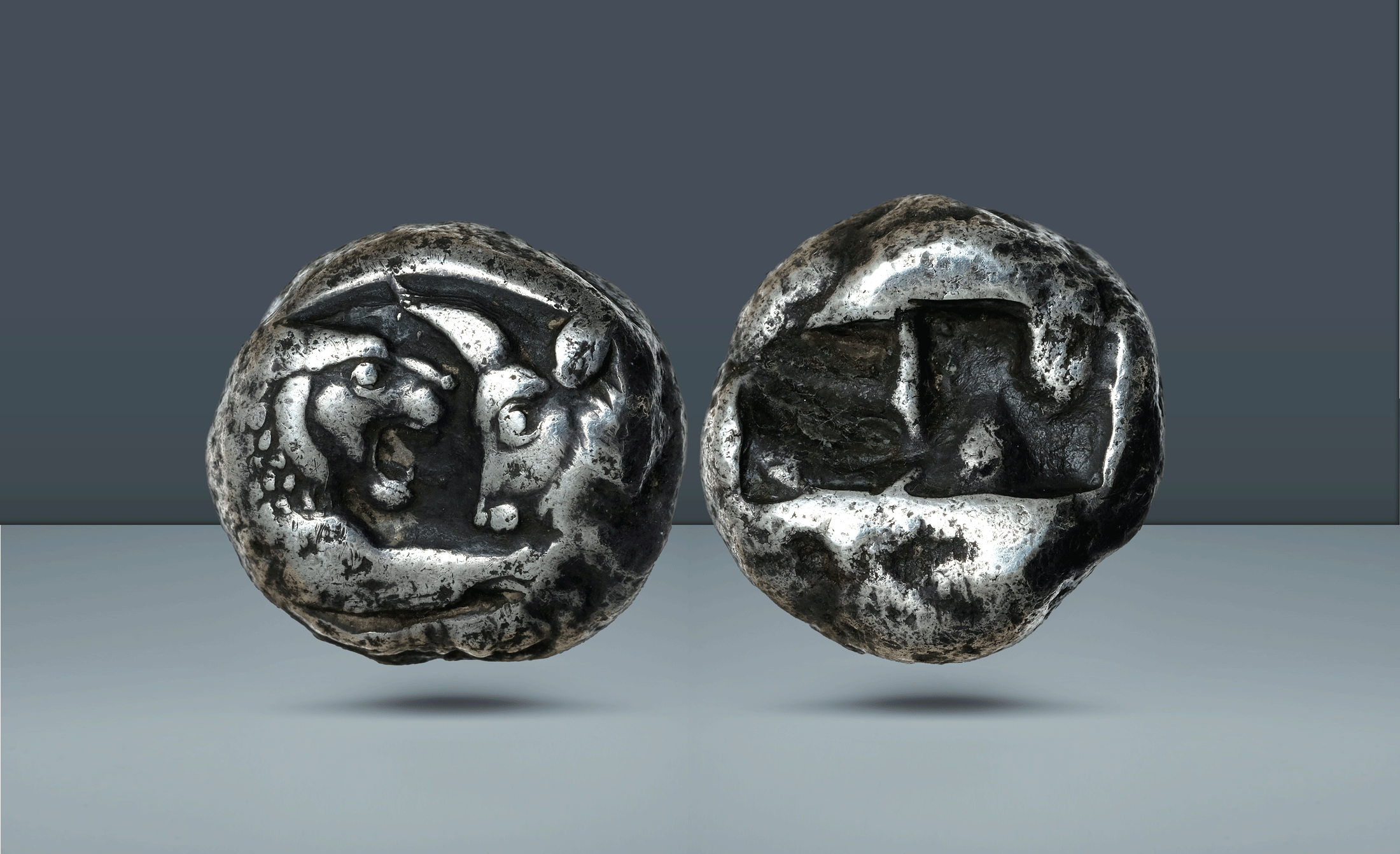
Lydia, Sardis. Croesus, c. 561-546 BC
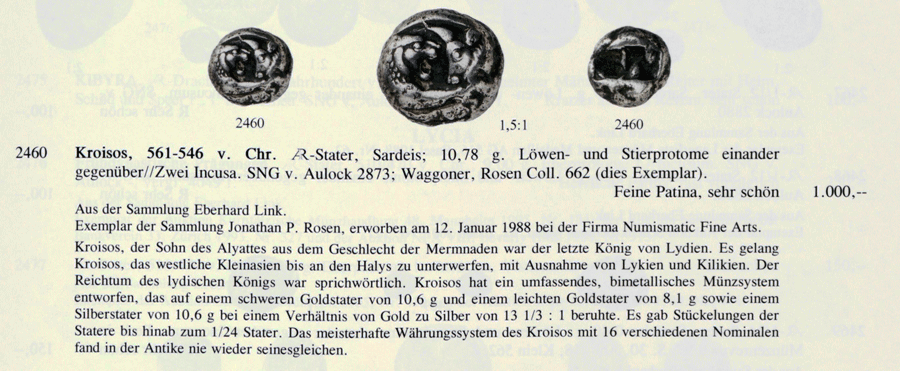
AR Heavy Stater, 10.77g (17mm, 1h).
Confronted foreparts of lion and bull / Two incuse squares
Pedigree: Ex Künker sale 312, 2018, 2460. Privately purchased from NFA on 12th January 1988. From the Jonathan Rosen and Eberhard Link collections.
References: Rosen 662 (this coin). H.J. Berk, The Coinage of Croesus in 100 Greatest Ancient Coins, Whitman Publishing, 2019, 19.
Grade: Compact but complete in a heavy AR stater. Light overall wear. Cabinet toning. EF for issue
gk2089
Scroll down for more information about this coin.
The gold “heavy” stater of Croesus represents one of the most historically important coin types ever produced. Struck at the royal mint of Sardis in the mid-6th century BC, these coins form part of the first true bimetallic currency system, in which gold and silver denominations were issued under a fixed relationship. By abandoning the earlier electrum coinage of Lydia-whose variable gold content made it difficult to value-Croesus introduced separate gold and silver coinages of consistent purity and weight, a reform that fundamentally shaped the monetary systems of the Greek world and beyond.
The obverse bears the powerful emblem of confronted foreparts of a lion and a bull, a design that has become synonymous with Croeseid coinage. The lion was the dynastic symbol of the Lydian royal house, representing strength, kingship, and authority. The bull, long associated with vitality and divine power, may have carried religious or cosmic significance. Their dramatic confrontation forms one of the most iconic images of Archaic coinage and served as a bold declaration of royal authority during Lydia’s dominance over western Anatolia.
On the reverse appear two incuse punches created during the striking process. These rectangular impressions are characteristic of the larger denominations of the Croeseid series and reflect the technical methods of early coin production. On heavy staters, the punch arrangement often appears particularly bold due to the thickness and weight of the flan.
Heavy staters such as this were among the earliest high-value gold coins to circulate widely in the ancient Mediterranean. Their reliability and recognizability helped establish coinage as a trusted medium of exchange, influencing the later coinage systems of the Greek city-states and eventually the Persian Empire, which absorbed Lydia following Cyrus the Great’s conquest in 546 BC.
Pedigree note:
This coin also carries the distinguished pedigree of Jonathan P. Rosen, a prominent American collector of early Greek coinage who passed away in February 2026. Rosen assembled one of the most significant private collections of Archaic Greek coins of the late twentieth century. His collection was sufficiently important to merit scholarly publication by Nancy Waggoner of the American Numismatic Society in Early Greek Coins from the Collection of Jonathan P. Rosen (1983), a work that remains a reference for early Greek numismatics.
Rosen was widely recognized for his dedication to preserving and studying the earliest phases of coinage, particularly the Archaic issues of Asia Minor and mainland Greece. Coins bearing his provenance reflect a collecting tradition that emphasized scholarship, rarity, and historical importance. The presence of his pedigree adds both academic significance and collecting prestige to the present piece.
As one of the earliest gold coins struck under state authority and connected to one of the most influential collectors of early Greek coinage, this heavy Croeseid stater stands at the intersection of monetary history and modern numismatic scholarship.