
Ptolemaic Kingdom, Egypt. Ptolemy I, as Satrap, 323-305/4 BC Memphis or Alexandreia, c. 323/2-317/1 BC
Ptolemaic Kingdom, Egypt. Ptolemy I, as Satrap, 323-305/4 BC Memphis or Alexandreia, c. 323/2-317/1 BC
AR Tetradrachm (Attic standard), 17.17g (27.5mm, 11h).
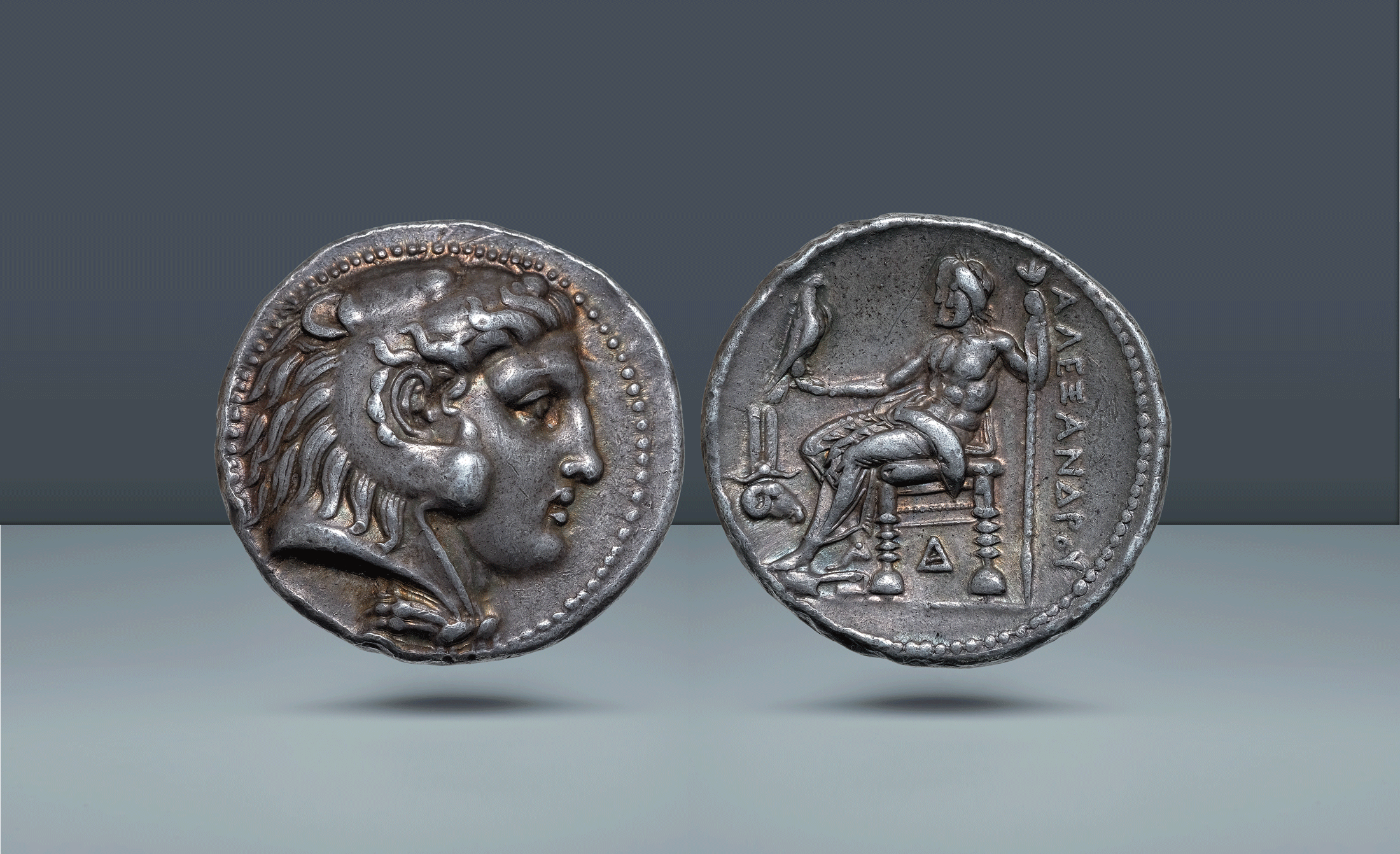
Head of Herakles right, wearing lion skin / AΛEΞANΔPOY, Zeus Aëtophoros seated left; in left field, head of Amun-Ra as ram's head right wearing double plume crown, monogram below throne
Pedigree: From the Westmoreland Collection.
References: CPE 4; Svoronos 6; Zervos Issue 3, dies 219/b (this coin referenced); Price 3964; SNG Copenhagen 9; ANS inv. 1944.100.35649 (same dies); Westmoreland 19 (this coin).
Grade: An extremely desirable mint and symbolic type struck just following the death of Alexander the Great under Ptolemy I while serving as satrap. Lovely toning and nicely struck. There is a small hairline scratch in left field on the reverse. Head of Zeus is double struck. EF
gk2109
Scroll down for more information about this coin.
Struck in the turbulent years immediately following the death of Alexander the Great in 323 BC, this tetradrachm belongs to the earliest coinage of Ptolemy I while he governed Egypt as satrap. At this stage, Ptolemy had not yet assumed the royal title; instead, he issued coinage in the name and types of Alexander, a powerful political statement that aligned him with the conqueror’s enduring prestige and legitimacy.
The coin follows the familiar Alexander-type design: the youthful Herakles in the guise of the hero, wearing the lion skin of the Nemean lion, and on the reverse Zeus enthroned, holding eagle and scepter. Yet this particular issue introduces a striking and distinctly Egyptian element: the ram’s head of Amun-Ra placed prominently in the reverse field. Amun was the chief deity of Thebes and a central figure in Egyptian state religion, long associated with kingship and divine authority. By incorporating this symbol, Ptolemy was visually merging Macedonian royal imagery with Egyptian religious tradition, an early indication of the cultural and political synthesis that would characterize the Ptolemaic kingdom.
Historically, the appearance of Amun on these early Alexandrine tetradrachms reflects Ptolemy’s efforts to legitimize his authority among both the Macedonian military elite and the native Egyptian population. This symbolic fusion laid the groundwork for the later Ptolemaic coinage, in which the rulers would present themselves not only as Hellenistic monarchs but also as pharaohs in the traditional Egyptian sense.
Coins of this issue are especially prized for their historical significance, as they belong to the formative years of the Ptolemaic state, when the successors of Alexander were still vying for control of his vast empire. The presence of the Amun-Ra symbol makes this type particularly evocative, representing one of the earliest numismatic expressions of the cultural duality that defined Ptolemaic rule.