Macedon, Philip II. 359-336 BC. Amphipolis, c. 354/348 BC
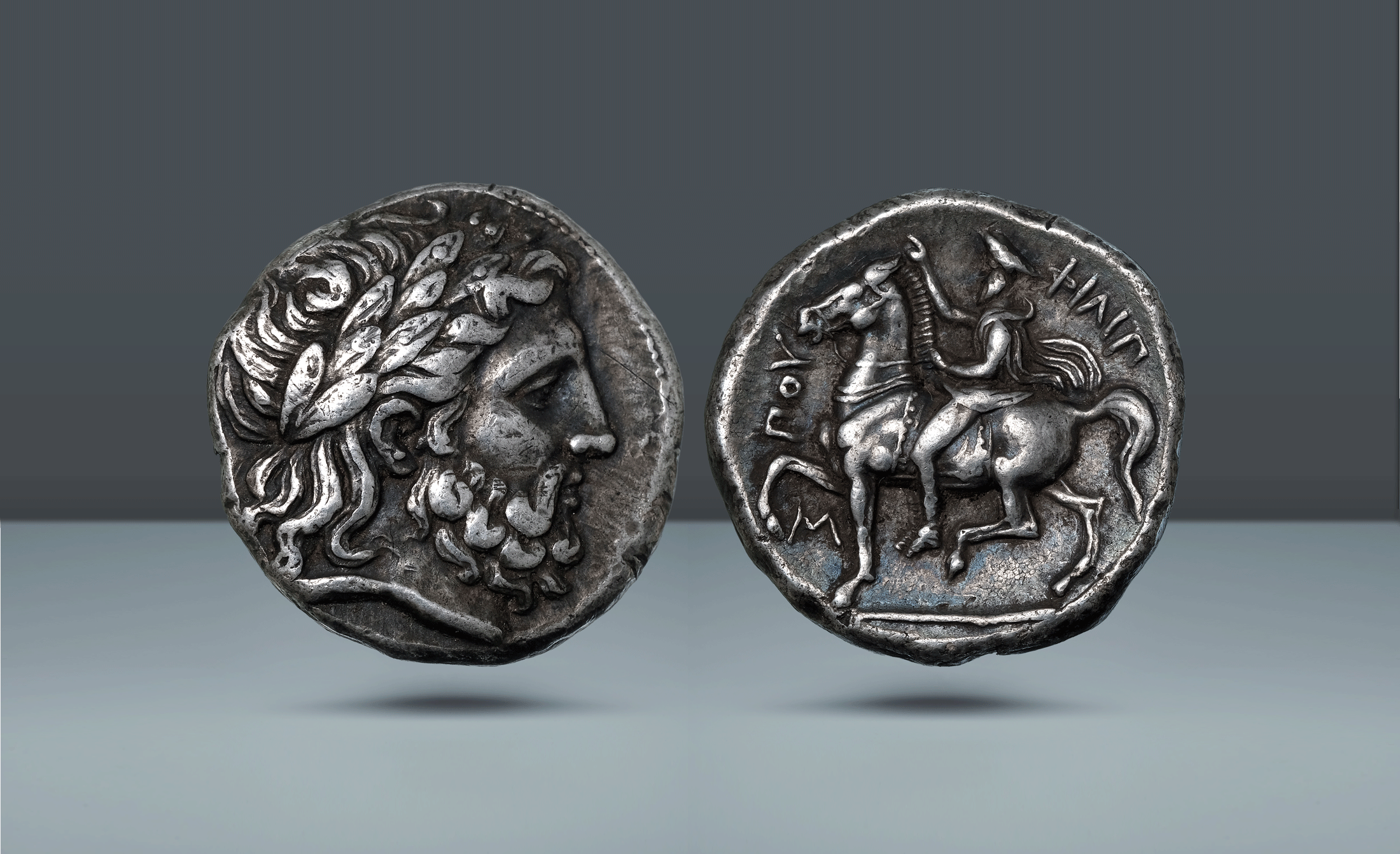
Macedon, Philip II. 359-336 BC. Amphipolis, c. 354/348 BC
AR Tetradrachm, 14.38g (26.2mm, 10h)
Head of Zeus / Philip on horseback wearing kausia, raising his hand; below, M.
Pedigree: From the Alfred Mamroth Collection (1874-1957), acquired from Dr. Thassilo Hoffmann in December 1950 for 50 West German marks. With original Mamroth ticket.
References: Le Rider, cf. pl. 24-25, 40-68; HGC 861 corr. (incomplete reference to Le Rider).
Grade: Lovely toned surfaces. Overall minor marks. EF
gk2275
Scroll down for more information about this coin.
Few coins of the ancient world had as much political effect as the silver tetradrachms of Philip II. When Philip took the Macedonian throne in 359 BC, the kingdom was weak, surrounded by enemies, and divided within. Two years later he captured Amphipolis, the old Athenian foundation on the Strymon. He then moved into the mining country around Mount Pangaion, where he refounded Crenides as Philippi. These gains gave him a supply of precious metal no earlier Macedonian king had had. Ancient writers were struck by how freely Philip used money to buy friends, pay mercenaries, and win cities without a siege. His silver, struck on the heavy Thraco-Macedonian standard, became the means by which a frontier monarchy rose to dominate Greece.
The obverse shows the laureate head of Zeus, the Olympian father whom the Argead kings claimed as their ancestor through Heracles. On the reverse a rider wearing the kausia, the flat broad-brimmed Macedonian felt hat, raises his right hand in salute. The figure is generally taken to be Philip himself. It shows a king who ruled from horseback, as head of a cavalry aristocracy that became the striking arm of his army. Georges Le Rider's 1977 study of the series, which remains the standard work, divided Philip's silver between the mints of Pella and Amphipolis and set out their sequence. This coin, with the letter M below the horse, comes from the early Amphipolis production of the 350s and 340s BC, when Philip was extending his power across the northern Aegean.
The pedigree adds real interest. Alfred Mamroth was a Berlin judge and a serious numismatist. He curated the collection of ancient coins of the Reichsbank between 1939 and 1945 and was helping put in the Münzkabinett Berlin from the beginning of 1951, and he wrote besides numismatic studies on Macedon also the 'Jugenderinnerungen an alte Berliner Münzhändler'. A tetradrachm of Philip from the cabinet of a specialist in Macedonian coinage, still with his original ticket and a recorded 1950 purchase, is the kind of documented provenance that collectors and scholars value most. Struck in good silver with attractive toning, this is a handsome example of the coinage that paid for Macedon's rise.